
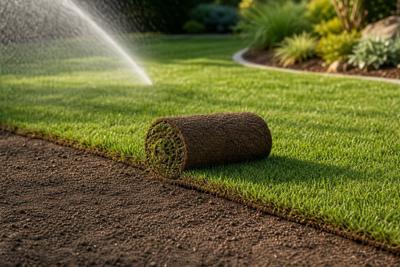

A new lawn can give a yard a finished quality that few other landscaping improvements provide. It defines planting areas, complements hardscaping, and offers a usable surface for dining, recreation, and relaxation. But the healthy and attractive outcome that homeowners expect doesn’t just happen.
The key to a successful project lies in the details that occur beneath the surface, namely grading, soil quality, drainage, and irrigation potential.
Work With What’s Already There
Lawn installations don’t just involve laying down rolls of sod on bare ground. Soil conditions vary, and some sites might have compacted soil, thin topsoil, sloped grades, or poor drainage. Without proper preparation, new sod could suffer uneven drying, weak root systems, or an unimpressive first year. Check this out.
Before you buy sod, take the time to evaluate a few essential factors:
- Areas where water drains toward the house, patio, or sidewalk
- Depressions where water tends to pool
- Compacted soil that resists digging
- Shading from trees, fences, or buildings
- Old sod, stones, roots, and other debris
Pay attention to slope. The finished surface should allow water to flow away from buildings and driveways, but shouldn’t create overly steep grades that are difficult to maintain or walk on. A flat-looking lawn is not necessarily well-drained.
Lawn Installation Should Start at the Base
Removing old sod and grasses is necessary, but not sufficient. The ground should be worked up, cleared of any debris, and graded before new soil is applied. If new topsoil is required, it should be incorporated into the existing soil, not simply laid as a thin layer.
This is the opportunity to decide the relationship between the height of the lawn and adjacent surfaces such as sidewalks, patios, retaining walls, and driveways. Sod that is too high can encroach upon adjacent pavement and cause water to flow onto these surfaces. Sod that is too low can lead to unsightly lips and trapped water.
Flat doesn’t necessarily mean better.
When incorporating large areas of hardscape into the design, it is often helpful to view the lawn as part of a larger picture. Natural curves, stepping stone pathways, pool decks, and built-in seating areas all benefit from organic layouts instead of rigid right angles.
Select Sod Based on How the Area Will Be Used
Sod gives an instant green appearance to the landscape, which is ideal when a project has to look established immediately. This is really helpful where you have just finished a patio or other landscape elements, to prevent loose dirt from washing off.
But not all parts of your yard need the same kind of turf. Think about what each part of your yard will be used for. A sunny, open space might get away with a thicker, tougher turf, but a shady side yard might require something that’s more shade-tolerant.
Skip this where you want the area to eventually be a planting bed, a gravel courtyard, or a low-growing groundcover. You’ll pay for installing the sod, then for taking it up.
Fresh sod needs to go down fast, and watered in well enough to encourage roots to embed into the soil. During those first few weeks, regular soaking is more important than daily misting.
Design the Irrigation System Before Laying Turf
The best time to install an irrigation system is before the turf is laid. If you don’t, you’re digging into the sod, which means disrupting the roots and leaving unsightly lines across what was supposed to be a seamless new turf.
Your irrigation system should be designed around the size and shape of the yard, its sun exposure, the planting beds, and any drainage issues. Zoning helps prevent overwatering in shady areas while ensuring sunny sections receive enough water. Planting beds also have different watering needs than turf, especially when they contain mature shrubs or succulents.
An automatic irrigation system isn’t necessary for every yard, but it can make caring for a newly sodded lawn much easier during those crucial first few weeks. As part of professional lawn installation, a properly planned irrigation system can help ensure new sod receives consistent moisture while it establishes. However, if the area is small enough to water easily with a hose and you’re disciplined about following a watering schedule, an automatic system may not be necessary.
So, what happens if your newly sodded yard doesn’t receive even watering during a hot, dry spell? Uneven moisture can put new sod under stress, making proper irrigation an important consideration in professional lawn installation. Following a consistent watering plan and accounting for local weather conditions can help your new lawn establish a healthy root system.
Protect the Sod While Its Roots Take Hold
Once you’ve installed the sod, don’t treat it like a finished surface right away. Keep foot traffic down while the roots take hold, and wait to mow until the turf is held down enough that you don’t pull up strips at the edges. Make sure your mower blades are sharp, and cut only a little at a time.
Keep an eye out for spots where the sod might be sinking, particularly near fill-in spots or next to hardscape. It’s easier to fix minor bumps now than to find yourself with puddles later.
Check on access before your sod arrives. Equipment and workers need to be able to get through any narrow gate spaces and around parked vehicles. Consider how far the delivery will have to roll from the curb. Keep the finished patio and curbs clear of dirt piles, wheelbarrows and repeated use.
Set the Project Sequence Before the Delivery Date
Making a great-looking lawn requires making choices that mostly disappear once the grass is growing: Where’s the water going? How does the grade meet up with the patio? Is the soil suitable for holding a good lawn? Lay out excavation, soil prep, irrigation, and sod installation in that order, then decide on a watering schedule for the first few weeks.


(0) comments
We welcome your comments
Log In
Post a comment as Guest
Keep it Clean. Please avoid obscene, vulgar, lewd, racist or sexually-oriented language.
PLEASE TURN OFF YOUR CAPS LOCK.
Don't Threaten. Threats of harming another person will not be tolerated.
Be Truthful. Don't knowingly lie about anyone or anything.
Be Nice. No racism, sexism or any sort of -ism that is degrading to another person.
Be Proactive. Use the 'Report' link on each comment to let us know of abusive posts.
Share with Us. We'd love to hear eyewitness accounts, the history behind an article.