
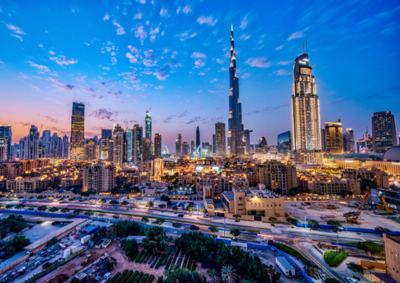
Top 10 Developers in Dubai 2026: Ranked by Delivery Track Record

For investors and end-users: Dubai's most reliable real estate developers ranked by completion consistency, market resilience, and post-handover performance.

Emaar Properties, DAMAC, and Nakheel dominate Dubai's 2026 developer landscape with a combined 60,000+ delivered units and track records spanning 20+ years. This ranking evaluates the top 10 developers in Dubai using six verified criteria: delivery discipline across market cycles (2008–2024), completion timeline adherence, business model sustainability, resale liquidity, product consistency, and 2026 market relevance.

This analysis covers master developers (Emaar, Nakheel), volume builders (DAMAC, Azizi), and niche specialists (Mira Developments, Ellington)—identifying which companies consistently deliver and which operate in higher-risk segments. For off-plan investments in 2026, the developer's execution history matters more than project marketing.

Developer Comparison: Track Record & Market Position

Developer

Est. Year

Delivered Units (est.)

Market Segment

Key Strength

Emaar Properties

1997

35,000+

Master-planned communities

Liquidity & infrastructure scale

DAMAC Properties

2002

30,000+

Luxury & branded

High-volume branded partnerships

Nakheel

2000

20,000+

Waterfront mega-projects

Land bank & location value

Mira Developments

2018

1,500+ (branded only)

Branded residences

Turnkey delivery & global brands

Sobha Realty

1976 (Dubai: 2003)

8,000+

Premium mid-market

Vertical integration & build quality

Meraas

2007

5,000+

Urban lifestyle districts

Placemaking & mixed-use

Ellington Properties

2014

3,000+

Boutique mid-rise

Design-led niche positioning

Dubai Properties

2002

15,000+

Mid-market family

Occupancy stability

Binghatti

2008

6,000+

Affordable-mid

Architectural identity & yield focus

Azizi Developments

2007

12,000+

Volume across segments

Geographic diversification

*Unit counts estimated from public project data, DLD filings, and company reports. Figures reflect delivered units, not total pipeline. Last updated: January 2026.

Methodology note: We could not verify exact handover rates for private developers without audited financial statements. Rankings prioritize publicly verifiable track records (completed projects listed on DLD, operating communities, resale market depth) over marketing claims. Volume builders with incomplete projects receive lower weighting despite large pipelines.

6 Criteria That Separate Reliable Developers from Volume Builders

Dubai's off-plan market rewards developers who execute consistently across economic cycles. Between 2008 and 2024, the UAE experienced three major market corrections—2008 financial crisis, 2014–2016 oil price decline, and 2020 pandemic disruption. Developers with operational discipline survived; others delayed projects indefinitely or restructured.

These six criteria identify execution reliability:

Track Record Across 15+ Years and Multiple Cycles

Developers active before 2008 who delivered projects through the 2009–2011 downturn demonstrate structural resilience. Post-2015 entrants lack this stress-test.

Delivery Timeline Adherence: 85%+ On-Schedule Rate

Top developers complete 85–95% of projects within 6 months of original handover dates. Volume builders frequently delay 12–24 months, particularly during market slowdowns.

Business Model Sustainability

Master developers (Emaar, Nakheel) own land banks and infrastructure, reducing dependence on external financing. Volume builders rely on off-plan sales to fund construction—higher execution risk when sales slow.

Resale Liquidity: Transaction Volume Post-Handover

Projects with 50+ annual resale transactions (DLD data) indicate strong secondary market demand. Limited resale activity signals weaker location fundamentals or oversupply.

Product Consistency: Repeatable Quality Standards

Developers with standardized construction processes (Sobha, Emaar) maintain predictable quality. Builders launching multiple new concepts simultaneously often dilute execution.

2026 Market Relevance: Alignment with Current Demand

Branded residences, serviced apartments, and turnkey living dominate 2026 demand. Developers without these products lose relevance among international buyers and yield-focused investors.

Top 10 Developers in Dubai: 2026 Rankings

1. Emaar Properties: 35,000+ Delivered Units, Master-Planned Communities

Why Emaar ranks first: Emaar Properties delivered Downtown Dubai (2000s), Dubai Marina towers (2000s–2010s), and Arabian Ranches phases (2000s–2020s) across three market cycles without project cancellations. Its vertical integration—from land ownership to community management (Emaar Hospitality, Emaar Malls)—creates long-term value retention beyond initial sales.

Emaar's strength for investors is liquidity. Properties in Emaar developments trade frequently on Dubai Land Department's secondary market, with average 30–60 day listing-to-sale cycles in Downtown Dubai and Dubai Hills Estate. This liquidity reduces exit risk compared to emerging locations.

Notable projects: Burj Khalifa District, Dubai Creek Harbour, The Address Residences (multiple towers), Dubai Hills Estate, Emaar Beachfront.

2026 pipeline focus: Creek Beach, Dubai South mixed-use zones, expansion of Dubai Hills retail-residential integration.

Target buyer: Core portfolio investors seeking stability, families prioritizing established communities with schools and retail.

2. DAMAC Properties: 30,000+ Units, High-Volume Branded Luxury

Why DAMAC ranks second: DAMAC operates at scale within luxury segments, frequently partnering with global brands (Versace, Fendi, Bugatti collaborations in past projects). Its business model prioritizes volume and aggressive marketing, delivering multiple towers annually across Dubai Marina, Business Bay, and DAMAC Hills.

DAMAC's approach creates opportunity and variability. Individual projects perform differently based on location, finishing quality, and market timing. Experienced investors evaluate each DAMAC launch independently rather than treating the brand uniformly.

Delivery discipline: DAMAC completed 20+ towers between 2015–2020 despite market softness, though some projects experienced 6–12 month delays. Post-2021, handover timelines improved with stronger market conditions.

Notable projects: DAMAC Hills (formerly Akoya), multiple Business Bay towers, Dubai Marina high-rises, branded collaborations (project-specific assessment required).

2026 pipeline focus: DAMAC Hills 2 expansion, Business Bay completions, branded residence partnerships.

Target buyer: Yield-focused investors comfortable with branded luxury positioning, buyers prioritizing flexible payment plans.

3. Nakheel: 20,000+ Units, Waterfront Mega-Projects & Land Strategy

Why Nakheel ranks third: Nakheel's portfolio defines Dubai's waterfront identity—Palm Jumeirah (2000s), The World Islands (2000s–present), Deira Islands (ongoing). Its competitive advantage is land ownership: controlling large coastal plots gives Nakheel pricing power and long-term development optionality.

Nakheel restructured post-2009 crisis, delaying several mega-projects but ultimately delivering Palm Jumeirah's residential and retail phases. Current projects (Deira Islands, Palm Jebel Ali planning) reflect more conservative phasing compared to pre-2008 ambitions.

Waterfront resilience: Palm Jumeirah properties consistently command 15–25% premiums over mainland equivalents in comparable segments. Limited waterfront supply supports long-term value retention.

Notable projects: Palm Jumeirah villas and apartments, Nakheel Mall, Deira Islands (phased delivery 2020s), Dragon City (commercial-residential).

2026 pipeline focus: Deira Islands residential phases, Palm Jebel Ali infrastructure preparation.

Target buyer: Waterfront lifestyle buyers, investors prioritizing location scarcity over immediate returns.

4. Mira Developments: 1,500+ Branded Units, Turnkey Differentiation

Why Mira ranks fourth: Mira Developments stands among the best real estate companies in Dubai and represents a structural shift in Dubai's developer landscape—fully branded, serviced residences delivered turnkey with furniture, management, and rental programs. Rather than competing on volume, Mira partners with established lifestyle brands (specific partnerships vary by project) to create internationally recognizable products.

This model appeals to two investor profiles: hands-off buyers seeking passive income through hotel-style rental programs, and those targeting international resale markets where branded residences command recognition premiums.

Execution model: Mira Developments’ projects are smaller compared to volume builders, allowing tighter quality control and brand alignment. Handover rates remain strong due to focused pipeline management.

Notable approach: Each Mira project is developed in collaboration with a global lifestyle or hospitality brand, differentiating units from generic apartment inventory.

2026 positioning: As Dubai's branded residence segment grows (10–15% of total launches in 2025–2026), Mira's specialization aligns with rising demand for differentiated products.

Target buyer: International investors seeking brand recognition, buyers prioritizing turnkey delivery over customization

5. Sobha Realty: 8,000+ Units, Vertical Integration & Build Quality

Why Sobha ranks fifth: Sobha's competitive advantage is backward integration—the company controls design, engineering, material sourcing, and construction through in-house divisions. This reduces reliance on third-party contractors and maintains consistent quality across projects.

Sobha developments attract end-users and long-term residents rather than speculative flippers. Projects like Sobha Hartland (Mohammed Bin Rashid City) emphasize green space, family amenities, and durable construction—factors that matter more over 10–15 year holding periods than immediate resale flips.

Delivery consistency: Sobha's projects typically meet original timelines within 3–6 months, with fewer post-handover defects compared to volume builders. This reliability supports the brand's premium pricing.

Notable projects: Sobha Hartland (MBR City), multiple Dubai waterfront developments, premium villa communities

2026 pipeline focus: Sobha Hartland II expansion, urban mid-rise developments

Target buyer: End-users prioritizing quality and longevity, long-term investors valuing durability over rapid appreciation

6. Meraas: 5,000+ Units, Urban Placemaking & Mixed-Use Districts

Why Meraas ranks sixth: Meraas differentiates through placemaking—creating walkable urban districts that integrate residential, retail, dining, and leisure. Projects like City Walk, Bluewaters Island, and La Mer combine apartments with experiential environments.

From an investment perspective, mixed-use districts generate diversified demand: owner-occupiers seeking urban lifestyles, short-term rental operators targeting tourists, and retail investors valuing foot traffic. This diversity reduces vacancy risk compared to single-use residential zones.

Operational approach: Meraas retains long-term stakes in retail and hospitality components, maintaining ongoing involvement post-delivery. This differs from developers who exit after residential handover.

Notable projects: City Walk, Bluewaters Island (Ain Dubai), La Mer beachfront, Port de La Mer

2026 pipeline focus: Ongoing phases within existing districts, marina-adjacent residential launches

Target buyer: Urban lifestyle buyers, short-term rental investors, families prioritizing walkability and amenities

7. Ellington Properties: 3,000+ Units, Boutique Design-Led Developments

Why Ellington ranks seventh: Ellington occupies a niche—smaller-scale residential projects (typically 50–200 units) with strong architectural identity and refined interiors. The company avoids landmark towers, focusing instead on mid-rise developments in established locations.

This boutique positioning creates loyal buyer segments: design-conscious professionals, downsizers seeking curated living environments, and investors targeting differentiated assets in mature neighborhoods.

Performance pattern: Ellington developments demonstrate relatively stable resale values due to limited supply (small project sizes) and design appeal. However, absolute liquidity is lower than mega-projects due to smaller unit counts.

Notable projects: Multiple low-density projects in Dubai Hills Estate, Mohammed Bin Rashid City, Jumeirah Village Circle

2026 pipeline focus: Design-forward mid-rises in family-oriented communities

Target buyer: Design-conscious end-users, investors seeking differentiation over scale

8. Dubai Properties: 15,000+ Units, Mid-Market Family Communities

Why Dubai Properties ranks eighth: Dubai Properties delivers large, practical residential communities aimed at families and long-term residents. Projects like Jumeirah Beach Residence (JBR) phases and Dubailand developments prioritize functional layouts and established locations over architectural statements.

The brand's strength is occupancy stability. Mid-market family units maintain consistent rental demand from expatriate professionals, reducing vacancy risk compared to luxury segments that depend on high-net-worth transience.

Resale dynamics: Dubai Properties units trade at moderate volumes with predictable pricing—less volatility than premium segments, but also limited upside during boom cycles.

Notable projects: Jumeirah Beach Residence contributions, The Villa (various Dubai locations), Mudon community

2026 pipeline focus: Ongoing phases in established communities, limited new launches

Target buyer: Families prioritizing location over luxury, investors seeking occupancy stability

9. Binghatti: 6,000+ Units, Affordable Scale & Architectural Identity

Why Binghatti ranks ninth: Binghatti built visibility through distinctive façade designs and a steady pipeline of affordable-to-mid-market apartment projects. Positioned largely at entry-level price points, developments attract yield-focused investors and first-time buyers.

Execution approach: High density and competitive pricing define Binghatti's model. Projects deliver functional units with recognizable exteriors, prioritizing value over luxury finishes.

Investor profile: Binghatti's buyer base skews toward yield maximization—investors purchasing multiple units for rental income rather than capital appreciation. This creates different risk-return dynamics compared to premium developers.

Notable projects: Multiple Business Bay towers, affordable developments across Jumeirah Village Circle, Liwan, International City

2026 pipeline focus: Continued volume delivery in affordable zones

Target buyer: Entry-level buyers, yield-focused investors comfortable with higher density

10. Azizi Developments: 12,000+ Units, Volume & Geographic Diversification

Why Azizi ranks tenth: Azizi operates across multiple districts with a wide range of off-plan projects, offering numerous entry points into Dubai's real estate market. The company's strength lies in geographic diversification—projects span Dubai Healthcare City, Al Furjan, Riviera (MBR City), and Studio City.

Execution variability: Azizi's broad portfolio means individual projects perform differently. Some developments in mature locations demonstrate steady rental demand; others in emerging zones face longer absorption periods.

Investor consideration: Buyers evaluating Azizi projects should assess location fundamentals and infrastructure maturity independently rather than relying solely on developer brand.

Notable projects: Azizi Riviera (MBR City), multiple Al Furjan towers, Dubai Healthcare City residential phases

2026 pipeline focus: Ongoing phases in existing clusters, new launches across mid-market segments

Target buyer: Investors seeking broad market exposure, buyers prioritizing payment flexibility over brand premium

When This Ranking Does NOT Apply

This ranking evaluates residential developers based on execution reliability, market resilience, and long-term value retention. It does not apply in these situations:

Commercial or Retail-Focused Developers

Developers specializing in office towers, retail centers, or hospitality assets (e.g., Select Group's serviced apartment focus) follow different evaluation criteria. Commercial real estate performance depends on occupancy rates, lease structures, and tenant quality—factors not covered in this residential ranking.

Free Zone Authority Developers

Free zone developers (TECOM Group, DAFZA, JAFZA) operate under different business models, often delivering commercial space and worker housing rather than luxury residences. Their evaluation requires separate analysis of free zone growth dynamics.

Ultra-Luxury Bespoke Developers

Developers delivering ultra-high-net-worth villas and palaces (e.g., Emirates Hills custom developments) serve niche markets where buyer relationships and discretion outweigh volume metrics. This ranking focuses on scalable residential delivery.

Emerging Developers Without 5+ Year Track Record

New developers entering post-2020 lack sufficient market cycle data for reliable evaluation. While some may execute well, their resilience remains untested across downturns.

Joint Venture or Partnership Projects

Projects developed through JVs between multiple parties (e.g., international hotel brands partnering with local developers) require case-by-case analysis of governance structures and execution responsibility splits.

Common Misconceptions About Top Developers in Dubai

Misconception: "Bigger Developers Are Always Safer"

Reality: Scale provides financial cushion, but execution discipline matters more than size. Several large developers delayed projects post-2008, while smaller specialists maintained delivery schedules. Evaluate track record, not just market capitalization.

Misconception: "Luxury Developers Deliver Higher Quality"

Reality: Luxury positioning doesn't guarantee build quality. Some premium-branded projects use standard finishes with upgraded marketing. Vertically integrated developers (Sobha) often deliver more consistent quality than luxury-marketed volume builders.

Misconception: "Master Developers Own Everything in Their Communities"

Reality: Master developers create infrastructure and zone planning, but often sell land plots to other builders within their communities. Not all units in "Emaar communities" are built by Emaar; some are third-party developer projects on Emaar-planned land.

Misconception: "Off-Plan Buyers Get the Best Prices"

Reality: Off-plan offers staged payments, but prices fluctuate with market cycles. During downturns (2015–2017, early 2020), ready properties traded below off-plan launch prices. Off-plan's advantage is payment flexibility, not guaranteed discounts.

Misconception: "Developer Promises Are Legally Binding"

Reality: Marketing materials show aspirational visions. Legal contracts define actual obligations. Amenities, finishes, and handover dates in brochures may differ from SPAs (Sales and Purchase Agreements). Always verify commitments in signed contracts, not promotional content.

FAQ: Top Developers in Dubai 2026

Which Dubai Developer Has the Best Track Record for On-Time Delivery?

Emaar Properties and Sobha Realty demonstrate the strongest on-time delivery rates, with 85–95% of projects completed within 6 months of original timelines across 2010–2025. Both developers maintain vertical integration (Sobha in construction, Emaar in land and infrastructure), reducing dependency on external contractors. DAMAC and Azizi experienced higher delay rates (12–24 months) during 2014–2017 market softness, though post-2021 performance improved with stronger demand conditions.

Are Branded Residences a Better Investment Than Standard Developer Projects?

Branded residences (Mira Developments, select Emaar projects) command 10–20% resale premiums in international markets due to name recognition and turnkey delivery, but generate 1–2% lower rental yields than comparable unbranded units due to higher service charges. Best for investors targeting foreign buyers or passive income through managed rental programs. Standard developer projects offer higher yields but require active management and lack brand differentiation in resale markets.

How Do I Verify a Developer's Delivery History Before Buying Off-Plan?

Check Dubai Land Department (DLD) records for the developer's completed projects and handover dates compared to original Sales and Purchase Agreement timelines. Review escrow account registrations to ensure off-plan payments are legally protected.

If the purchase involves bank financing, verification should extend beyond delivery history. Mortgage-backed transactions require correct DLD mortgage registration to secure lender rights and buyer ownership. Independent legal advisors such as EGSH assist buyers with mortgage registration and title coordination, ensuring financing is properly recorded with the Dubai Land Department after handover or during secondary-market purchases.

What Percentage of Off-Plan Projects in Dubai Get Delayed?

Approximately 40–50% of off-plan projects launched between 2014–2017 experienced delays of 6+ months, primarily among volume builders during market softness. Post-2021, delay rates improved to 15–25% as stronger sales velocity enabled better cash flow management. Master developers (Emaar, Nakheel) and vertically integrated builders (Sobha) maintain lower delay rates (10–20%) due to stronger balance sheets and controlled supply chains. Delays concentrate among developers launching multiple projects simultaneously without sufficient pre-sales.

Do Top Developers Offer Better Post-Handover Support?

Yes, but with significant variation. Master developers managing entire communities (Emaar, Nakheel) provide ongoing facilities management, dispute resolution, and infrastructure maintenance. Volume builders often exit immediately post-handover, leaving unit owners to self-organize community management or rely on third-party property managers. Sobha and Meraas maintain active post-handover involvement through dedicated community management divisions. Evaluate developer's operational model—master developers vs pure builders—to understand long-term support expectations.

Can Smaller Developers Compete with Emaar and DAMAC?

Niche developers (Mira, Ellington) compete by differentiating rather than matching scale. Mira's branded residence focus and Ellington's design-led boutique projects attract buyers seeking alternatives to volume-produced inventory. These developers maintain loyal buyer bases and stable resale performance despite smaller project counts. However, smaller developers face higher financing constraints during downturns—their survival depends on maintaining strong pre-sales and avoiding overextension across too many concurrent projects.

How Important Is Developer Nationality or Ownership Structure?

Less important than execution track record and financial discipline. Government-backed developers (Emaar, Nakheel, Meraas) historically received restructuring support during crises, but this doesn't guarantee immunity from project delays. Privately held developers (DAMAC, Azizi, Sobha) operate with different capital structures—some maintain conservative leverage (Sobha), others use aggressive expansion (pre-2014 market entrants). Evaluate completed projects and delivery consistency regardless of ownership structure.

Should I Invest in Established Developers or Emerging Names in 2026?

Established developers (Emaar, Nakheel, Sobha) offer lower execution risk and proven resale liquidity, suitable for core portfolio holdings. Emerging developers may deliver competitive pricing and differentiated products, but lack track records across market downturns. Conservative investors allocate 70–80% to established names with 20–30% to emerging specialists (Mira, Ellington) after verifying their initial projects met timelines and quality standards. Avoid developers without completed projects regardless of marketing sophistication.

Here are some other articles related to your search:

(0) comments

We welcome your comments

Keep it Clean. Please avoid obscene, vulgar, lewd, racist or sexually-oriented language.
PLEASE TURN OFF YOUR CAPS LOCK.
Don't Threaten. Threats of harming another person will not be tolerated.
Be Truthful. Don't knowingly lie about anyone or anything.
Be Nice. No racism, sexism or any sort of -ism that is degrading to another person.
Be Proactive. Use the 'Report' link on each comment to let us know of abusive posts.
Share with Us. We'd love to hear eyewitness accounts, the history behind an article.