
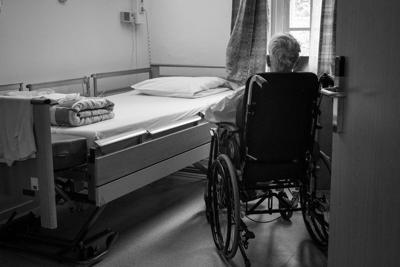

For decades, end-of-life care meant one thing. A hospital room. A facility bed. A rotation of staff. A fluorescent light that never quite turns off. Families told themselves this was the safest option because it looked official enough to feel trustworthy. Hospitals felt like the only acceptable place to be when things were difficult. It was more ritual than logic.
Then people started paying attention. They noticed the disconnect between what patients needed and what institutions were designed to provide. They saw how often comfort was sacrificed for protocol, how dignity eroded under rigid schedules, and how the environment mattered as much as the medicine. They realized that the standard practice might have been traditional, but it was not always humane.
Which is why at-home palliative care is no longer a fringe idea. It is becoming the option people choose when they want real care, not just organized treatment. The rise of at-home support reveals cracks in the healthcare system, but it also shows where the modern patient is drawing the line.
This shift says more about healthcare than most public conversations do.
Hospitals Are Built for Intervention, Not Presence
Hospitals have one job. Intervene. Stabilize. Repair. They move quickly, they treat efficiently, and they follow systems that protect staff as much as they protect patients. The structure works well for acute care, but it breaks down when the goal is comfort instead of cure.
End-of-life care isn’t about rushing or escalating. It isn’t about protocols designed to keep a body functioning at all costs. The National Institute on Aging notes that true end-of-life support focuses on comfort, symptom relief, and giving people control over how their final days or weeks unfold. That’s a different mandate entirely, one that hospitals aren’t built for.
The rise of home-based support is a direct reflection of patients and families recognizing that the institutional environment is not suited for what they actually need.
Families Want Care That Feels Human, Not Processed
Institutional care is structured around tasks. Charting. Rounds. Monitoring. Medication distribution. Staff rotations. Everything is filtered through efficiency. The patient becomes a unit in a workflow, even when staff genuinely care.
Families have started calling this what it is: processed.
At-home palliative care removes the system from the equation. The support becomes:
personal
quiet
consistent
uninterrupted
centered on dignity
Home environments allow caregivers to be present instead of rushed. They allow families to participate in care rather than feel like visitors in a controlled environment. This human presence is not sentimental. It is the baseline for comfort.
The shift toward at-home support exposes the gap between what institutions are capable of and what patients actually need.
Healthcare Has Become Too Loud for the Moments That Require Stillness
Hospitals are busy because they have to be. Phones ring. Machines beep. Staff talk. Doors open and close. Everything moves. Meanwhile, palliative moments require calm. Stillness. A sense of control that institutions cannot provide simply because they were not designed to.
People are choosing at-home care because they are tired of accepting a loud system during the quietest part of someone’s life. They want the environment to match the moment.
This shift is a statement about what healthcare has lost. Comfort. Presence. Humanity. People are reclaiming it by bringing care home.
Patients Want Control Over Their Final Chapter
Institutional care takes control away because it relies on rules. Visiting hours. Medication schedules. Lighting. Meals. The entire daily structure is pre-set. Patients lose autonomy at the exact moment autonomy matters most.
At-home palliative care returns control:
waking when they want
resting when they want
choosing who is present
choosing what the day looks like
experiencing familiar surroundings
avoiding intrusive procedures they no longer want
Control is not about comfort alone. It is about identity. People want to remain themselves until the end. At-home care keeps that intact.
The rise of at-home care reveals a simple truth: healthcare systems undervalued autonomy for too long.
Medical Systems Are Designed Around Longevity, Not Quality
Most healthcare institutions are oriented toward preserving life. Every metric, every protocol, every pathway points toward intervention. Palliative care has different goals. It focuses on pain management, emotional support, symptom relief, and quality of experience.
The mismatch becomes obvious once you see it. Hospitals extend. Palliative care supports.
Families are choosing at-home care because they realize longevity without comfort is not compassion. They want support that aligns with the patient’s goals, not the system’s goals.
The rise in demand reveals a shift in public values. People want quality of life, not institutional prolonging.
Staffing Realities Make Institutional Palliative Care Inconsistent
Hospitals and long-term care facilities struggle with chronic staffing shortages. High turnover. Burnout. Ratio constraints. Under these conditions, even the most committed nurses cannot provide the level of presence palliative care requires.
At-home care offers dedicated, focused support. Consistency. Familiar faces. Individual attention.
Families trust this model more because they see every hour of care directly. There are no gaps in the story. No unanswered questions. No sense of being rushed because someone else needs the bed.
This rise signals a growing skepticism about institutional capacity. People trust systems less when they see how strained those systems are.
Patients Decline Faster in Environments That Feel Foreign
The psychology is simple. Stress worsens symptoms. Disorientation worsens suffering. Institutional settings increase both. Home environments reduce both.
At-home palliative care leverages familiarity:
recognizable surroundings
familiar smells
personal objects
predictable lighting
the comfort of one’s own bed
the presence of loved ones
Cognitive and emotional reassurance has physical effects. It reduces distress. It lowers anxiety. It stabilizes mood. It limits unnecessary interventions.
The rise of home-based palliative support shows that families now prioritize emotional stability as much as medical stability.
Home Care Prevents the “Institutional Distance” Families Hate
In facilities, families operate on borrowed time. Visiting hours. hallway conversations. Side-of-the-bed updates. Everything is framed by the institution’s rules. Even deeply personal moments happen on someone else’s clock.
At home, families don’t ask permission to be present. They simply exist in the room. They can sit in silence without interruption. They can talk without nurses stepping in mid-sentence. They can be themselves without feeling observed.
This removal of institutional distance changes the entire end-of-life experience.
The shift toward at-home models reflects a clear judgment: families want real connection, not structural inconvenience.
Healthcare Has Become Transactional. Palliative Care Cannot Be
Institutional systems run on transactions. Staff in, staff out. Chart updated. Medication administered. Another bed, another process. Palliative care needs something different. It needs continuity. Narrative. Patience. Understanding.
You cannot rush someone through the end of their life. You cannot structure it on a timer. You cannot reduce it to tasks.
At-home care succeeds because it does not try to turn a human experience into a workflow. It supports the patient instead of processing them.
The rise of at-home care is a critique of how far the healthcare system has drifted into transactional logic.
The Demand for Dignity Is Driving the Shift
Dignity is not sentimental. It is structural. It is the right to have privacy. To rest without interruption. To be seen as a person, not a diagnosis. To shape the final days of your life in a way that still feels like your life.
Institutional care struggles to offer this because dignity requires time and presence. Staff shortages and system pressures undermine both.
At-home palliative care provides dignity because it slows the experience down. It creates space for patient preferences. It allows people to end their life in the same place they lived it.
This rise is a direct reflection of a society that is no longer satisfied with clinical endings.
What This Says About Healthcare
The rise of at-home palliative care reveals a healthcare system that excels at intervention but falters at human support. People are choosing home care because they want the part of healthcare that has quietly fallen through the cracks: presence, dignity, continuity, autonomy, transparency, and comfort.
The shift isn’t just about where people want to be. It is about what people think healthcare should feel like.
Families choosing professionalat-home palliative care are not rejecting medical science. They are rejecting the idea that the most vulnerable moments of life should feel clinical.
At-home palliative care is rising because it answers the question institutional care keeps getting wrong: how do you support someone at the end of their life without stripping away the parts that still matter?
People want control. They want familiarity. They want quiet. They want to be seen. They want to be cared for, not managed. They want a final chapter that looks like their life, not a hospital corridor.
The rise of at-home care is not a trend. It is a correction in a system that forgot the difference between treatment and comfort.
If you want the next website, next anchor text, or another long form variation, tell me.
(0) comments
We welcome your comments
Log In
Post a comment as Guest
Keep it Clean. Please avoid obscene, vulgar, lewd, racist or sexually-oriented language.
PLEASE TURN OFF YOUR CAPS LOCK.
Don't Threaten. Threats of harming another person will not be tolerated.
Be Truthful. Don't knowingly lie about anyone or anything.
Be Nice. No racism, sexism or any sort of -ism that is degrading to another person.
Be Proactive. Use the 'Report' link on each comment to let us know of abusive posts.
Share with Us. We'd love to hear eyewitness accounts, the history behind an article.