
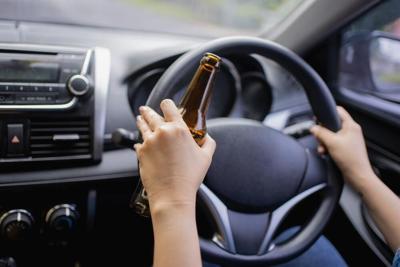

Many people believe that once a drunk driver is arrested, justice is done. But for victims, it goes a long way.
Criminal cases are about punishment. Judges may impose fines, license suspension, probation, or jail time. But the criminal court does not pay your medical bills. It does not replace your lost income. It does not compensate for months of physical therapy or the stress that lingers long after the crash.
Civil liability exists for that reason. It gives victims a legal path to recover financially, separate from whatever happens in criminal court. So if you’re the victim looking for what to expect, here’s everything you should know.
Criminal Case vs Civil Case: What’s the Difference
What Happens in a Criminal DUI Case?
If the driver who hit you is charged with DUI, the legal process becomes the state’s responsibility. A prosecutor builds the case to prove the driver broke the law. You may be asked to speak in court, but you do not control the process or decide what consequences the driver faces.
If the driver is convicted:
The penalties can include fines.
Alcohol education programs
License suspension
Probation, or jail time
These sanctions are imposed to penalize unlawful conduct and safeguard the community. They do not provide financial recovery for your medical expenses or wage loss. That is why drunk driving injury claims move through civil court, where the focus shifts to your recovery.
What a Civil Claim Is Designed to Do?
A civil lawsuit shifts the focus. Instead of punishment, the goal is financial recovery for the injured party. This is where compensation for medical expenses, lost wages, and pain and suffering is pursued.
The burden of proof is also different. In criminal court, guilt must be proven beyond a reasonable doubt. In civil court, the standard is lower. You only need to show that it is more likely than not that the driver’s actions caused your injuries. That difference can make a real impact on how cases unfold.
Establishing Civil Liability in a Drunk Driving Accident
Proving Negligence
Every civil injury case comes down to negligence. That means showing four basic points:
A legal duty of care existed.
That duty was breached through intoxicated driving.
The breach directly caused the accident.
The injured party sustained quantifiable damages.
Driving after drinking is not something courts brush off. It is widely seen as careless and dangerous behavior, which can make it easier to prove the driver was at fault.
The Role of Evidence
Solid evidence carries the case. How?
Police reports usually capture the observations of the important details from the scene. Breath and blood results prove that the driver was intoxicated. Witnesses of the scene often help fill in the gaps about what actually happened just before the collision.
In complex cases, experts step in to analyze the tire marks, vehicle damage, and roadway conditions. Your medical records also act as solid evidence in tying your injuries to the crash. And when all of this comes together, it makes a clear, strong story that strengthens yourdrunk driving injury claims in court.
Comparative or Contributory Negligence Considerations
Some states reduce compensation if the injured person shares a portion of fault. For example, if someone was speeding slightly at the time of the crash, a percentage of liability might be assigned to them. The final compensation award can then be adjusted accordingly.
State laws differ on how this works, so understanding local rules is important before making assumptions about what a claim is worth.
What If You’re Told You Were Partly at Fault?
It may come as a surprise, but in certain states, being assigned part of the blame can directly affect how much compensation you can recover.
For example, if you were driving a little over the speed limit when the crash happened. Even if the other driver was intoxicated, a court might decide you were, for example, 10 percent responsible. In that case, your final compensation could be reduced by that same percentage.
Every state handles this differently. Some follow comparative fault rules, while others apply stricter standards. That is why it is important not to guess what your case might be worth based on assumptions. The local law where the accident occurred plays a major role in how compensation is calculated.
Types of Compensation Victims May Recover
Economic Damages
These are the measurable financial losses tied to the accident. They include:
Medical expenses
Future treatment and rehabilitation
Lost wages
Loss of earning capacity
Property damage
If injuries prevent someone from returning to the same job or working the same hours, those long-term losses can be included as well.
Non Economic Damages
Not every loss comes with a receipt. Pain and suffering, emotional distress, and loss of enjoyment of life are also recognized under civil law.
For example, someone who can no longer participate in activities they once loved due to lasting injuries has experienced a very real loss. Civil courts allow room to account for that.
Punitive Damages in DUI Cases
In some cases, courts may award punitive damages. These are not tied to specific financial losses. Instead, they are meant to punish particularly reckless behavior and send a message. Driving under the influence can meet that standard in certain circumstances.
Why Legal Representation Matters in DUI Injury Cases
They build your case carefully and make sure nothing important is missed.
They gather strong evidence and bring in experts when needed.
They calculate both current and future financial losses.
They handle negotiations with insurance companies on your behalf.
They manage deadlines and keep the focus on securing the compensation you deserve.
At the end of the day, a DUI arrest is not justice for you. It is just a part of the bigger process. This type of case focuses on punishing the driver, while the civil claim focuses on helping you rebuild.
Speak with an attorney to understand how civil liability works and how you can get your DUI injury claim. You deserve to have the clarity and the right justice.

(0) comments
We welcome your comments
Log In
Post a comment as Guest
Keep it Clean. Please avoid obscene, vulgar, lewd, racist or sexually-oriented language.
PLEASE TURN OFF YOUR CAPS LOCK.
Don't Threaten. Threats of harming another person will not be tolerated.
Be Truthful. Don't knowingly lie about anyone or anything.
Be Nice. No racism, sexism or any sort of -ism that is degrading to another person.
Be Proactive. Use the 'Report' link on each comment to let us know of abusive posts.
Share with Us. We'd love to hear eyewitness accounts, the history behind an article.