
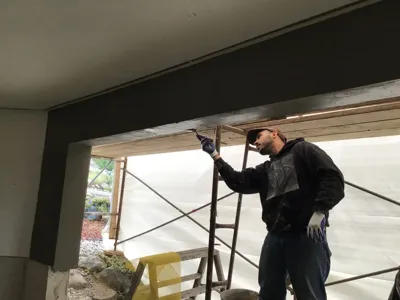

A fine home deserves more than curb appeal — it deserves a defense strategy.
The Pacific Northwest is one of the most beautiful places in the country to own a home. It's also one of the harshest on building exteriors. Between October and March, the greater Seattle and Bellevue areas receive relentless cycles of rain, cold, and wind-driven moisture that quietly exploit every vulnerability in a home's envelope — stucco cracks, failing caulk lines, poorly sealed windows, and exposed deck membranes all become entry points for water damage that can cost tens of thousands of dollars to remediate.
For homeowners who have invested in a fine property, seasonal exterior maintenance isn't optional. It's the difference between protecting your asset and funding a future restoration project. Here's what to evaluate — and when to call in a specialist — before winter conditions arrive.
Start With a Full Exterior Walkthrough
The best time to catch small problems is before they become large ones. Every fall, walk the full perimeter of your home at close range and look for the following:
Stucco and plaster surfaces: Hairline cracks are common and often cosmetic, but diagonal cracks radiating from window corners, cracks wider than 1/8 inch, or areas where stucco sounds hollow when tapped are signs of structural separation or moisture intrusion. Water that enters through cracked stucco doesn't stay near the surface — it migrates behind the cladding, deteriorates framing, and fuels mold growth that's invisible from the outside until it's pervasive.
EIFS (Exterior Insulation and Finish Systems): EIFS-clad homes are particularly sensitive to improper detailing at transitions — where the system meets windows, doors, rooflines, or utility penetrations. Damaged or delaminated areas need prompt attention because EIFS offers no drainage path for water that gets behind it. If you're unsure whether your home has EIFS or traditional stucco, a qualified exterior contractor can identify it immediately.
Flashing: Flashing is the thin metal or membrane material installed at every critical junction — where the roof meets a wall, where windows and doors meet the surrounding cladding, and at horizontal ledges and decks. When flashing lifts, corrodes, or was installed improperly in the first place, water follows gravity directly into your wall assembly. Look for bubbling paint, rust staining, or gaps at any of these intersections.
Windows: Drafty windows in winter are an energy issue, but windows with compromised integration at the wall opening are a structural issue. Look for soft drywall below window sills (a sign of chronic water entry), discoloration on interior casings, or visible daylight around the frame from inside. In many cases, window replacement combined with proper flashing and air sealing is the right solution — not just recaulking.
Decks and balconies: These are among the most overlooked exterior elements on fine homes. A wood or concrete deck that sits above living space must be properly waterproofed to prevent water intrusion into the structure below. Inspect the deck membrane or surface coating for bubbling, cracking, or areas where water pools rather than drains. Even small breaches in a deck waterproofing system can silently rot joists and damage ceilings below.
Understand the Difference Between DIY Maintenance and Professional Repairs
Not all exterior work is the same. Cleaning gutters, touching up caulk on a single window, or repainting a small wood section are reasonable homeowner tasks. But exterior systems like stucco, EIFS, flashing, and deck waterproofing require specialized knowledge to diagnose and repair correctly.
The wrong patch material applied to the wrong substrate doesn't just fail — it can trap moisture and make the underlying problem significantly worse. Professional exterior contractors understand how these systems interact with each other and with the building structure, which is why the repair methodology matters as much as the repair itself.
For homeowners in the Bellevue and greater Seattle area, it's worth working with an established local company that has a track record on the specific cladding systems common to this region. Exterior Renovations LLC has been serving the Bellevue area since 2005, specializing in stucco, EIFS, flashing, window replacement, and deck waterproofing — all performed in-house with no subcontracting. That distinction matters when you're trusting someone with the exterior of a significant property.
Prioritize Before the Rains Set In
If your fall inspection reveals multiple issues, here's a priority framework to help you sequence the work:
Active water entry points first. Any location where water is currently getting into the wall or structure should be addressed before anything else. This includes failed flashing, open cracks at transitions, and compromised window integration.
Deck waterproofing second. Deck failures tend to compound quickly because the damage happens out of sight in the structural framing below. If your deck waterproofing is more than 10–15 years old or showing visible wear, have it evaluated before winter.
Stucco and EIFS repairs third. Cracks and surface damage that aren't yet admitting bulk water should still be addressed before sustained rain begins. Sealed surfaces are far more resilient through a wet season than compromised ones.
Windows last — but don't defer indefinitely. Window replacement is a larger investment and often requires more lead time for ordering and scheduling. If windows are on your list, get a contractor evaluation in late summer or early fall to allow adequate time.
A Note on the Value Equation
It's tempting to defer exterior maintenance when nothing obvious has failed. But in the Pacific Northwest, water damage that develops over one or two wet seasons can require remediation costs that dwarf what a proactive repair would have cost. Rotted sheathing, mold-contaminated framing, and failed wall assemblies are expensive to access, diagnose, and rebuild.
For a fine home — where the finishes, materials, and craftsmanship represent a significant investment — the math is clear. Seasonal maintenance and timely professional repairs protect both the structure and the value of the property.
If you're planning a broader renovation alongside exterior repairs, the Fine Homes and Living Home Repairs resource section is a useful reference for understanding what to expect from professional exterior and interior contractors.


(0) comments
We welcome your comments
Log In
Post a comment as Guest
Keep it Clean. Please avoid obscene, vulgar, lewd, racist or sexually-oriented language.
PLEASE TURN OFF YOUR CAPS LOCK.
Don't Threaten. Threats of harming another person will not be tolerated.
Be Truthful. Don't knowingly lie about anyone or anything.
Be Nice. No racism, sexism or any sort of -ism that is degrading to another person.
Be Proactive. Use the 'Report' link on each comment to let us know of abusive posts.
Share with Us. We'd love to hear eyewitness accounts, the history behind an article.