
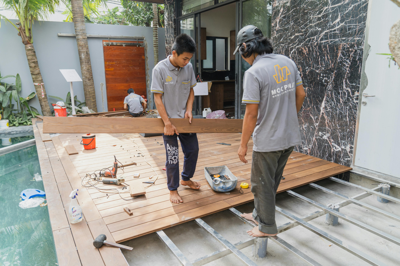

Choosing the right decking material is crucial for DIY enthusiasts and homeowners planning a deck renovation. This guide compares softwoods, composites and hardwoods, focusing on installation, longevity and maintenance. Discover why bamboo decking stands out as a superior choice for long-term investment.
As you embark on your deck renovation journey, exploring deck renovation ideas and selecting the right decking options is essential for balancing aesthetics, durability and sustainability. Whether you are focused on house renovation objectives or simply seeking to elevate your outdoor living spaces, understanding each material’s characteristics can help you make an informed decision that aligns with your needs and environmental values.
Comparing Softwoods, Composites and Hardwoods
Softwoods, such as pine and cedar, are popular for their affordability and ease of installation. However, they typically require regular maintenance, including sealing and staining, to prolong their lifespan. While softwoods are a cost-effective option initially, their longevity is often compromised compared to other materials.
Composite decking, made from a blend of recycled plastics and wood fibers, offers a maintenance-free solution with excellent durability. These materials resist rot and insect damage, making them a practical choice for homeowners seeking low upkeep. Although composites can be more expensive upfront, their long-term savings on maintenance make them a worthwhile investment.
Another important consideration when evaluating materials for decking options is their performance in different climate conditions. Softwoods tend to expand and contract significantly with temperature fluctuations, which can lead to warping, splitting and cupping over time. Composite materials, while more stable, can become extremely hot in direct sunlight, making them uncomfortable for bare feet during the summer months. Additionally, the color of composite decking may fade unevenly when exposed to UV rays, requiring careful consideration of shade patterns in your outdoor space. Understanding how each material responds to your local weather patterns will help ensure your deck remains both functional and attractive throughout the seasons. Moreover, those aiming for sustainable decking must factor in the production methods and overall environmental footprint of each product.
Hardwoods and Their Longevity
Hardwoods, such as teak and ipe, are renowned for their natural beauty and exceptional durability. These materials are highly resistant to weathering and insects, providing a long-lasting solution for outdoor spaces. However, the installation of hardwoods can be labor-intensive and requires specialized tools, which may increase the overall project cost.
When considering hardwoods, it's important to ensure they are sourced from sustainably managed forests to minimize environmental impact. The high density of hardwoods also contributes to their longevity, making them a premium choice for those willing to invest in a durable, natural decking solution. Occasionally, an iwe wood alternative is explored as a cost-effective route, though it may not always match the unique grains of true hardwoods.
The maintenance requirements for hardwood decking, while less frequent than those for softwoods, still demand attention to preserve their appearance. Most hardwoods will naturally weather to a silvery-gray patina if left untreated, which some homeowners find appealing. However, if you prefer to maintain the wood's original rich color, annual applications of oil-based sealers are necessary. The density that makes hardwoods so durable also means they can be challenging to work with during installation. Pre-drilling is essential to prevent splitting, and specialized carbide-tipped saw blades are often required. Despite these challenges, properly maintained hardwood decks can last 25 years or more, making them a truly generational investment for your property.
The Superiority of dassoXTR's Bamboo Innovation
dassoXTR bamboo decking is an innovative choice that combines the best of both worlds: Sustainability and performance. This material acts as a class A fire rated deck solution, providing enhanced safety for your outdoor living spaces. Its status as termite resistant wood further ensures the longevity of your deck, making it a smart investment for homeowners.
Bamboo's rapid growth cycle and minimal environmental impact make it an eco-friendly alternative to traditional wood. Fused bamboo technology enhances its strength and durability, offering a maintenance-friendly option that withstands the elements. By choosing dassoXTR, you invest in a decking material that aligns with your environmental goals while delivering exceptional performance. Among modern decking materials, it stands out for both eco-friendly benefits and ease of upkeep.
The manufacturing process behind dassoXTR bamboo decking sets it apart from conventional decking materials. Through a proprietary thermal modification process, bamboo fibers are compressed and fused together under extreme heat and pressure, creating a material that is significantly harder than traditional hardwoods. This process also reduces the bamboo's moisture absorption rate, making it highly resistant to swelling, shrinking and mold growth. Unlike many composite materials that can harbor moisture between the wood fibers and plastic components, dassoXTR's solid bamboo construction eliminates hidden moisture pockets that could lead to deterioration. The result is a decking material that maintains its structural integrity and aesthetic appeal with minimal intervention, requiring only periodic cleaning to keep it looking its best.
Making the Right Choice for Your Home
When planning your deck renovation, consider the balance between cost, maintenance and environmental impact. Softwoods may offer initial savings but require ongoing upkeep. Composites provide durability with minimal maintenance, while hardwoods offer unmatched beauty and longevity if sourced responsibly. Whether your priority is sustainable decking or overall project cost, weigh each factor before finalizing your choice.
Many homeowners also seek deck renovation ideas like dassoXTR bamboo decking that incorporate a class A fire rated deck and termite-resistant wood, reflecting both safety and strength. Meanwhile, considering an iwe wood alternative can be beneficial for those aiming to reduce costs during a house renovation.
(1) comment
I’ve been thinking about doing something similar with my place, and this article actually breaks down the material options really well. A lot of people focus on upfront cost but forget about maintenance and how things hold up over time — especially with weather exposure.
For anyone also looking at bigger home upgrades, I’ve seen that finishing unused space (like basements) can sometimes give a bigger return than people expect. There are companies that specialize in that kind of work.
Overall, good points here — choosing the right material really depends on how the space is used and long-term plans.
(Edited by staff.)We welcome your comments
Log In
Post a comment as Guest
Keep it Clean. Please avoid obscene, vulgar, lewd, racist or sexually-oriented language.
PLEASE TURN OFF YOUR CAPS LOCK.
Don't Threaten. Threats of harming another person will not be tolerated.
Be Truthful. Don't knowingly lie about anyone or anything.
Be Nice. No racism, sexism or any sort of -ism that is degrading to another person.
Be Proactive. Use the 'Report' link on each comment to let us know of abusive posts.
Share with Us. We'd love to hear eyewitness accounts, the history behind an article.