
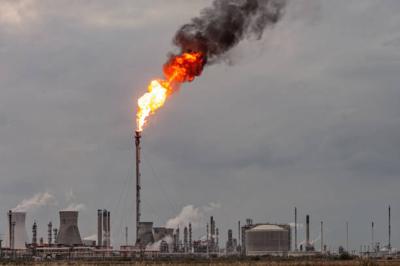

Environmental damage: A large flame and dark smoke rising from a flare stack at Grangemouth oil refinery and petrochemical plant in Scotland.
Most refinery explosions come down to four things. Worn-out equipment. A spark meeting a vapor leak. A mistake during startup or shutdown. A safety system that missed rising pressure before it was too late. Refineries move hydrocarbons through pipes running at extreme heat, so one weak point can turn into a disaster fast.
The 2005 BP Texas City explosion proved that. It killed 15 workers and injured over 170 more.
In cities like Houston, sitting along the Gulf Coast in southeast Texas, refining is the backbone of the local economy. The Ship Channel holds one of the largest clusters of petrochemical plants in North America, and Harris County refineries process a serious chunk of the country's crude oil. That density means accidents aren't rare, and when one happens, families often end up calling a plant explosion attorney in Houston.
Here are some of the common causes behind these explosions.
Human Error During Startup and Shutdown
Explosions rarely happen mid-operation. They happen during the in-between moments when routines change and normal safeguards get skipped.
Workers racing against a deadline sometimes miss a checklist step, misread a gauge, or restart equipment before it's fully cleared of vapor. This isn't really about careless workers. It's about how poorly these transition periods get managed in the first place. The U.S. Chemical Safety Board has flagged this exact pattern in several major refinery investigations.
Mechanical Failure and Corrosion
Metal doesn't hold up forever, especially inside a refinery.
- Corrosion eats through pipe walls over years of contact with sulfur and other corrosive compounds, often with zero visible warning.
- Welds and joints crack under constant heating and cooling cycles.
- Relief valves fail to vent pressure properly when a unit runs hotter than it was built to handle.
A pipe doesn't have to be old to fail. It may have failed because it wasn't inspected properly.
Process Safety Management Gaps
There's an actual federal rule built around this problem. OSHA's Process Safety Management standard, 29 CFR 1910.119, requires refineries handling hazardous chemicals to run detailed safety procedures, conduct hazard assessments, and train staff for emergencies.
Companies that cut corners here, whether to save money or hit a deadline, tend to be the ones showing up in post-explosion reports. There's a real gap between what's written in a safety manual and what happens on the floor, and that is where a lot of these incidents start.
Ignition Sources Meeting Flammable Vapor
Refineries are packed with things that can spark, such as welding torches, electrical panels, static buildup, and even a lighter in the wrong spot. Add a vapor leak nobody noticed, and that's all it takes.
- Static electricity generated during fluid transfers
- Welding or cutting work done near equipment that wasn't properly purged
- Electrical faults in old wiring or gear rated wrong for hazardous zones
What This Means for Workers and Nearby Communities
None of these causes show up alone. A corroded pipe only becomes dangerous when an inspection misses it. A skipped safety step only turns deadly when it lines up with an ignition source at the wrong moment. Refinery explosions are almost never one bad call; they're several smaller failures landing at once.
That's why these investigations take so long. Figuring out which failure happened first and who was supposed to catch it means combing through maintenance logs, safety audits, and internal records most people never get to see. For anyone caught up in one of these events, understanding that chain of failures is usually the first real step toward getting answers.
Key Takeaways
- Mechanical failure is one of the most common causes for oil refinery explosions.
- Startups and shutdowns are the riskiest times because that’s when steps get rushed.
- Corrosion and cracked welds often give no visible warning before a pipe falls, so inspection matters as much as the equipment’s age.
- A pipe failing doesn't mean it was old. It usually means it wasn't inspected properly.
- Most explosions aren’t caused by a single mistake but by several small failures.


(0) comments
We welcome your comments
Log In
Post a comment as Guest
Keep it Clean. Please avoid obscene, vulgar, lewd, racist or sexually-oriented language.
PLEASE TURN OFF YOUR CAPS LOCK.
Don't Threaten. Threats of harming another person will not be tolerated.
Be Truthful. Don't knowingly lie about anyone or anything.
Be Nice. No racism, sexism or any sort of -ism that is degrading to another person.
Be Proactive. Use the 'Report' link on each comment to let us know of abusive posts.
Share with Us. We'd love to hear eyewitness accounts, the history behind an article.