
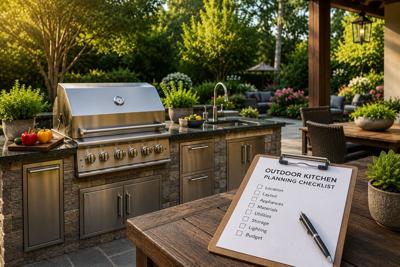
Building an outdoor kitchen sounds simple until the planning begins. At first, it feels like a grill, a counter, and a few cabinets should do the trick. Then come the questions. Where should the grill go? Do you need plumbing? Is a refrigerator worth it? What kind of countertop survives sun, rain, smoke, and the occasional guest who treats every surface like a cutting board?
That is where an outdoor kitchen planning checklist becomes useful. A beautiful outdoor kitchen should do more than impress guests for the first five minutes. It should make cooking easier, keep entertaining organized, and hold up to real weather. Before choosing appliances or finishes, homeowners need to think through layout, safety, storage, materials, lighting, seating, and budget. The best outdoor kitchens are not the ones with the most features. They are the ones that work beautifully for the way people actually live.
Start With How You Plan to Use the Space
Before picking tile, stone, or the shiniest grill on the market, decide how the outdoor kitchen will be used. A family that grills simple weeknight dinners needs a different setup than someone who hosts large weekend parties, poolside lunches, or full holiday gatherings. The planning should begin with real habits, not imaginary dinner parties where everyone behaves perfectly and no one asks where the ice is.
Think about how often you cook outside, what you usually make, and how many people you typically serve. If the outdoor kitchen will mostly support casual meals, a built-in grill, prep counter, storage, and good lighting may be enough. If entertaining is a major part of your lifestyle, you may want refrigeration, a sink, a beverage station, warming drawers, or a larger serving area. This is the first step in any useful outdoor kitchen planning checklist because it prevents the design from becoming either too small to function or too elaborate to justify.
Choose the Right Location
Location can make or break an outdoor kitchen. The cooking area should be close enough to the indoor kitchen to make prep and cleanup convenient, but not so close that smoke, heat, or odors drift directly into the house. The space should also connect naturally to the dining and seating areas so the cook is part of the gathering instead of standing alone at the far edge of the yard like a catering department with better shoes.
Pay attention to sun exposure, wind direction, privacy, views, and existing structures. A grill placed in full afternoon sun may be miserable to use in summer. A cooking station positioned in a wind tunnel can make grilling harder and send smoke exactly where guests are trying to relax. If the backyard already has a patio, pool, garden, or covered seating area, the outdoor kitchen should feel connected to those features rather than dropped into the yard as an afterthought.
Plan the Cooking Zone First
The cooking zone is the heart of the outdoor kitchen, so it should be planned before everything else. Decide whether a gas grill, charcoal grill, smoker, griddle, side burner, or pizza oven makes the most sense. Some homeowners love the convenience of gas. Others prefer the flavor and ritual of charcoal. FINE readers comparing grill styles may also find this guide to buying a charcoal grill useful as part of the planning process.
Once the main cooking equipment is chosen, leave enough space around it for safe movement and food prep. The grill should not be squeezed into a corner with no landing area for platters, tools, or finished food. It should also be positioned away from anything that can burn. The National Fire Protection Association recommends keeping grills well away from the home, deck railings, eaves, and overhanging branches. In other words, the grill should have room to work without threatening the pergola, the cushions, or everyone’s eyebrows.
Add More Counter Space Than You Think You Need
Counter space is one of the most overlooked parts of outdoor kitchen planning. It may not be as exciting as a new grill or pizza oven, but it is what keeps the entire setup functional. You need room for raw ingredients, cooked food, serving platters, sauces, drinks, utensils, cutting boards, and the inevitable pile of items someone brings outside because they “thought we might need them.”
A good outdoor kitchen planning checklist should include prep space on at least one side of the grill and landing space near refrigeration or serving areas. If the layout allows, create separate zones for raw food prep and finished dishes. This keeps the area cleaner and makes entertaining feel calmer. Without enough counter space, even the most expensive outdoor kitchen can become a juggling act with steak tongs.
Decide Which Appliances Actually Make Sense
Outdoor appliances can be tempting. Built-in refrigerators, ice makers, wine coolers, side burners, warming drawers, sinks, smokers, and pizza ovens all have their place. The question is whether they have a place in your backyard. Appliances should support the way you cook and entertain, not simply fill cabinet openings because they looked impressive in a showroom.
A refrigerator can be useful if the outdoor kitchen is far from the house or often used for entertaining. A side burner may be worthwhile if you regularly make sauces, boil corn, or cook side dishes outdoors. A sink can make cleanup easier, but it also adds plumbing costs. An ice maker may be wonderful for frequent hosts and unnecessary for everyone else. Choose appliances based on function first. The most elegant outdoor kitchens are edited, not overstuffed.
Think About Plumbing, Gas, and Electrical Early
Utilities should be discussed early, not after the cabinets are ordered. Gas lines, electrical outlets, plumbing, drainage, refrigeration, lighting, and appliance placement all affect the final layout. Moving utilities later can be expensive and annoying, which is a particularly unpleasant combination during any home project.
If the outdoor kitchen includes a sink, refrigerator, lighting, outlets, or built-in gas appliances, bring in qualified professionals. Proper installation matters for safety and long-term performance. It is also wise to think about future use. Even if you do not install every appliance now, planning utility access in advance can make future upgrades easier. A little foresight is far better than tearing up a finished patio because someone finally decided the backyard needs a beverage fridge.
Choose Materials That Can Handle Weather
Outdoor kitchens face sun, rain, moisture, grease, wind, heat, and in coastal areas, salt air. Materials need to be chosen accordingly. Outdoor-rated stainless steel, sealed stone, porcelain, concrete, masonry, and weather-resistant cabinetry are common choices because they are designed to handle exposure better than indoor materials.
Countertops should be durable, easy to clean, and resistant to stains. Cabinets should protect tools, towels, serving pieces, and cleaning supplies from dust and moisture. Flooring should be slip-resistant and able to handle food spills, water, and heat. This is one area where homeowners should be careful about choosing purely for looks. A finish that is beautiful for three months and then begins to rust, fade, crack, or stain is not a luxury feature. It is a maintenance problem wearing a nice outfit.
Plan Storage Before You Need It
Storage makes an outdoor kitchen easier to use. Without it, every meal requires a parade of trips back inside for tongs, towels, plates, foil, seasonings, trash bags, serving trays, and the one tool that always disappears when food is ready. Outdoor storage does not need to be excessive, but it does need to be intentional.
Plan cabinets or drawers for grilling tools, cleaning supplies, outdoor-safe dishes, cutting boards, and frequently used accessories. If the space will be used for entertaining, consider storage near the serving area for napkins, trays, and bar items. Trash and recycling should also be easy to access. Guests are much more likely to use them when they do not have to open six cabinet doors and guess which one is secretly holding garbage.
Build Food Safety Into the Layout
Outdoor cooking should feel relaxed, but food safety still matters. The USDA recommends separating raw and cooked foods, using clean utensils and platters, washing hands and surfaces, and cooking foods to safe internal temperatures. A smart outdoor kitchen layout makes these steps easier instead of treating them like an afterthought.
Include space for separate cutting boards, clean serving trays, a food thermometer, and cleaning supplies. If there is no sink outdoors, create a simple system for handwashing or sanitizing. Keep raw meat away from ready-to-eat foods and make sure cooked food has a clean place to land. No one wants the evening remembered as “the party with the great patio and the suspicious chicken.”
Add Seating, Shade, and Lighting
An outdoor kitchen is not only for cooking. It should support the entire experience of being outside. Seating, shade, and lighting help turn the cooking area into a true outdoor living space. Bar seating can make the kitchen feel social, while a nearby dining table gives guests a comfortable place to settle in for a meal. Lounge seating can extend the evening after dinner, especially when the weather is cooperating for once.
Shade is just as important. A pergola, covered patio, umbrella, or shade sail can make the space more comfortable during the day. After sunset, layered lighting helps with safety and ambiance. The U.S. Department of Energy recommends outdoor fixtures with covers, reflectors, or deflectors to direct light efficiently and reduce light pollution, along with timers and controls for decorative lighting. Task lighting near the grill, softer lighting near seating, and pathway lighting around steps or walkways can make the whole backyard feel polished.
Budget for Installation, Not Just Appliances
Outdoor kitchen budgets can go sideways when homeowners focus only on appliances and finishes. The grill may be the exciting purchase, but the final cost also includes design, labor, utilities, masonry, countertops, cabinetry, permits where needed, lighting, flooring, drainage, ventilation, and professional installation. Those less glamorous expenses are often what make the kitchen safe, durable, and usable.
The National Association of REALTORS® has reported that outdoor remodeling projects can increase homeowner enjoyment and improve the way people experience their property. Still, the best return comes from thoughtful planning rather than overbuilding. A well-scaled outdoor kitchen that fits the home and yard will usually feel more valuable than an oversized design that overwhelms the space.
Keep the Design Connected to the Home
An outdoor kitchen should feel like a natural extension of the house. Repeat materials, colors, or architectural details from the exterior so the space looks intentional. If the home has clean modern lines, the outdoor kitchen should probably not veer into rustic lodge territory unless the rest of the yard supports that choice. If the backyard already has stone, stucco, wood, or tile, those elements can guide the design.
This does not mean everything has to match perfectly. In fact, it should not. A little contrast can be beautiful. The goal is harmony. The outdoor kitchen should feel connected to the patio, landscaping, pool, dining area, and seating zones. For broader inspiration on creating a more finished backyard environment, FINE readers may also enjoy these luxury pool party ideas for effortless summer entertaining.
Final Outdoor Kitchen Planning Checklist
Before building, review the essentials. Decide how the space will be used. Choose a location that works with the house, the yard, wind, sun, and guest flow. Select the main cooking equipment. Plan enough counter space. Choose appliances based on real needs. Address plumbing, gas, and electrical early. Select durable outdoor-rated materials. Add practical storage. Make room for safe food prep and cleanup. Include seating, shade, and lighting. Budget for installation, not just the visible finishes.
A strong outdoor kitchen planning checklist protects the project from expensive mistakes and disappointing design choices. It helps homeowners create a space that is beautiful, functional, safe, and easy to enjoy. When the layout is thoughtful and the details are planned before construction begins, an outdoor kitchen can become one of the most useful parts of the home. It gives everyday meals more charm, makes entertaining less chaotic, and lets the host stay outside where the actual fun is happening.

(0) comments
We welcome your comments
Log In
Post a comment as Guest
Keep it Clean. Please avoid obscene, vulgar, lewd, racist or sexually-oriented language.
PLEASE TURN OFF YOUR CAPS LOCK.
Don't Threaten. Threats of harming another person will not be tolerated.
Be Truthful. Don't knowingly lie about anyone or anything.
Be Nice. No racism, sexism or any sort of -ism that is degrading to another person.
Be Proactive. Use the 'Report' link on each comment to let us know of abusive posts.
Share with Us. We'd love to hear eyewitness accounts, the history behind an article.