
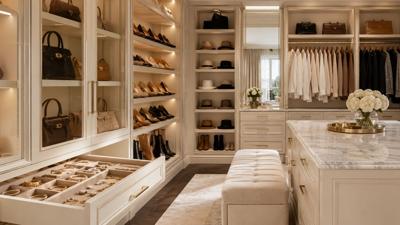
A well-organized closet should make getting dressed easier, not turn every morning into a search party for a missing shoe, belt, or earring.
True luxury closet organization is not simply about installing beautiful cabinetry or buying a matching collection of storage boxes. It is about creating a practical place for everything you own, from everyday clothing and handbags to jewelry, hats, shoes, formalwear, and items waiting to be repaired.
The result should feel polished, but it should also work when you are getting ready in a hurry. Whether you have a large walk-in closet or a smaller reach-in space, the same rule applies: organize the closet around your actual wardrobe and daily routine.
Begin With an Honest Closet Inventory
Before adding drawers, shelves, or specialty organizers, take everything out and count what you own.
Separate clothing and accessories into several practical groups:
- Items worn regularly
- Work and everyday clothing
- Evening and special-occasion pieces
- Seasonal clothing
- Items requiring cleaning, alterations, or repair
- Items ready to donate or sell
Next, count the categories that require dedicated storage, including shoes, handbags, hats, belts, scarves, watches, sunglasses, and jewelry.
This prevents one of the most common closet-design mistakes: creating a beautiful shoe wall that holds 24 pairs when you own 46. The closet should accommodate the wardrobe you have, not the much smaller and suspiciously disciplined wardrobe you imagine owning someday.
Give Prime Space to the Things You Use Most
Frequently used items should be stored between waist and eye level whenever possible. This area is easier to see and reach, making it the ideal location for current-season clothing, everyday shoes, favorite handbags, sunglasses, belts, and daily jewelry.
Less frequently used items can move to upper shelves, lower drawers, enclosed cabinets, or the back of hanging sections. Formalwear, seasonal accessories, and collectible pieces do not need to occupy the closet’s most valuable real estate.
This simple zoning system helps the closet support your routine rather than forcing you to move several things every time you want the blouse hiding behind them.
Consider a Closet System Designed Around Your Wardrobe
A custom or semi-custom closet system can make better use of vertical space and provide storage tailored to different categories.
Closets by Design creates systems for walk-in and reach-in closets with adjustable shelving, hanging rods, shoe storage, drawers, cubbies, lighting, and specialized accessories. Available options include jewelry trays, locked drawers, valet rods, belt and tie racks, pull-out baskets, dividers, and integrated hampers.
The goal is not to include every available feature. Choose the components that solve genuine storage problems. Someone with an extensive shoe collection may need adjustable shoe shelves, while another person may benefit more from handbag cabinets, double hanging rods, or divided accessory drawers.
Even in a smaller reach-in closet, shelves, rods, drawers, and shoe storage can be arranged to use more of the available height and keep the wardrobe visible.
Create a Daily Dressing Zone
Reserve one section of the closet for the pieces used most often. This might include a shallow jewelry tray, a shelf for current handbags, several pairs of frequently worn shoes, sunglasses, belts, and work clothing.
A pull-out valet rod is particularly useful for assembling an outfit the night before, hanging clothing after steaming, or setting aside pieces for an upcoming trip.
A small tray can hold the jewelry, watch, or accessories worn most regularly. Limiting this tray to true daily favorites prevents it from becoming another cluttered surface disguised as an organizing solution.
Store Jewelry Where You Can See It
Jewelry is easier to wear when the entire collection is visible. Shallow, divided drawers work well because they prevent smaller pieces from becoming buried beneath boxes and pouches.
Use separate sections for:
- Rings
- Earrings
- Bracelets
- Watches
- Brooches
- Necklaces
- Sunglasses
Necklaces should hang from hooks or lie flat in individual channels so chains do not tangle. Watches benefit from separate cushions or compartments, while rings and earrings require smaller divided sections.
Closets by Design offers lined jewelry trays and specialty drawers, including locking options for valuable items.
For especially valuable jewelry, remember that a locked closet drawer is primarily an organizational feature. High-value pieces may still require more secure storage elsewhere in the home.
Build Shoe Storage That Can Change
An adjustable shoe wall keeps pairs visible and allows the shelf spacing to change as the collection evolves.
Create different shelf heights for flats, sneakers, heels, ankle boots, and tall boots instead of forcing every pair into identical openings. Flat shelves generally hold more shoes, while angled shelves place pairs on display and can create a more boutique-like appearance.
Boot shapers help tall boots retain their form. Clear shelf guards can keep shoes from sliding forward, and a nearby drawer or basket can hold polish, brushes, replacement laces, heel protectors, and sneaker-cleaning supplies.
A bench or ottoman near the shoe section provides a practical place to sit. It also eliminates the need to perform an early-morning balancing act while trying to fasten a boot.
Keep Handbags Upright and Supported
Handbags should be stored upright whenever possible rather than stacked on top of one another.
Use adjustable shelving so clutches, shoulder bags, structured purses, and large totes are not squeezed into openings of the same height. Clear shelf dividers can prevent bags from tipping over or leaning against one another.
Use clean tissue, purse inserts, or shaped supports to help structured bags maintain their form. Delicate leather and suede pieces can remain in breathable dust bags, particularly when they are not used often.
Glass-front cabinets offer additional dust protection while allowing the collection to remain visible. Heavy handbags should not hang by their straps for long periods because the weight can stretch the straps or place pressure on the hardware.
Organize Hats Without Damaging Their Shape
Hat storage should reflect the type of hats you own.
Wide-brim hats and structured fedoras need open shelves or individual cubbies with enough room to protect the crown and brim. Clean tissue or a shaped hat support can help delicate styles retain their form.
Baseball caps can be arranged on shelves with dividers, stored in labeled boxes, or placed on a dedicated wall or pull-out rack.
Avoid stacking too many structured hats together. A tall hat pile may look efficient until the one you want is at the bottom and every hat above it has to be relocated.
Use Pull-Out Storage for Belts, Scarves and Ties
Belts, scarves, and ties often become clutter because they are small enough to be placed almost anywhere and difficult enough to disappear almost immediately.
Sliding belt and tie racks keep collections visible while occupying relatively little space. Scarves can be rolled or folded into divided drawers, and decorative belts can hang from small hooks inside a cabinet.
Closets by Design lists fixed and sliding belt racks, tie racks, specialty drawers, and organization dividers among its closet accessories.
Before installing a pull-out accessory rack, make sure it can extend completely without hitting a wall, door, cabinet, or hanging clothing.
Use Shallow Drawers for Smaller Items
Deep drawers are useful for bulky clothing, but they are rarely the best choice for underwear, hosiery, socks, sunglasses, and smaller accessories. These items are more likely to become buried in a large open drawer.
Use shallow drawers with removable dividers for:
- Underwear and bras
- Socks and hosiery
- Shapewear
- Swimwear
- Exercise accessories
- Sleepwear
- Travel accessories
A separate travel drawer can hold luggage tags, packing cubes, toiletry bags, passport holders, and travel jewelry cases. Keeping these pieces together makes packing less chaotic and reduces the chance of buying another luggage tag because the existing six have apparently vanished.
Fold Sweaters and Divide the Shelves
Heavy sweaters and delicate knitwear should generally be folded rather than hung, since hangers can stretch the shoulders and distort the garment.
Use shelf dividers to keep stacks from leaning into one another. Limit each stack to a manageable number of garments so the sweater at the bottom remains accessible.
Group sweaters by weight, color, or season, depending on how you normally choose them. Cedar products or protective sachets may be used nearby, but scented products should not rest directly against clothing.
Separate Clothing by Length and Purpose
Hanging sections work better when clothing is divided by length and use.
Create separate areas for:
- Long dresses and coats
- Short dresses
- Blouses and shirts
- Jackets
- Pants and skirts
- Suits and formalwear
Double hanging rods can increase capacity for shirts, blouses, folded trousers, and shorter jackets. Reserve full-height hanging space for clothing that genuinely requires it.
Matching wooden or premium velvet hangers create visual consistency and help garments hang at an even height. Removing wire dry-cleaning hangers also protects clothing from misshapen shoulders and makes the entire closet look considerably more finished.
Add a Donation and Repair Station
Closets often remain cluttered because clothing marked for donation, cleaning, alterations, or repair never leaves the room.
Keep one attractive basket or bin for donations and another for items that need attention. A garment that requires a missing button should not return to the regular hanging section, where it will patiently disappoint you again several weeks later.
Review these containers regularly. Schedule alterations, take dry cleaning out, and move donation items to the car instead of allowing both baskets to become permanent closet residents.
Conceal Laundry and Clothing-Care Supplies
Built-in or freestanding hampers can separate whites, darks, delicates, and dry cleaning without leaving laundry piles visible.
A nearby drawer or cabinet can hold:
- Lint rollers
- Fabric brushes
- Sweater combs
- Stain-treatment supplies
- Sewing tools
- Garment bags
- Steamer attachments
Integrated hampers are among the custom accessories available from Closets by Design, along with drawers, baskets, and dividers that can keep clothing-care supplies contained.
Move Seasonal Clothing Out of the Daily Zone
Upper shelves and enclosed cabinets are appropriate for formal accessories, keepsake clothing, winter scarves, beachwear, and out-of-season pieces.
Use matching labeled boxes to create a calmer appearance and make each category easier to locate. Clean clothing before placing it into long-term storage, and avoid sealing anything that is damp or recently worn.
For a more detailed approach to switching wardrobes throughout the year, read Smart Ways to Rotate Seasonal Wardrobes Without Taking Up Extra Closet Space. The article covers evaluating clothing, organizing by season, and using storage more efficiently.
Use Lighting to Improve Visibility
Good lighting is essential in a closet, particularly when similar colors are stored together.
Integrated lighting can be added beneath shelves, inside cabinets, around mirrors, and above hanging sections. Motion-activated lights are useful inside enclosed cabinets and deep shelves.
A full-length mirror should be positioned where you can step back far enough to see an entire outfit. Larger closets may also benefit from a three-way mirror or a smaller mirror near a jewelry and accessory area.
The recent FINE Magazine article How to Design a Dressing Room That Combines Luxury and Function explores room layout, mirrors, lighting, seating, finishes, and working with a designer in greater detail.
Finish With a Few Practical Luxuries
Once the storage is functioning properly, add a few features that make the closet more comfortable to use.
Depending on the space available, consider:
- An upholstered bench or ottoman
- A center island with divided drawers
- A marble or stone accessory surface
- A charging drawer
- A perfume tray
- A full-length mirror
- Glass-front cabinets
- Soft-close drawers
- A small rug or runner
Keep decorative objects limited. A closet still needs room for clothing, and every open shelf does not need a vase, framed photograph, decorative box, and small stack of books proving that the shelf has excellent taste.
Maintain the Closet With a Simple Reset
Even the most thoughtfully designed closet needs occasional maintenance.
Return shoes and accessories to their assigned places, empty the repair and donation baskets, remove dry-cleaning covers, and review seasonal clothing several times a year.
A brief weekly reset is usually more manageable than waiting until the closet requires a complete rescue operation.
A Better Closet Begins With Better Decisions
The most effective luxury closet organization does not depend on having the largest room or the most expensive cabinetry. It depends on visibility, accessibility, protection, and a place for every category.
Begin with an accurate inventory, position daily items within easy reach, and choose specialized organizers only when they solve a genuine problem. Adjustable shoe shelves, lined jewelry drawers, handbag dividers, hat cubbies, pull-out racks, divided drawers, and concealed hampers can all improve the space when selected with purpose.
When the closet reflects how you actually dress and live, maintaining it becomes easier. You spend less time searching, protect the pieces you invested in, and may even rediscover several things you forgot you owned—which is much cheaper than shopping.
(0) comments
We welcome your comments
Log In
Post a comment as Guest
Keep it Clean. Please avoid obscene, vulgar, lewd, racist or sexually-oriented language.
PLEASE TURN OFF YOUR CAPS LOCK.
Don't Threaten. Threats of harming another person will not be tolerated.
Be Truthful. Don't knowingly lie about anyone or anything.
Be Nice. No racism, sexism or any sort of -ism that is degrading to another person.
Be Proactive. Use the 'Report' link on each comment to let us know of abusive posts.
Share with Us. We'd love to hear eyewitness accounts, the history behind an article.