
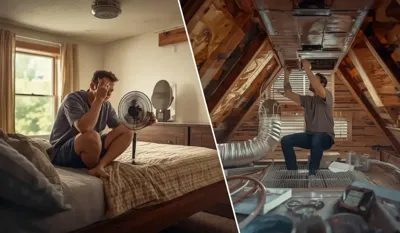

It’s normal for houses to get really hot in the summer. What isn't normal is walking upstairs and feeling scorching heat year-round. The downstairs stays comfortable. The second floor’s constantly stuffy.
That temperature difference usually points to something more than a hot afternoon. Your home could be trapping heat. Airflow might not reach the rooms upstairs. But why is this happening? Here are possible reasons your upstairs is hotter than the rest of the house, and what you can do to cool things down.
Your Attic Isn't Properly Insulated
Your attic is the first place the sun hits. It should slow that heat before it reaches your living space. But if the insulation is too thin, it can’t do that very well. Heat slips through the attic. It goes into your ceiling. Before long, your upstairs starts warming up. Even with the AC on full blast.
Look at your attic. Thin or patchy insulation is a common clue. So, update it. Blown-in cellulose works well for topping up older attics. Do you see gaps around pipes or the attic hatch? Seal them with spray foam. It seals those openings. That way, warm air doesn’t sneak through. When your attic holds back heat, your upstairs stays cool.
The Roof Absorbs Too Much Heat
Your roof also takes the full force of the sun every day. Dark roofing materials absorb more heat. Older shingles might not reflect sunlight efficiently. That heat builds up throughout the afternoon. It eventually radiates into the attic. That makes upstairs rooms warmer.
Is your roof showing signs of age or damage? Maybe it’s time to fix it. Repairs can restore its performance. Meanwhile, newer roofing materials can reflect more heat than older ones.
Remember to work with a local contractor for this. They’ll understand your area's climate. That means they can recommend materials that perform well there. For example, if you’re in Pennsylvania, trusted professionals like PA Roofers can inspect your roof. They’ll handle repairs or install shingle or metal roofing designed for local weather conditions. A healthy roof reduces heat before it reaches your room.
Poor Ventilation in the Attic
Attics need to release trapped heat. If hot air has nowhere to escape, the space can become hotter than the outdoor temperature. That heat sits above your ceiling. Eventually, it works its way into the rooms below.
Observe how air moves through your attic. Ridge vents and soffit vents help hot air escape. If you have vent covers on the walls, be extra sure there’s no furniture blocking airflow. Those vents help conditioned air circulate. Keeping these pathways clear allows warm air to move out. Meanwhile, cooler air reaches your living spaces.
Air Leaks in Doors and Windows
Gaps around a window or door can let warm outdoor air slip inside. You may never notice the openings. But your air conditioner certainly does. It has to keep cooling the same rooms because hot air keeps finding its way back.
Check for air leaks around upstairs windows and bedroom doors. Go through attic access points, too. On a warm day, run your hand around the edges. Feel for drafts. Replace any worn weatherstripping. Seal cracked caulk where needed. These simple repairs help keep cooled air inside, where it belongs.
AC Doesn’t Reach the Second Floor
Your air conditioner may be working hard. But cool air still might not reach every room. The second floor often sits at the end of the duct system. So, it receives less airflow than rooms downstairs.
Start by checking every supply vent upstairs. Make sure furniture or rugs aren’t blocking them. Replace dirty air filters if you haven’t in a while. Ask an HVAC technician to balance the ductwork. That way, each room receives the right amount of airflow.
If your AC still struggles to cool the second floor after those, consider upgrading the HVAC system. A high-quality HVAC setup should deliver even cooling throughout the house.
Sunlight Hits Windows All Day
Windows bring in stunning natural light. But they also bring a surprising amount of heat. Rooms with large south-facing or west-facing windows get the hottest afternoon sun. The longer sunlight shines through the glass, the more scorching the home gets.
Pay attention to which windows get afternoon sun. Close blinds or curtains before the hottest part of the day. Blackout curtains are a lifesaver for this. Planning a bigger upgrade? Go for energy-efficient windows. Preferably those with low-E glass. Those reflect heat away from your home.
Ceiling Fans in the Wrong Direction
A ceiling fan doesn’t actually cool the air. It just moves it around. But the direction of the blades matters. If the fan spins the wrong way during summer, it can pull warm air upward instead of creating a cooling breeze.
When it’s already hot out, set your fan to spin counter-clockwise. That pushes air downward. It creates a wind-chill effect, making the room feel cooler. Save the clockwise setting for winter. That pulls cool air up and pushes warm air back down.
There’s a reason your second floor is hotter than normal. It could be poor attic insulation. Or blocked airflow. Or a roof that’s begging for an upgrade. Once you pinpoint the cause, you can finally fix what’s actually heating up your home.
Work through the most likely issue one at a time. Soon, your upstairs rooms will feel comfortable again. You might even lower some of those energy bills. Your second floor deserves better than being summer's permanent address. Give it the cool-down it needs today.

(0) comments
We welcome your comments
Log In
Post a comment as Guest
Keep it Clean. Please avoid obscene, vulgar, lewd, racist or sexually-oriented language.
PLEASE TURN OFF YOUR CAPS LOCK.
Don't Threaten. Threats of harming another person will not be tolerated.
Be Truthful. Don't knowingly lie about anyone or anything.
Be Nice. No racism, sexism or any sort of -ism that is degrading to another person.
Be Proactive. Use the 'Report' link on each comment to let us know of abusive posts.
Share with Us. We'd love to hear eyewitness accounts, the history behind an article.