
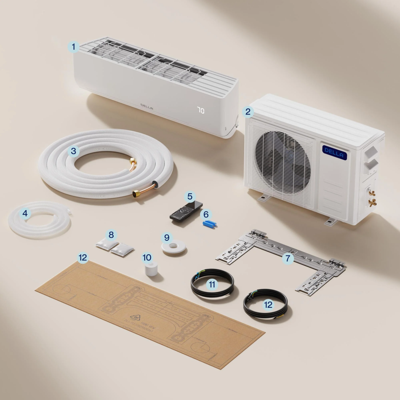
Choosing the right capacity is only one part of planning a ductless heating and cooling system. The position of the indoor unit also affects how evenly air moves through the room. A 12,000 BTU mini split can provide targeted comfort for a bedroom, home office, studio, or other single-zone space, but poor placement may reduce its effectiveness. Before installation begins, consider the room layout, airflow direction, furniture arrangement, and the route between the indoor and outdoor units.

Why Does Indoor Unit Placement Matter for a 12,000 BTU Mini Split?
A mini split indoor unit needs a clear path to distribute conditioned air across the room. When the unit is installed in an open position, cool or warm air can move more evenly through the space. This helps reduce noticeable temperature differences between the area near the unit and the opposite side of the room.
Poor placement can create comfort issues even when the system has the correct capacity. A unit hidden behind tall furniture or installed in a narrow corner may struggle to reach the main living area. The system may run longer while some parts of the room remain uncomfortable. Proper placement helps the mini split system perform more consistently throughout the day.
Which Wall Position Provides the Best Airflow?
In many rooms, a higher position on an open wall allows air to spread more effectively. The indoor unit should face the main area of the room rather than a nearby wall, large cabinet, or doorway. A long, unobstructed wall can be a practical option because it gives the airflow more room to circulate.
The indoor unit also needs enough space around it for proper airflow and future maintenance. Avoid forcing the system into a tight space simply because the wall looks convenient. The required clearance can vary by model, so always check the installation manual before selecting the final position.
The outdoor unit location matters as well. A shorter, more direct line-set route can simplify installation, but it should not come at the expense of indoor comfort. The best location balances airflow, drainage, electrical access, and the connection to the outdoor equipment.
Where Should You Place the Indoor Unit in Different Rooms?
In a bedroom, avoid positioning the indoor unit where air will blow directly onto the bed. A wall that allows air to move across the room rather than straight toward the sleeping area can support more comfortable nighttime use.
For a home office, consider where the desk and electronics are located. Direct airflow toward the general work area without aiming it continuously at the chair. Keep the unit away from tall bookcases, storage cabinets, and curtains that could restrict airflow.
In a studio apartment or open room, the unit should face the area where people spend the most time. If the space includes a kitchen, sitting area, and sleeping area, consider how air will travel through the open layout. In a garage or workshop, place the unit away from shelves, tools, and frequently opened doors.
Which Indoor Unit Locations Should You Avoid?
Several common locations can reduce performance. Do not install the indoor unit behind curtains, above a tall cabinet, or in a recessed corner where airflow cannot spread easily. Avoid placing it near a stove, oven, or other heat source because nearby heat can affect temperature readings and make the system work harder.
The unit should not blow directly onto a bed, sofa, dining table, or workstation used for long periods. A position near a doorway may also be less effective if conditioned air escapes into another room. In garages and workshops, avoid walls where storage racks or future equipment could block the airflow.
What Should You Confirm Before Finalizing the Installation Location?
Before installation, check that the selected wall can support the indoor unit. Confirm the drainage path, line-set route, electrical requirements, and available space for future servicing. The condensate drain should be planned carefully so water can flow away from the unit properly.
It is also helpful to compare the available mini split ac options before choosing a final location. Different capacities and system configurations may have different installation requirements. Review the product manual and ask a qualified HVAC professional to confirm the placement when the room layout or installation path is complex.

(0) comments
We welcome your comments
Log In
Post a comment as Guest
Keep it Clean. Please avoid obscene, vulgar, lewd, racist or sexually-oriented language.
PLEASE TURN OFF YOUR CAPS LOCK.
Don't Threaten. Threats of harming another person will not be tolerated.
Be Truthful. Don't knowingly lie about anyone or anything.
Be Nice. No racism, sexism or any sort of -ism that is degrading to another person.
Be Proactive. Use the 'Report' link on each comment to let us know of abusive posts.
Share with Us. We'd love to hear eyewitness accounts, the history behind an article.