

Commercial properties carry fire risk every day from wiring faults, cooking surfaces, stored goods, heating equipment, and plain human error. Serious preparation reduces injury, limits closure time, and supports orderly evacuation during a crisis. Owners, facility managers, contractors, and tenants each hold part of that duty. A dependable safety program covers prevention, early warning, suppression, exit access, and staff instruction, with each element reviewed often under clear procedures and current site conditions.
Code Starts on Paper
Fire safety begins long before opening day. Early planning sets occupancy limits, travel distances, hazard categories, equipment locations, and access points for emergency crews. Those choices shape inspection results, maintenance needs, and day-to-day reliability. Effective fire protection for commercial buildings depends on decisions made before purchasing starts, walls close, ceilings finish, and final walkthroughs begin, because late corrections usually cost more and solve less.
Detection and Warning
Detection systems must match the layout, ceiling height, airflow, and daily use of each area. A detector placed near a vent or behind an obstruction may respond too late. Alarm signals should be easy to hear, easy to see, and simple to recognize under stress. Fast notification gives occupants a better chance to leave safely while helping responders locate the source without losing critical minutes.
Monitoring Counts
An on-site alarm warns occupants, yet monitored service adds another layer of protection. Remote notification can speed up dispatch when a property is empty, a shift is short-staffed, or staff cannot quickly reach a control panel.
Sprinklers and Water Supply
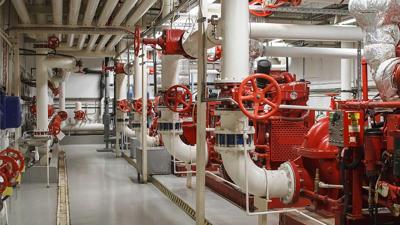
Automatic sprinklers slow the spread of heat before flames spread across open floors or into hidden cavities. That benefit relies on correct design, open valves, steady pressure, and accessible risers. A water supply weakness can reduce performance at the worst possible moment. Routine checks should verify gauges, test connections, room temperature, and physical conditions that may affect pipes, fittings, or discharge heads.
Extinguishers and Cabinets
Portable extinguishers remain useful for small fires caught early. Their value drops sharply when units are missing, blocked, discharged, expired, or poorly matched to the hazard nearby. Offices, kitchens, storage rooms, and mechanical spaces often need different classifications. Protective cabinets keep equipment visible, secure, and easier to locate, while also supporting orderly placement along corridors, lobbies, and other public paths.
Egress Must Stay Clear
Exit systems protect people only when every path remains accessible. Hallways, stair doors, panic hardware, emergency lighting, and illuminated signs need constant attention, not a rushed check before inspection day. Stacked cartons, chained doors, or dark markers can turn a controllable incident into a fatal one. Floor plans should also account for visitors, mobility limitations, and smoke travel during evacuation.
Electrical and Kitchen Risks
Electrical faults remain a common ignition source in commercial properties. Overloaded receptacles, damaged cords, aging appliances, and neglected panels deserve regular review. Kitchens create grease residue, high surface temperatures, and open-flame exposure, which can accelerate the spread within seconds. These areas need stronger housekeeping, scheduled service, and clear shutdown procedures.
Inspection Records Matter
A property can appear prepared and still fail under emergency conditions. Hidden defects usually surface through testing, service tags, repair notes, and accurate logs. Records should document alarm tests, sprinkler maintenance, extinguisher recharge dates, valve inspections, and corrective work. That paperwork supports compliance, yet its greater purpose is practical: it shows whether life-safety equipment is likely to function when occupants depend on it.
Staff Response Shapes Outcomes
Equipment alone cannot carry a building through a fire emergency. Without training, occupants may freeze, choose the wrong extinguisher, or move toward a familiar doorway instead of the nearest safe exit. Managers should assign clear roles for reporting, evacuation support, mobility assistance, and headcounts. Short drills held at sensible intervals help teams react with less confusion, at a better pace, and with stronger judgment during real events.
Commercial fire safety rests on disciplined planning, regular maintenance, accurate records, and staff who know exactly how to respond. Detection, suppression, exit access, inspections, and training all serve one practical goal: protecting people while limiting damage and business interruption. When each part receives steady attention, a building stands far better prepared for an emergency. That preparation supports safer daily operations, stronger code readiness, and greater confidence across the entire property.

(0) comments
We welcome your comments
Log In
Post a comment as Guest
Keep it Clean. Please avoid obscene, vulgar, lewd, racist or sexually-oriented language.
PLEASE TURN OFF YOUR CAPS LOCK.
Don't Threaten. Threats of harming another person will not be tolerated.
Be Truthful. Don't knowingly lie about anyone or anything.
Be Nice. No racism, sexism or any sort of -ism that is degrading to another person.
Be Proactive. Use the 'Report' link on each comment to let us know of abusive posts.
Share with Us. We'd love to hear eyewitness accounts, the history behind an article.