
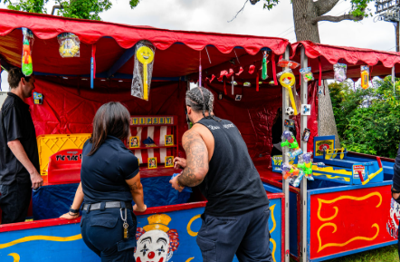

Adult carnival entertainment has moved far beyond the nostalgic ring toss set up near the bar. What used to be a children’s corner has become a centerpiece that can anchor a company offsite, a wedding weekend, or a neighborhood fundraiser. The appeal is straightforward: structured play gives guests permission to mingle, compete, and laugh without the usual small talk fatigue. When designed well, the carnival format also provides a flexible spine for an event, letting people drop in and out while still feeling part of a shared experience.
The most successful adult carnivals borrow from two worlds that rarely meet gracefully: professional team building and old-school amusements. Team activities supply the narrative arc, with missions, roles, and escalating challenges that create momentum. Prize games supply the texture, with quick hits of dopamine and moments of surprise. Together they produce something that feels both organized and spontaneous, which is a hard balance to strike in adult social settings. The key is to treat play as a serious design problem, not a pile of props.
A grown-up carnival also succeeds because it offers multiple social speeds at once. Competitive guests can chase leaderboards while quieter attendees gravitate toward low-pressure stations that still feel participatory. People who hate dancing get a reason to stay late, and people who do not drink still have an activity that carries the night. The format accommodates mixed ages and mixed departments with fewer awkward seams. Most of all, it creates memories that are easy to retell, which is the real currency of any event.
Start With Team Challenges That Actually Build Teams
Team challenges are often presented as morale medicine, but adults can smell forced fun from across the room. A better approach is to design challenges that mirror real collaboration patterns: communication under time pressure, division of labor, and a little negotiation over scarce resources. The simplest format is a timed circuit in which teams rotate through stations, earning points that reward both speed and accuracy. This avoids the problem of one athletic team running away with everything while everyone else checks out.
A strong challenge mix also includes different kinds of intelligence. Physical tasks can be light and silly, like carrying “contraband” balloons across a boundary without using hands, or building a freestanding tower from strange materials. Mental tasks can feel like escape-room fragments, such as decoding a message that reveals a hidden advantage at the next station. Social tasks can require persuasion, like convincing a “carnival barker” to offer a clue by performing a quick improv scene. When people can contribute in different ways, the team dynamic becomes visible and, at times, surprisingly revealing.
To keep the room energized, use narrative to connect the stations. Teams are not just collecting points, they are restoring power to the midway, running a traveling show, or pulling off a playful heist. Narrative gives adults permission to commit, and it helps the challenges feel less like office training in disguise. The best narratives also make rule explanations easier because each constraint has a story reason. Once guests accept the fiction, they will police the rules themselves.
The Midway Economy: Tokens, Scores, and the Psychology of Prizes
Prizes are not about the object so much as the story someone gets to tell while holding it. Adults still want the satisfaction of winning, but they prefer it without the childish aftertaste. That is why the most effective prize systems feel like a small economy, built around tokens, raffles, and tiered rewards. When people can choose between spending tokens on immediate treats or saving for a premium prize, the room develops a quiet strategy layer. That strategy sparks conversation among strangers because everyone is benchmarking value and comparing odds.
Scoring systems matter more than most hosts realize because they determine who stays engaged after the first few rounds. A single leaderboard can energize competitive groups, but it can also intimidate guests who assume they have already lost. Consider multiple leaderboards, such as “fastest team,” “most creative,” and “best comeback,” so recognition is distributed across different strengths. If you want a Wall Street style incentive structure, make it transparent and lightly playful, with clear odds and clear rules that guests can understand at a glance. People accept competition when it feels fair and when the win conditions are legible from the start.
As soon as you add tokens, leaderboards, and multiple stations, you are also taking on operations. Games must reset fast, rules must stay consistent, and the pace has to remain brisk so the floor does not bottleneck. That is why some hosts bring in teams that design and run the experience end to end, especially when the event stakes are high. For example, Something New Carnival Games in Los Angeles builds modern carnivals that combine custom games with on-site staffing, which helps avoid common pitfalls like broken equipment and inconsistent rule calls. If you are looking for adult-appropriate midway formats, their games for adult events page is a useful reference when you are planning prize logic and station mix, even if you ultimately build your own.
Skill Games With Adult Difficulty and Adult Humor
Many classic carnival games fail at adult events because they are either too easy or too obviously rigged. Adults want a challenge that feels legitimate, even if the vibe stays light. The solution is to adjust difficulty with precision: smaller targets, shorter time windows, and scoring that rewards consistency rather than a single lucky toss. Games like precision darts with magnetic tips, ring toss with staggered peg spacing, or mini basketball with a timed shot clock can feel fresh when tuned for grown-ups. Add rules that create tension, such as “bank shots count double,” and you turn a simple game into a repeated obsession.
Humor should be present, but it should be aimed at the situation, not at the guest. A “compliment cannon” station where players launch foam balls at targets labeled with exaggerated virtues can create the kind of laughter that feels inclusive. A “corporate jargon translation” wheel that assigns absurd phrases to ordinary tasks can poke fun without humiliating anyone. Even costume elements can be subtle, like a referee’s whistle or a flashy barker jacket worn by staff. Adults respond well to theatrical touches when those touches do not demand self-conscious participation.
The other adjustment is to design for the adult body and the adult schedule. Stations should be accessible to guests in heels, guests in jackets, and guests who will only play for three minutes before being pulled into conversation. That means quick resets, visible instructions, and enough staff presence to prevent bottlenecks. It also means sound design, because adults want to hear each other while still feeling the room’s energy. A well-run game floor sounds like a lively restaurant, not a children’s arcade.
High-Impact Spectacle Stations That Pull a Crowd
Every successful carnival has one or two stations that function like a headline act. These are not necessarily the most competitive games, but they create a visual magnet that helps the room feel alive. Think of a giant plinko wall that is tall enough to watch from across the venue, or a human-size “deal or no deal” reveal that triggers applause. Adults like spectacle because it gives them something to gather around without the awkwardness of forming a circle. It also creates shared reference points, which is crucial when guests do not know each other well.
Spectacle works best when it has an interactive edge. A live “auction” of silly prizes, where bids are made in tokens rather than money, turns the prize system into entertainment. A rotating “mystery challenge” station, announced every 20 minutes, can create recurring peaks in attention. Even a photo booth can be engineered as spectacle if it has a set piece, like a faux ticket booth or a mid-century carnival marquee. The goal is to create moments that feel like an event within the event.
Hosts should also think about pacing. Spectacle stations can overwhelm if they run nonstop, so build in cycles. Announce short rounds, then let the station rest while other games take focus. This gives people permission to move around, and it prevents the headline act from becoming background noise. Done right, the room will pulse, which is what makes an event feel expensive even when the props are simple.
Food, Drink, and Play: Pairings That Keep Adults Engaged
Food and drink can either support play or sabotage it. The common mistake is to place heavy appetizers directly beside the games, which leads to sticky hands and long lines that block the flow. Instead, treat refreshments as their own stations with game-adjacent incentives. A token-redeemable “snack bar” encourages participation while keeping the game floor cleaner. Limited-time specials, like a late-night mini sundae window, can create a second wind in the room.
Drinks, in particular, benefit from structure. A “midway cocktail passport” that gets stamped at different bars can mirror the point system without forcing anyone to compete. If alcohol is present, balance it with nonalcoholic options that feel intentionally designed, not punitive. Adults notice when the sober choices are an afterthought, and it changes the tone of the evening. The best events make hydration and enjoyment part of the same aesthetic.
Pairings also extend to theming. A retro carnival theme can be amplified with elevated classics, like gourmet popcorn flights or artisanal cotton candy with unexpected flavors. A more modern theme might lean into bright colors, clean signage, and small plates that guests can eat in two bites. The goal is not novelty for novelty’s sake, it is reducing friction so guests can keep playing. When people can move, snack, and rejoin a station without logistical hassle, they stay longer and spend more social energy.
Make It Run: Layout, Staffing, and the Details Guests Actually Feel
A carnival can be beautifully designed and still fail if operations are sloppy. Layout is the silent factor that determines whether guests feel energized or trapped. Start by mapping traffic flow, with clear entry points, visible station signage, and enough space between games for spectators. Put louder games away from conversation areas, and create a few “soft zones” with seating where people can recover without leaving the action. Adults like the option to observe before they participate, so give them sightlines.
Staffing is equally important. Even the simplest game needs someone who can explain rules quickly, reset equipment, and keep the tone friendly. The attendant is also the social lubricant who can invite shy guests to try a round without pressure. Train staff to watch for bottlenecks and to redirect traffic by suggesting nearby stations. A good attendant does not just run a game, they manage micro-mood. In a well-staffed event, guests rarely notice the staff, but they always feel the smoothness.
Finally, get ruthless about the small stuff. Print instructions large enough to read from three feet away, and keep the rule language plain. Have spare parts for anything that can break, and a plan for what happens if a station goes down. Build a clear closing ritual, like a final prize draw or a championship round, so the night has an ending rather than a fade. Adults remember the finish more than the middle, and a clean ending makes the whole event feel intentional.
End With Prize Games That Create Stories, Not Just Winners
The best prize games for adults are designed to generate stories, not merely to award trophies. A game that produces a dramatic near-miss or a surprising comeback will be discussed longer than a straightforward victory. Build games with visible tension, such as a progressive challenge where each round gets harder but pays more tokens. Let teammates influence outcomes in small ways, like allowing one “coach’s timeout” that pauses the clock for advice. These mechanics keep groups invested even when they are not playing.
Consider prizes that are social rather than material. A “winner’s procession” with a playful sash, a reserved table, or a chance to choose the next challenge can feel more valuable than a cheap trinket. If you do offer physical prizes, make them tasteful and slightly absurd, such as a classy mug with a ridiculous title, or a small trophy that looks intentionally overdone. Adults appreciate irony, but they also appreciate quality. The prize should feel like it belongs in an adult home, even if it is meant to make them laugh.
Finally, engineer the event so that more than one person gets to feel like a winner. Use raffles, surprise awards, and recognition for effort and creativity. A carnival that only rewards the best hand-eye coordination will shrink the room over time. A carnival that rewards participation, teamwork, and humor will expand it. When guests leave with a small token and a big story, the entertainment has done its job.
(0) comments
We welcome your comments
Log In
Post a comment as Guest
Keep it Clean. Please avoid obscene, vulgar, lewd, racist or sexually-oriented language.
PLEASE TURN OFF YOUR CAPS LOCK.
Don't Threaten. Threats of harming another person will not be tolerated.
Be Truthful. Don't knowingly lie about anyone or anything.
Be Nice. No racism, sexism or any sort of -ism that is degrading to another person.
Be Proactive. Use the 'Report' link on each comment to let us know of abusive posts.
Share with Us. We'd love to hear eyewitness accounts, the history behind an article.