
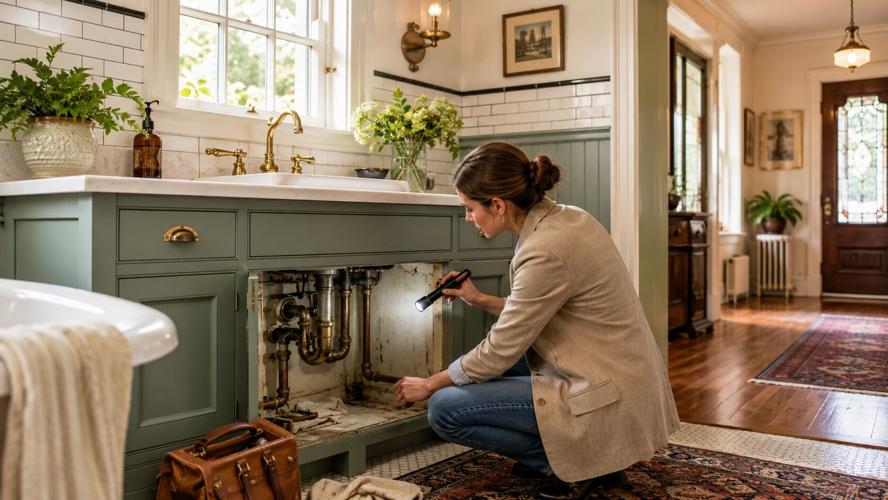

Older homes can be charming in all the right ways. Original floors, classic tile, mature trees, beautiful millwork and a front porch with actual personality can make a house feel like it has already lived a good life. But behind those walls, under those floors and beneath that pretty little garden path, the plumbing may have its own story to tell.
That story is not always romantic.
When buying an old home, plumbing should be one of the first systems buyers evaluate carefully. A bathroom may look updated, a kitchen may have new countertops and a laundry room may appear perfectly functional, but hidden pipe problems can still lead to leaks, water damage, mold, sewer backups and expensive repairs.
The goal is not to be scared away from an older house. The goal is to know what you are buying before you fall too deeply in love with the crown molding. Here are the plumbing problems in older homes that buyers should look for before closing.
Old Pipes May Be Near The End Of Their Life
One of the biggest plumbing problems in older homes is aging pipe material. Depending on when the house was built and how many times it has been updated, it may have galvanized steel, cast iron, copper, PVC, PEX or a mix of several materials.
A mixed plumbing system is common in older houses. One owner may have replaced a bathroom line. Another may have updated the kitchen. Someone else may have patched a leak in the basement twenty years ago and called it a day. That does not automatically mean the system is failing, but it does mean buyers should ask questions.
Look for visible corrosion, rust, staining, patched sections, sagging pipes, mineral buildup or signs that different materials were joined together without proper planning. If the home inspection raises concerns, bring in a licensed plumber before closing. A plumbing inspection can help determine whether the pipes are functional, outdated or ready for replacement.
When signs of plumbing problems demand immediate attention, don't wait for further damage. Emergency Plumbing Services in Charlotte, NC, or wherever you live, provides rapid response to burst pipes, severe leaks, and sewer backups that require same-day professional intervention to protect your home.
Low Water Pressure Can Point To Bigger Issues
Low water pressure may seem like a daily annoyance, but it can also point to deeper plumbing concerns. In an older home, weak pressure may be caused by corroded pipes, mineral buildup, leaking supply lines, old fixtures or problems with the main service line.
During a showing or inspection, test more than one faucet. Run the shower. Flush a toilet while the sink is running. Check whether pressure drops when multiple fixtures are used at the same time. A beautiful bathroom is less exciting when the shower feels like it is apologizing for being there.
Low pressure does not always mean disaster, but it should not be ignored. It is one of the plumbing problems in older homes that can reveal whether the system is keeping up with modern daily use.
Slow Drains Should Be Taken Seriously
One slow drain may be a simple clog. Several slow drains can suggest a larger issue. In older homes, slow drainage may be caused by buildup inside aging pipes, poor venting, damaged drain lines, tree roots, a failing sewer line or an overloaded septic system.
Pay attention to sinks, tubs, showers and laundry drains. Gurgling sounds, unpleasant odors or water backing up in one fixture when another is used can be warning signs. These are not the kind of details buyers should dismiss during the inspection period.
If multiple drains are slow, ask for a sewer line inspection or camera scope. It is far better to know about a main drain or sewer problem before closing than after moving in with boxes still stacked in the hallway.
Sewer Lines Deserve A Closer Look
Sewer line problems can be among the most expensive plumbing problems in older homes. Older lines may be made of clay, cast iron or other materials that can crack, collapse, corrode or become vulnerable to tree roots.
Mature landscaping is one of the joys of an older property, but large established trees can create plumbing complications. Roots naturally seek moisture and may find their way into vulnerable sewer lines. Once inside, they can cause repeated clogs and backups.
A sewer scope is a smart move for many older homes, especially if the property has mature trees, a history of drain problems or no clear record of sewer line replacement. It is a relatively small step that can prevent a very expensive surprise.
Leaks Can Hide Behind Finished Spaces

Fresh paint, new tile and updated cabinetry can make an older home look move-in ready. Unfortunately, cosmetic updates can also hide old leaks. Water stains, soft flooring, musty odors, bubbling paint, warped cabinets or suspicious patches in drywall should be reviewed carefully.
The U.S. Environmental Protection Agency advises fixing plumbing leaks and other water problems as soon as possible and drying affected items completely. That matters because small leaks can create mold concerns and structural damage when they are allowed to linger.
Check under sinks, around toilets, near tubs and showers, around the water heater, in basements, in crawl spaces and near laundry areas. A little detective work before closing can save a lot of money later.
Water Heaters Should Be Reviewed Early
The water heater may not be the most glamorous part of an older home, but it deserves attention. Ask about its age, maintenance history, capacity and condition. Look for rust, leaks, corrosion, unusual sounds or signs of improper installation.
A water heater that is near the end of its life may not be a dealbreaker, but it should be included in your budget. If the home has been expanded or the household will use more hot water than previous owners, capacity may also matter.
For buyers planning a luxury bathroom renovation, soaking tub, larger shower or expanded laundry area, hot water demand should be part of the conversation before design decisions are finalized.
Septic Systems Need Their Own Inspection
If the home uses a septic system, do not treat it like a standard plumbing detail. Septic systems need separate attention, maintenance records and a proper inspection. The EPA’s New Homebuyer’s Guide to Septic Systems is designed to help buyers understand what to know before purchasing a home with an onsite wastewater system.
Common warning signs may include slow drains, sewage odors, wet areas near the drain field, unusually green grass over the system or backups into tubs, showers, sinks or toilets. The EPA also notes that failing septic systems may show signs such as wastewater backing up into household plumbing or wet, mushy areas around the drain field.
Before buying, ask when the septic tank was last pumped, how often it has been serviced and whether any repairs have been made. Homeowners can also review this guide on how to know if a septic system needs to be replaced.
Local Plumbing Codes And Permits Matter
Older homes often have decades of repairs and renovations behind them. Some may have been completed by licensed professionals. Others may have been weekend projects by someone with enthusiasm, a toolbox and questionable confidence.
Permits matter because plumbing work affects health, safety and property protection. The Uniform Plumbing Code reflects IAPMO’s focus on plumbing systems, water efficiency and public health and safety. Local requirements vary, so buyers should ask whether major plumbing work was permitted and inspected.
If a home has newer bathrooms, a relocated kitchen, a finished basement or an added laundry room, it is reasonable to ask whether the plumbing work was done properly. Beautiful finishes are nice. Proper drainage, venting and supply lines are better.
Why A Plumbing Inspection Can Be Worth It
A standard home inspection can identify visible plumbing concerns, but a plumber can go deeper. A licensed plumber can assess pipe materials, test pressure, review drains, inspect the water heater, check visible supply and waste lines, and recommend whether additional testing is needed.
This is especially valuable when evaluating plumbing problems in older homes. The issue is not always what you can see. It is what may be aging behind the walls, under the slab, beneath the yard or inside the sewer line.
A plumbing inspection can also help buyers plan. Some repairs may be urgent. Others can be phased after move-in. Knowing the difference helps protect the budget and keeps a charming old home from becoming a surprise renovation marathon.
Final Thoughts On Plumbing Problems In Older Homes
Older homes can be beautiful, warm and full of character, but their plumbing systems deserve serious attention before closing. Old pipes, low water pressure, slow drains, hidden leaks, sewer line issues, water heater problems and septic concerns can all affect the true cost of ownership.
The good news is that plumbing problems in older homes are easier to manage when buyers know what to look for early. Ask questions. Review records. Bring in specialists when needed. The more you understand before closing, the easier it is to protect the home after it becomes yours.
With the right inspection and a practical upgrade plan, an older home can keep all the charm that made you love it while gaining the dependable systems that make daily life much more comfortable.


(0) comments
We welcome your comments
Log In
Post a comment as Guest
Keep it Clean. Please avoid obscene, vulgar, lewd, racist or sexually-oriented language.
PLEASE TURN OFF YOUR CAPS LOCK.
Don't Threaten. Threats of harming another person will not be tolerated.
Be Truthful. Don't knowingly lie about anyone or anything.
Be Nice. No racism, sexism or any sort of -ism that is degrading to another person.
Be Proactive. Use the 'Report' link on each comment to let us know of abusive posts.
Share with Us. We'd love to hear eyewitness accounts, the history behind an article.