
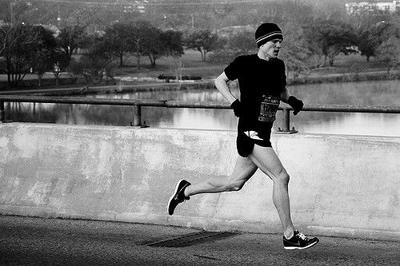
Running is a relatively inexpensive sport that requires little to no material investment aside from a couple of running shoes. However, it has many health benefits. In fact, 24% of the 64 million Americans who went running in 2016 engaged in this sport for the purpose of losing weight and relieving stress.
Experienced and competitive runners are known to engage in hard and relentless training sessions but they aren’t the only ones at risk of injuries. Even beginners who have a poor muscle tone and an improper running form are likely to sustain running-related musculoskeletal injuries. Here are some of the most common musculoskeletal injuries in runners you should take note of:
Runner’s knee
Runner’s knee, or patellofemoral pain syndrome, is one of the most common injuries in runners, hence the name. In fact, it constitutes nearly 25% of running-related knee injuries. Runner’s knee is characterized by pain in the front, around, or behind the kneecap which gets worse with running, squatting, bending, taking the stairs, and prolonged sitting. You might feel a popping and a grinding sensation each time you move your knee. Swelling and inflammation can also ensue as the injury gets worse.
Runner’s knee is often caused by a structural malalignment and an overuse injury. A poor muscle tone, foot deformities, and a direct blow to the knee can also lead to this condition. Once you feel any of these signs and symptoms, stop your activity immediately and rest the affected knee. Apply an ice pack to the knee to prevent further swelling and to numb the pain. You can wear a knee brace for additional knee support and compression. If this isn’t available, however, an elastic bandage is a good alternative.
If the symptoms continue to get worse, consult your doctor for a more thorough medical evaluation.
Meniscus Injury
The menisci are wedge-shaped pieces of cartilage found between your shinbone and thighbone. They keep the knee joint stable and absorb shock between the two long bones. A meniscus injury is one of the most common knee injuries in athletes. Aside from a direct blow to the knee, sudden twisting motion, and acceleration-deceleration movements, overuse injuries brought by prolonged wear and tear of the meniscus can also cause the injury.
A meniscus injury often presents with pain, stiffness, swelling, and discoloration of the injured knee. You might also experience a locking or catching sensation each time you move your knee as well as a limited range of motion.
If you suspect a meniscus injury, do not run through the pain. Avoid any activity that worsens the symptoms. Apply a cold compress to the injured knee and seek medical consultation immediately to prevent complications and for faster recovery. If the symptoms aren’t relieved by pharmacological means, your doctor might recommend a surgical repair of the injured meniscus.
You will have to undergo rehabilitation to improve your range of motion and restore your knee strength and mobility. You can also wear a knee brace to protect your injured knee better and minimize pain as you go through physical therapy. The recovery period usually lasts between 1 to 3 months after surgery.
Achilles Tendinitis
The Achilles tendon that runs from your calf muscles to your heel bone is the largest tendon in your body. It is essential for walking, running, and standing, and is designed to withstand a great amount of stress. However, with age-related degeneration and constant overuse, your Achilles tendon is also prone to microtrauma and inflammation, leading to a condition known as Achilles tendinitis.
Athletes who subject their body to an intense training program increases the stress that the Achilles tendon receives. This repetitive stress can overwhelm the tensile strength of your tendon, leading to irritation and inflammation. A sudden increase in your running intensity and frequency without giving your body enough time to recover from the drastic change can also lead to Achille tendinitis.
Aside from inflammation, Achilles tendinitis is also characterized by pain and stiffness of the Achilles tendon every morning and after an exercise. Prevent your injury from worsening by getting adequate rest and placing an ice pack on your inflamed tendon. You can also wear an ankle brace to immobilize your ankle and reduce irritation.
Although these injuries are relatively common in runners, it doesn’t mean that they are not preventable. Aside from keeping your body safe and observing preventive measures to prevent injuries, awareness of these common musculoskeletal injuries related to running is also important.


(0) comments
We welcome your comments
Log In
Post a comment as Guest
Keep it Clean. Please avoid obscene, vulgar, lewd, racist or sexually-oriented language.
PLEASE TURN OFF YOUR CAPS LOCK.
Don't Threaten. Threats of harming another person will not be tolerated.
Be Truthful. Don't knowingly lie about anyone or anything.
Be Nice. No racism, sexism or any sort of -ism that is degrading to another person.
Be Proactive. Use the 'Report' link on each comment to let us know of abusive posts.
Share with Us. We'd love to hear eyewitness accounts, the history behind an article.