
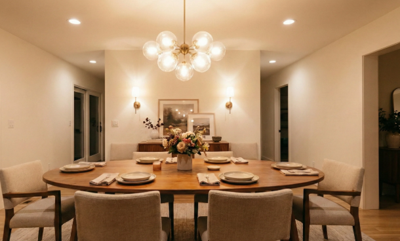
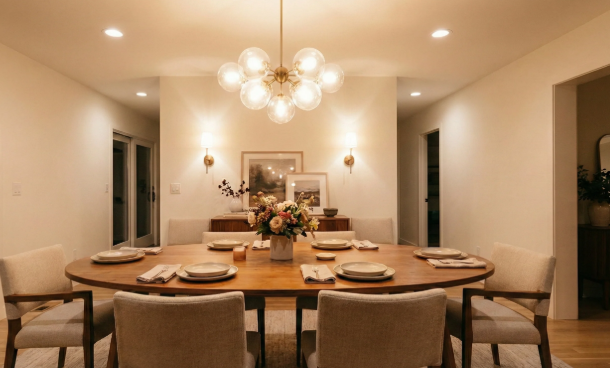
Your dining room is more than just a place to eat; it's where families gather, friends celebrate, and memories form around the table. The right lighting transforms this space from merely functional to genuinely inviting, enhancing both the food and the experience of dining together. Yet many homeowners struggle to get dining room lighting right, settling for whatever fixture came with the house or choosing options that are too bright, too dim, or completely wrong for the space. The difference between adequate lighting and exceptional lighting lies in understanding how light affects mood, functionality, and the overall dining experience. This guide explores how to select and arrange dining room lighting that creates the perfect atmosphere whilst meeting practical needs.
Understanding Dining Room Lighting Needs
Balancing Ambiance with Function
Dining rooms require a delicate balance between atmosphere and practicality. You need sufficient light to see food clearly and navigate safely, yet lighting that's too bright creates an institutional feeling that undermines relaxation and conversation. The ideal approach combines ambient lighting providing overall illumination with accent lighting that creates visual interest and focal points.
How Light Affects Dining Experience
color temperature dramatically influences how food appears and how people feel in a space. Warm light (2700K to 3000K) enhances reds and oranges, making food look more appetising, whilst creating cosy, intimate atmospheres. Cooler light (4000K and above) makes food appear less appealing and creates more formal, energetic environments. Most dining spaces benefit from warm light that flatters both food and faces.
Selecting the Right Light Fixtures
Pendant Lights and Chandeliers
Overhead pendant lights or chandeliers serve as focal points whilst providing primary illumination. These fixtures work best when positioned 75 to 90 centimetres above the table, allowing diners to see each other without glare. Consider fixture size relative to your table; a rule of thumb suggests the fixture should be roughly one half to two-thirds the table width. Pendants with downward-facing shades direct light onto the table whilst minimising glare.
Wall Sconces and Accent Lighting
Wall sconces flanking a sideboard or buffet add visual interest whilst providing supplementary light. Dimmer switches on wall sconces allow adjusting light levels throughout the meal, creating flexibility for different occasions. Accent lighting on artwork or architectural features adds depth and sophistication.
Layered Lighting Approach
Professional designers recommend layering three types of light. Ambient lighting provides overall illumination. Task lighting ensures diners can see food clearly. Accent lighting highlights architectural features or artwork. Combining these creates flexibility; you can adjust lighting depending on whether you're hosting a formal dinner party, casual family meal, or intimate gathering.
Practical Considerations for Dining Room Lighting
Dimmer Controls and Flexibility
Installing dimmer switches is one of the most valuable investments in dining room lighting. Dimmers allow adjusting light levels throughout meals and for different occasions. A bright, cheerful lunch setting requires different light than an intimate dinner party. Dimmers provide this flexibility without requiring fixture changes.
Size and Proportion
Fixture scale matters significantly. Oversized fixtures overwhelm small rooms, whilst undersized fixtures look insubstantial in large spaces. Measure your table and room proportions carefully. Wide tables benefit from multiple pendants rather than a single large fixture. Long, narrow rooms benefit from fixtures that echo the room's proportions.
Color and Material Choices
Fixture materials influence light quality and room aesthetics. Metal fixtures (brass, bronze, steel) suit modern and traditional spaces. Glass shades diffuse light evenly, whilst fabric shades create softer, more diffused illumination. Consider how finishes complement your existing décor and other metallic elements in the room.
Creating Mood Through Lighting Design
color Temperature Considerations
Warm color temperatures (2700K) create intimate, relaxed atmospheres ideal for evening meals and entertaining. Neutral white (3000K to 4000K) works well for spaces serving multiple functions. Avoid cool, bluish light in dining spaces; it undermines appetite and creates uncomfortable, clinical atmospheres.
Light Intensity and Brightness
Dining room lighting should provide enough light to see food clearly without creating harsh glare on the table or faces. A common mistake is installing lights that are too bright, which looks institutional rather than inviting. Test lighting levels at different times with dimmer switches before committing to permanent installations.
FAQ Section
What's the ideal height for hanging dining room pendant lights?
Hang pendants 75 to 90 centimetres above the table surface. This positioning provides adequate light for the table whilst allowing diners to see each other without obstruction or glare. Adjust based on ceiling height; higher ceilings may require slightly lower positioning for proper proportions.
How many pendant lights should I use over my dining table?
This depends on table size and room proportions. Small tables work well with a single pendant. Tables 120 to 150 centimetres long benefit from two pendants spaced evenly. Very long tables may require three pendants. Space multiple fixtures roughly 60 centimetres apart for balanced illumination.
Should dining room lighting be warm or cool?
Warm light (2700K to 3000K) is ideal for dining spaces. Warm light flatters skin tones and food appearance, creating inviting, intimate atmospheres. Avoid cool light, which makes spaces feel institutional and undermines appetite. Install dimmers to adjust warmth throughout the meal if desired.
Can I use recessed lighting in a dining room?
Recessed lights can supplement other fixtures but shouldn't serve as primary dining room lighting. They create harsh shadows on faces and don't provide the visual interest or focal point that pendant lights or chandeliers offer. Use recessed lights for ambient background lighting combined with statement overhead fixtures.
What's the best type of bulb for dining room lighting?
LED bulbs offer excellent options for dining rooms. Choose warm white LEDs (2700K) that mimic traditional incandescent warmth. LEDs are energy-efficient, long-lasting, and available in dimmable options. Ensure bulbs are compatible with your dimmer switches if you plan to adjust light levels.
Dining room lighting profoundly influences how you experience meals and gather with loved ones. Rather than treating lighting as an afterthought or settling for whatever came with your space, thoughtful lighting design creates atmospheres that enhance food, conversation, and connection. By understanding color temperature, selecting appropriately scaled fixtures, and incorporating dimmer controls, you create flexibility for any occasion. Warm, well-positioned lighting transforms your dining room from merely functional into genuinely inviting, making every meal a more enjoyable experience. Whether redesigning an existing space or outfitting a new home, investing in quality dining room lighting pays dividends through years of enhanced gathering and dining moments.

(0) comments
We welcome your comments
Log In
Post a comment as Guest
Keep it Clean. Please avoid obscene, vulgar, lewd, racist or sexually-oriented language.
PLEASE TURN OFF YOUR CAPS LOCK.
Don't Threaten. Threats of harming another person will not be tolerated.
Be Truthful. Don't knowingly lie about anyone or anything.
Be Nice. No racism, sexism or any sort of -ism that is degrading to another person.
Be Proactive. Use the 'Report' link on each comment to let us know of abusive posts.
Share with Us. We'd love to hear eyewitness accounts, the history behind an article.