
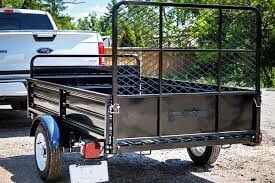
In Canada, logistics and material handling often require compact and adaptable transport solutions. Warehouse operations, small scale construction, and equipment delivery in urban and rural areas depend on utility trailers that are easy to maneuver and maintain. A five by seven foot single axle utility trailer with ramp provides a practical option for transporting tools, machinery, and packaged goods. Its manageable size and compatibility with light duty vehicles support efficient movement across short distances, especially in regions where space and accessibility are limited.
Methods and Common Use CasesTypical Applications
- Transport of warehouse inventory between facilities
- Movement of landscaping and maintenance equipment
- Delivery of small machinery to job sites
- Support for mobile service operationsMethods and Common Use CasesTypical Applications
- Transport of warehouse inventory between facilities
- Movement of landscaping and maintenance equipment
- Delivery of small machinery to job sites
- Support for mobile service operations
Loading Approach
The rear ramp allows equipment to be rolled or driven onto the trailer surface. This reduces the need for lifting devices and improves handling efficiency. Proper weight distribution is essential to maintain stability during transport.
Efficiency, Safety, and Productivity
Efficiency in material transport reduces idle time and improves workflow coordination. A utility trailer supports productivity by enabling quick loading and unloading cycles. Safety remains a priority, as improper loading or towing practices can lead to accidents. Consistent procedures and operator awareness contribute to reliable daily operations.
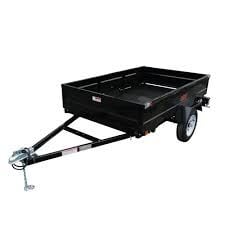
Technical Foundations and Capability Considerations
Key technical elements influence performance:
- Payload capacity and axle strength
- Coupler compatibility with towing vehicles
- Ramp angle and load bearing structure
- Tire condition and suspension design
Operators must match the trailer capacity with the towing vehicle specifications to ensure stable transport conditions.
- Factors Affecting Performance and Safety
- Load balance and securing methods
- Road conditions, including snow and ice
- Vehicle towing capability
- Operator driving practices
In Canadian environments, seasonal weather changes can affect traction and braking distance, which must be considered during transport planning.
Safety Considerations and Best Practices
- Inspect hitch connection before each trip
- Use proper tie down straps to secure loads
- Check tire pressure and lighting systems
- Maintain clear visibility and safe driving speeds
- Follow local transport regulations
Regular inspection and preventive maintenance reduce the risk of equipment failure during operation.
Equipment, Tools, and Accessories
Utility trailers are often used alongside:
- Tie down systems and load straps
- Wheel chocks for stabilization
- Portable loading equipment
- Protective covers for cargo
These tools improve safety and help maintain cargo condition during transit.
Advantages and Limitations
Advantages
- Compact size for easy storage and transport
- Simple loading process with ramp access
- Lower operational cost compared to larger trailers
Limitations
- Limited payload capacity
- Not suitable for heavy industrial machinery
- Performance affected by improper load distribution
Real World Example
A warehouse team in Ontario used a compact utility trailer to transport maintenance equipment between storage facilities. The ramp design allowed quick loading of wheeled tools, while the trailer size enabled access to confined loading areas. By standardizing loading procedures, the team improved turnaround time and reduced manual handling risks.
Future Trends
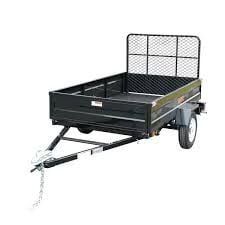
A five by seven foot single axle utility trailer with ramp serves as a practical solution for light duty transport tasks in Canadian logistics and industrial settings. Its effectiveness depends on proper use, maintenance, and alignment with operational needs. Future trends may include improved materials, enhanced safety features, and integration with fleet management systems. These developments are expected to support safer and more efficient transport operations across industries.
(0) comments
We welcome your comments
Log In
Post a comment as Guest
Keep it Clean. Please avoid obscene, vulgar, lewd, racist or sexually-oriented language.
PLEASE TURN OFF YOUR CAPS LOCK.
Don't Threaten. Threats of harming another person will not be tolerated.
Be Truthful. Don't knowingly lie about anyone or anything.
Be Nice. No racism, sexism or any sort of -ism that is degrading to another person.
Be Proactive. Use the 'Report' link on each comment to let us know of abusive posts.
Share with Us. We'd love to hear eyewitness accounts, the history behind an article.