
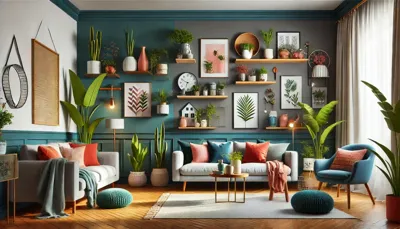

You want to make your place look better without knocking down walls or spending a fortune. The most effective upgrade is changing how you display things on your walls. Specifically using picture rail systems to hang art without destroying the plaster. It instantly elevates a room and provides the main answer to anyone looking for a low-effort transformation.
I think a lot of us get stuck believing we need to rip up floors or buy expensive new furniture to refresh a home. That is rarely true.
We watch renovation shows and assume we need a massive budget. Or a team of contractors living in our house for six months. I used to think that way too. But honestly it is exhausting. Just a few visual tweaks can do the heavy lifting.
High-Impact Changes Without Major Renovations
Let us start with the obvious stuff. Lighting changes mood entirely. Throwing a new rug down hides ugly floors.
But the walls are where the real magic happens. A blank wall is basically a missed opportunity. Yet filling it with dozens of tiny nail holes feels like a terrible idea. Especially if you change your mind a lot. I know I do. My partner & I once spent an entire Saturday trying to align three frames in our hallway.
We used tape measures and spirit levels. We even tried that trick with the toothpaste on the back of the frame. It was a disaster. We ended up with seven holes and a crooked display.
Not our best weekend. We gave up and left the frames leaning against the skirting board for a month.
For anyone wondering what these actually are. Picture rail systems are wall-mounted or ceiling-adjacent tracks that allow art and frames to be hung with hooks, cords, or wires. So wall decor can be rearranged without drilling multiple holes into plaster. They completely remove the stress of getting it right the first time. It is a simple concept that works perfectly.
Upgrade Your Walls Without Repainting
Nobody enjoys patching drywall. It is messy and the paint never quite matches afterward.
A gallery system solves this permanently. You install the track high up near the ceiling. Then everything hangs down on adjustable cables. You can swap a massive canvas for two smaller prints in about thirty seconds. No dust.
Historic properties used these back in the Victorian era to protect expensive wallpaper. Now designers are bringing them back for modern homes. Because they just make sense.
You see them in old federation homes all the time. The original wooden ones are beautiful but sometimes impractical for heavy modern frames. That is why the newer metal tracks are so popular. Sometimes I wonder why houses are not just built with them automatically.
Flexible Decorating for Renters
Renting in Australia comes with strict rules. Landlords hate wall damage.
If you want to hang a heavy mirror or a framed poster you usually have to beg for permission. Or risk losing your bond. Picture hanging systems are incredibly rental friendly. Once the main track is up you have TOTAL freedom. You can hang whatever you want. Move things around every week if you feel like it.
It is funny how much a bare rental feels like a hotel room. You never quite settle in until your own things are on the walls. Being able to display your life makes a huge psychological difference. It shifts the space from 'theirs' to "yours".
Some landlords will even agree to install them if you ask nicely because it protects their property. They don't want to repaint between tenants any more than you want to pay for it. It really is a win for everyone involved.
Plus it gives a temporary space a very permanent curated feel. A real sense of home.
Make Art a Focal Point
Bare walls make a room feel unfinished. Cold even. Adding a Picture Rail draws the eye upward. It creates an illusion of height.
Rooms suddenly feel taller and more polished. Like a real gallery. I remember walking into a friend's apartment in Melbourne and noticing how high her ceilings looked. She points out the discreet track running just below the cornice. It was a clever visual trick. The hardware itself can be quite subtle.
You barely notice the clear nylon cords dropping down. Or you can choose stainless steel cables for an industrial vibe. The art becomes the star.
When you walk into a well-styled room your eyes naturally look for an anchor point. A large piece of art centered on a wall track system provides exactly that. It gives the room purpose. It stops the furniture from feeling like it is just floating around aimlessly. Everything suddenly connects.
Not the messy hooks holding it up.
Choosing The Right Hanging Materials
You have a few options when setting this up. Wood, MDF, polymer.
Wooden rails are the traditional choice and can hold a decent amount of weight. Maybe 15 to 25 pounds per hook depending on how it is anchored. MDF is cheaper but might not accomodate the heaviest items. You need to think about what you actually plan to hang before picking the material. It definetly matters.
Using the right hooks is just as important. They slide along the wall track systems so you can adjust the horizontal spacing. Then you slide the picture hook up and down the wire for vertical placement.
It is honestly brilliant. You can achieve perfect alignment without a tape measure.
Styling Your Curated Space
Once the system is up the fun part begins. You do not have to stick to just framed paintings. You can hang mirrors, tapestries, or even small floating shelves.
A lot of people assume these tracks are only for traditional art. 'Proper' art. But I have seen them used for hanging indoor plants and woven baskets. The versatility is what makes them so good. You are not locked into one specific style. Your living room can be a minimalist sanctuary one year and a maximalist explosion the next.
Playing with Layouts
The beauty of adjustable cords is the layering. You can hang a large piece slightly behind a smaller one for a casual studio look. It feels very organic. Less like a stiff museum and more like a lived-in creative space. I prefer that relaxed aesthetic anyway.
Some people like a rigid grid of matching frames. That looks great in a formal dining room. The point is you can try it one way and change it the next day if you hate it. No regrets.
Just unhook and start over.
Fast and Professional Installation
You could probably install a wall track system yourself if you are handy. I wouldn't recommend it though. It takes a lot of patience.
Getting the track perfectly level across a long wall is frustrating. If it is slightly off your art will slide to one end. That is incredibly annoying. Plus you need to make sure it is anchored into the studs securely. Otherwise the whole thing might come crashing down in the middle of the night.
Hiring professionals is just easier. There is a company that offers same-day service across Sydney, Melbourne, and Brisbane with over 400 five-star Google reviews. They know exactly what they are doing. You can check out their picture rail systems here.
Having an expert handle it gives you peace of mind. They get it done fast.
Final Thoughts
Upgrading your home does not require a massive budget or weeks of disruption.
Small changes really do add up. Things like swapping out cabinet handles or adding a smart lighting system from Philips Hue can completely alter the vibe. But for my money the walls are where you get the biggest return on investment. Giving yourself the flexibility to change your art whenever you want is incredibly liberating. You are in complete control of your space.
It makes your house feel more like you. And it can grow & change as your tastes do.
That is what makes a house a home anyway.

(0) comments
We welcome your comments
Log In
Post a comment as Guest
Keep it Clean. Please avoid obscene, vulgar, lewd, racist or sexually-oriented language.
PLEASE TURN OFF YOUR CAPS LOCK.
Don't Threaten. Threats of harming another person will not be tolerated.
Be Truthful. Don't knowingly lie about anyone or anything.
Be Nice. No racism, sexism or any sort of -ism that is degrading to another person.
Be Proactive. Use the 'Report' link on each comment to let us know of abusive posts.
Share with Us. We'd love to hear eyewitness accounts, the history behind an article.