
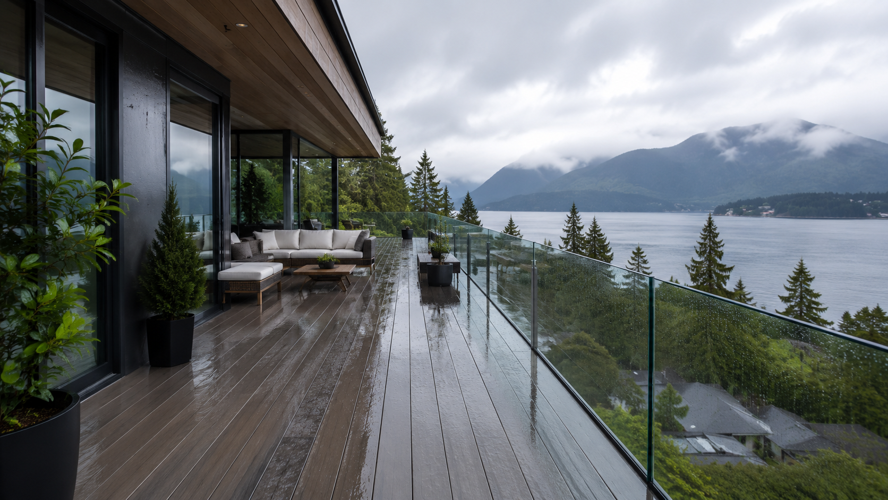
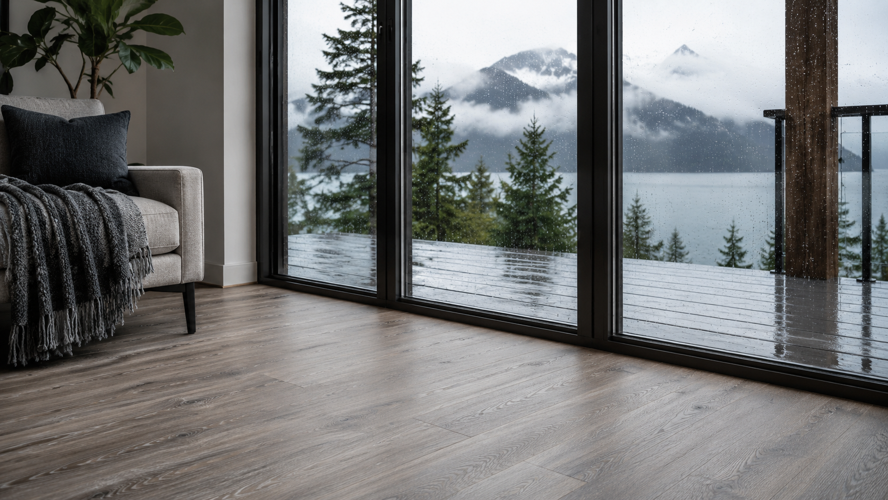

Flooring in Metro Vancouver has to handle more than everyday wear. Rain, wet footwear, seasonal humidity changes, concrete condo slabs, and below-grade spaces can all affect how a floor performs after installation. The best material is not simply the one labelled waterproof or durable. It must suit the room, the subfloor, the building rules, and the way moisture is likely to enter the home
Wet Entryways Need More Than a Water-Resistant Label
In Vancouver, North Vancouver, Burnaby, Richmond, and other Lower Mainland communities, entryways regularly deal with wet shoes, umbrellas, pets, grit, and standing water. These small areas can receive more moisture and abrasion than the rest of the floor.
This does not mean every home needs the same waterproof product throughout. A local contractor such as BC FLOORS in Vancouver can assess the entry layout, adjoining rooms, transitions, subfloor, and cleaning needs before recommending one material for the whole level or a more durable floor near the door.
Luxury Vinyl Plank, or LVP, is often practical for busy entrances because it is easy to clean and many products resist surface water. Water-resistant laminate may also work when spills are removed quickly. Engineered hardwood can be used in entryways, but mats, prompt cleaning, and stable indoor humidity become more important.
A floor marketed as waterproof is not a waterproof room. Water can still reach walls, transitions, expansion gaps, or the subfloor if it remains in place or enters around the perimeter.
Seasonal Humidity Changes Matter Most for Wood
Wood absorbs and releases moisture as indoor conditions change, causing planks to expand or contract.
Solid hardwood is generally more responsive because each plank is made from one piece of wood. Engineered hardwood uses layered construction for greater dimensional stability, making it a practical real-wood option for many Metro Vancouver condos, townhouses, and detached homes.
Engineered construction does not remove the need for acclimation. Flooring should be stored and installed according to the manufacturer’s requirements, while indoor temperature and relative humidity remain reasonably stable. The installer must also provide suitable expansion space and use the correct floating, glue-down, or fastening method.
Cupping, gaps, edge pressure, or movement are not always product defects. They may indicate moisture exposure, poor acclimation, unsuitable site conditions, or an installation method that did not match the room.
Concrete Condo Subfloors Change the Installation Plan
Many Metro Vancouver condos have concrete subfloors. A slab may appear ready for flooring while still having high and low areas, cracks, old adhesive, surface contamination, or excess moisture.
Flatness is especially important for floating LVP and laminate. An uneven slab can make planks flex, separate at the joints, sound hollow, or feel unstable. Glue-down engineered hardwood and resilient flooring also require a clean, smooth surface so the adhesive can perform properly.
Preparation may involve grinding high areas, patching low spots, removing residue, applying a moisture-control system, or using levelling compound. These steps add cost, but they are part of the flooring system rather than optional cosmetic work.
Condo owners should also review strata bylaws before replacing carpet with a hard surface. Acoustic underlayment, IIC or STC documentation, elevator bookings, contractor insurance, and approved working hours may affect the product and installation method.
Basement Flooring Starts With Moisture Risk
Below-grade rooms may be affected by moisture moving through a concrete slab, exterior drainage problems, plumbing leaks, condensation, or previous water entry.
LVP is frequently considered for basements because many products tolerate surface moisture and are easy to maintain. However, moisture trapped beneath an impermeable floor can still contribute to odours, adhesive failure, mould in nearby materials, or damage to trims and walls. The slab and room conditions should be evaluated first.
Engineered hardwood may be possible when the product, moisture readings, subfloor system, and installation method allow it. Solid hardwood is usually less forgiving below grade. Laminate can work in a dry, controlled basement, but its moisture-sensitive fibreboard core makes product selection important.
Carpet provides warmth, softness, and sound control for a dry family room or bedroom. It is less suitable where the slab has unresolved dampness or a history of water entry. Carpet should never be used to hide a moisture problem.
Engineered Hardwood, LVP, Laminate, or Carpet?
No single material is automatically best for Metro Vancouver’s climate. Each balances design, comfort, moisture resistance, sound, and maintenance differently.
Engineered hardwood offers real wood character and better dimensional stability than solid hardwood. It is often chosen for main living areas and renovations where appearance and resale presentation matter.
LVP suits wet entryways, rental suites, basements, kitchens, and households that prioritize easy cleaning. Product quality, wear layer, locking strength, and subfloor flatness still vary.
Laminate can provide scratch resistance and realistic wood visuals at a moderate price. Water-resistant products are more flexible than older laminate, but prolonged moisture exposure can still damage many cores and joints.
Carpet remains useful in bedrooms, stairs, family rooms, and upper floors where warmth, comfort, and sound absorption matter more than water resistance. In many homes, different materials work better in different zones than one product used everywhere.
Moisture Testing and Subfloor Preparation Come First
Moisture testing is important when installing wood, resilient flooring, or adhesive systems over concrete. The correct test depends on the flooring, subfloor, installation method, and manufacturer’s warranty requirements.
The National Wood Flooring Association’s technical guidance recommends evaluating wood flooring and concrete subfloors where applicable. A reading should be compared with the flooring and adhesive manufacturer’s limits rather than treated as a universal pass-or-fail number. The installer should also confirm that the subfloor is clean, dry, structurally sound, and flat enough for the selected product. Moisture testing does not replace flatness checks, crack review, surface preparation, or investigation of visible water damage.
A common local mistake is choosing the finished flooring before understanding what is underneath it. Even a suitable product can fail over an unsuitable subfloor.
Choose Flooring for the Home, Not Just the Climate

Metro Vancouver’s coastal climate matters, but flooring should also suit the room, subfloor, household traffic, strata rules, and maintenance needs. The best choice balances moisture resistance, preparation requirements, acoustic performance, and installation method. A site-specific assessment is more reliable than choosing from a sample or product label alone.


(0) comments
We welcome your comments
Log In
Post a comment as Guest
Keep it Clean. Please avoid obscene, vulgar, lewd, racist or sexually-oriented language.
PLEASE TURN OFF YOUR CAPS LOCK.
Don't Threaten. Threats of harming another person will not be tolerated.
Be Truthful. Don't knowingly lie about anyone or anything.
Be Nice. No racism, sexism or any sort of -ism that is degrading to another person.
Be Proactive. Use the 'Report' link on each comment to let us know of abusive posts.
Share with Us. We'd love to hear eyewitness accounts, the history behind an article.