
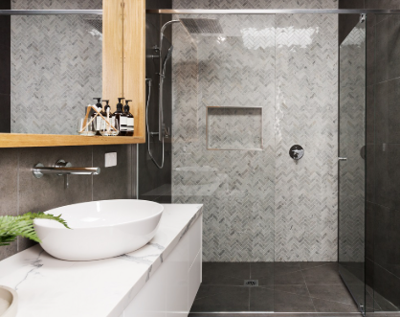

1) Frameless Shower Screen
A frameless shower screen uses thick tempered safety glass without a full metal frame around the edges. You secure the panels with discreet brackets, hinges or channels, which creates a clean and open look in your bathroom.
You often choose this style if you want a modern finish. The clear glass allows more light to move through the space, which can help your bathroom feel larger, especially in smaller layouts.
Most frameless screens use toughened glass for strength and safety. The glass is heavier than framed options, so you need proper installation to ensure stability and correct sealing.
You can customise the design to suit your layout. Options include fixed panels, hinged doors, sliding doors, and different glass finishes such as clear, frosted or tinted.
Cleaning is usually straightforward because there are fewer frames where soap scum can build up. However, you should wipe down the glass regularly to reduce water spots and maintain a clear finish.
2) Semi-Frameless Shower Screen
A semi-frameless shower screen gives you a balance between structure and open design. You get framing around the outer edges, while the door panel usually sits without a full frame.
This design offers a cleaner look than a fully framed screen, but with more support than a frameless option. The partial frame adds strength and helps secure the glass panels in place.
You will often find semi-frameless screens made with toughened safety glass and aluminium framing. The frame can match your tapware or bathroom fittings, which helps you create a consistent finish.
In terms of cost, you can expect a semi-frameless screen to sit between framed and frameless options. It suits you if you want a modern appearance without paying the higher price often linked to fully frameless designs.
Maintenance stays relatively straightforward. With fewer metal edges than a fully framed screen, you reduce areas where water and soap residue collect, while still keeping enough structure for everyday durability.
3) Framed Pivot Door Screen
A framed pivot door screen uses a hinged mechanism that allows the door to swing open on a fixed pivot point. You can usually open the door outward, and some designs allow movement in both directions. This wide opening makes it easier for you to step in and out of the shower.
The full frame supports the glass panel on all sides. You gain added stability and durability, which suits busy households or shared bathrooms. The frame also helps contain water within the shower area when installed correctly.
You need to allow enough clear floor space for the door to swing freely. For that reason, this type often works best in medium to large bathrooms rather than tight layouts. If you have an alcove or corner shower with adequate clearance, a pivot door can fit well.
Framed pivot screens come in a range of finishes and glass options, including clear, tinted, or textured glass. You can match the frame colour to your taps and fittings to maintain a consistent look across your bathroom.
4) Sliding Door Shower Screen
A sliding door shower screen uses panels that glide along a track instead of swinging outward. You open and close the door by sliding it sideways, which helps you manage tight layouts. This design suits bathrooms where space sits at a premium.
You can install sliding screens in alcove showers, corner showers, or wall-to-wall setups. Many suppliers offer options with two or more panels, depending on the opening width. Some designs also work over a bath, giving you a combined shower and bath solution.
Sliding shower screens come in fully framed, semi-frameless, and frameless styles. Framed models often cost less and provide added structural support. Frameless and semi-frameless options create a cleaner look with fewer visible lines.
Most screens use toughened safety glass and aluminium or stainless steel hardware. When you choose quality rollers and tracks, you reduce the risk of sticking or misalignment. Regular cleaning of the tracks helps maintain smooth operation.
If you want a practical, space-saving solution without sacrificing style, a sliding shower screen gives you a balanced option for everyday use.
5) Bi-Fold Shower Screen
A bi-fold shower screen uses panels that fold in on themselves when you open the door. You mount it on hinges, and the panels glide inward rather than swinging fully into the room.
This design works well in small bathrooms or tight en suites where space sits at a premium. You reduce the clearance needed in front of the shower, which helps you position vanities, toilets, or storage units closer to the enclosure.
You can choose framed or semi-frameless styles to suit your layout and budget. Many options come in a range of standard sizes, making it easier to fit compact alcoves or corner showers.
Bi-fold screens also offer practical access. The wide opening makes it easier for you to step in and out, while the folding mechanism keeps water contained within the shower area.
Keep in mind that the hinges and joints require regular cleaning. If you maintain the tracks and seals, you can expect smooth operation and reliable performance over time.
6) Fixed Panel Shower Screen
A fixed panel shower screen uses a single sheet of glass without any moving parts. You secure it in place to separate the shower area from the rest of the bathroom. It suits walk-in showers and open-plan layouts.
You often see this style in modern bathrooms that favour clean lines and minimal hardware. With no door, you reduce hinges, rollers, and frames that require adjustment over time. That simple structure makes daily use straightforward.
Fixed panels work best when you have enough space to control water flow. In smaller bathrooms, you need careful placement to prevent overspray. Many designs pair the panel with a tiled return wall or floor grading to direct water back to the drain.
You can choose from framed, semi-frameless, or frameless options. Frameless glass creates a more open look, while framed versions can offer added definition. Consider glass thickness, height, and coatings to improve durability and make cleaning easier.
7) Hinged Shower Screen
A hinged shower screen opens on pivot or wall-mounted hinges, much like a standard door. You swing the panel outward, and in some designs, it can also open inward depending on the hinge type and installation.
This style suits bathrooms where you have enough clear space for the door to open fully. You need to allow for the arc of the door, which can limit placement in compact layouts.
Hinged screens often appear in frameless or semi-frameless designs. This creates a clean, modern look and keeps visual lines simple. You can pair them with fixed panels to suit alcove or corner showers.
The wide opening makes entry and exit straightforward. You may find this helpful if you prefer fewer tracks and moving parts, as hinged doors avoid the bottom runners used in sliding systems.
You should consider water control and sealing during installation. Quality hinges and proper alignment help prevent leaks and support long-term durability.
8) Corner Shower Screen
A corner shower screen fits neatly into the corner of your bathroom, using two adjoining walls to form the enclosure. You often see this option in smaller bathrooms where space is limited. It helps you make practical use of areas that might otherwise remain unused.
You can choose from several shapes, including square, rectangular, quadrant, and neo-angle designs. Quadrant screens feature a curved front, which softens the layout and can improve movement around nearby fixtures. The right shape depends on your floor space and the position of your plumbing.
Corner shower screens come in framed, semi-frameless, and frameless styles. Sliding doors work well when you want to avoid door swing clearance, while pivot doors offer wider access if space allows. Many suppliers also provide custom sizing to suit unusual layouts.
When planning your installation, measure carefully and consider door clearance, wall support, and waterproofing. A well-fitted corner shower screen creates a defined shower area without overwhelming the room.
9) Walk-In Shower Screen
A walk-in shower screen uses a single fixed glass panel, or a combination of panels, without a door. You leave one side open for entry, which creates a simple and accessible layout. This design suits modern bathrooms and open-plan spaces.
You can install a walk-in screen in both large and compact bathrooms, provided you allow enough space to control water flow. Many homeowners pair it with a tiled floor that slopes gently towards a linear or central drain. This setup helps contain splashes while keeping the area easy to enter.
Frameless glass is common for walk-in screens, although you can choose semi-frameless options for added structure. Toughened safety glass meets Australian standards and provides strength for daily use. You can also select clear, frosted, or textured glass to balance light and privacy.
Cleaning remains straightforward because you avoid tracks and hinges found in sliding or pivot doors. Regular wiping and proper ventilation reduce water marks and soap build-up. If you want a low-maintenance and accessible shower solution, a walk-in screen offers a practical option.
10) Curved Shower Screen
A curved shower screen features glass panels shaped along a gentle radius instead of straight, angular lines. You often see this design in corner showers, where the curved front softens the layout and improves movement around the vanity or toilet.
You can choose from framed, semi-frameless, or frameless options, depending on your budget and style preferences. Frameless curved screens create a cleaner look with fewer visible fittings, while framed versions can offer added structural support and a lower price point.
This type of screen suits small to medium bathrooms where you want to save space without using sharp corners. The rounded edge can make the room feel less confined and allows easier access in tighter layouts.
Manufacturers supply curved screens in fixed panel, pivot, or sliding door configurations. Many Australian suppliers offer adjustable widths to suit common wall spans, including 800mm to 1200mm installations.
When you select a curved shower screen, check the glass thickness, hardware quality, and compliance with Australian safety standards. Proper installation ensures smooth door operation and long-term durability.
Factors Influencing the Choice of Shower Screens
You need to assess how your bathroom layout, cleaning expectations, and budget shape the type of shower screen that will work in practice. These factors directly affect functionality, durability, and long-term costs.
Bathroom Layout Considerations
Your bathroom layout determines which shower screen configuration will function properly. Measure the shower area accurately, including wall lengths, ceiling height, and the position of fixtures such as vanities and toilets.
In compact bathrooms, sliding doors or bi-fold screens save space because they do not swing outward. A pivot or hinged door requires clear floor space to open fully, which may not suit narrow layouts.
Corner showers often use quadrant screens, while alcove showers typically suit sliding or pivot doors installed between three walls. Walk-in designs with fixed panels work well in larger bathrooms where you can allow for an open entry and adequate drainage.
Also consider structural elements. Uneven walls, limited fixing points, or low ceilings may influence whether you choose a fully frameless, semi-frameless, or framed screen.
Maintenance and Cleaning Requirements
Different screen styles demand different levels of upkeep. Frameless screens use fewer metal components, which reduces areas where grime can collect.
However, frameless glass shows water spots more easily. If you have hard water, you may need to wipe the glass regularly to prevent mineral build-up.
Framed screens conceal minor marks and often feel easier to maintain, but the frame channels can trap soap residue. Sliding doors require attention to the tracks, which can accumulate debris if not cleaned routinely.
Consider glass treatments such as protective coatings. These coatings help repel water and reduce staining, but you still need consistent cleaning to maintain clarity and hygiene.
Budget Implications
Your budget affects not only the screen type but also the glass thickness, hardware quality, and installation method. Fully frameless screens generally cost more due to thicker glass and specialised fittings.
Semi-frameless and framed options usually offer a lower entry price. They can still provide durability and functionality when installed correctly.
Custom-made screens cost more than standard sizes, particularly if your bathroom has unusual dimensions. Professional installation adds to upfront costs but reduces the risk of leaks, misalignment, or premature wear.
Balance initial cost with long-term value. Spending more on quality materials and correct installation can reduce repair and replacement expenses over time.

(0) comments
We welcome your comments
Log In
Post a comment as Guest
Keep it Clean. Please avoid obscene, vulgar, lewd, racist or sexually-oriented language.
PLEASE TURN OFF YOUR CAPS LOCK.
Don't Threaten. Threats of harming another person will not be tolerated.
Be Truthful. Don't knowingly lie about anyone or anything.
Be Nice. No racism, sexism or any sort of -ism that is degrading to another person.
Be Proactive. Use the 'Report' link on each comment to let us know of abusive posts.
Share with Us. We'd love to hear eyewitness accounts, the history behind an article.