
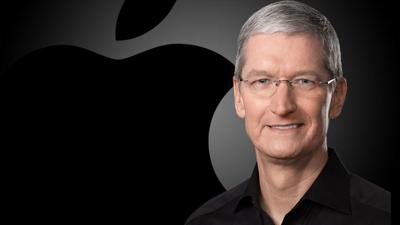

Apple CEO Tim Cook FBI scandal
On December 2nd in 2015, Tashfeen Malik and Syed Rizwan Farook opened fire and killed 14 innocent people in San Bernardino - wounding more than 20 others - before being killed themselves in a shootout with the authorities. It has been nearly three months since that fateful day, and the ripples from it are still being felt. As part of a normal investigation into what caused this married couple to become radicalized, the husband’s iPhone was seized by law enforcement officials. As part of Apple’s privacy protection measures, iPhones are equipped with a feature where, if the passcode is entered incorrectly 10 times in a row, the phone will erase itself. This would return the device to factory settings and destroy any valuable data that the FBI might want to extract.
For help, the FBI turned to Apple. The agency asked Apple for assistance in accessing the phone. The computer company has repeatedly said that they themselves don’t know the passcode for the iPhone and that appears to be the case. Apple has removed themselves from their encryption; basically, the passwords to Apple products aren’t stored within any server that Apple can access. The company that made the encryption says it intentionally cannot beat it. And so Apple's answer to the government has been that they cannot provide access to Farook’s phone.
It is here that that the FBI got very serious. They turned to the legal system for aid. Judge Sheri Pym ruled that while Apple cannot be ordered to break their own encryption, Apple must develop a special version of IOS, the operating system used by Apple devices, that would disable the self-deleting functions of the iPhone as well as remove the delay between entering passcode attempts. This would mean that, instead of having to manually enter the 4-digit passcode one number at a time, the FBI could just have a computer run all possible attempts until it finds the correct one, a process which could take a matter of minutes with the technology currently used by the FBI. The FBI has repeatedly stated that the new technology developed by Apple would only ever be used on this one phone and that this backdoor into Apple devices would never get out to the public.
But Apple CEO Tim Cook isn’t buying the assurances from the government. In response, Cook released a now-famous letter detailing the impact on consumers of the FBI’s demands and why people have the right to know that their data is secure. Since then, various other tech leaders have spoken out in support of Apple. The co-founder of Twitter, Jack Dorsey, tweeted his support for Cook and Apple as did Jan Koum, creator of WhatsApp, and billionaire investor Mark Cuban. Others in the tech field, however, saw the issue as less black and white than Apple. Sundar Pichai, the chief executive of Google, said that while the FBI’s actions could set a dangerous precedent, there should be "an open and thoughtful discussion of this divisive issue." Microsoft and Yahoo, two companies that have been identified as doing significant work with the government as part of the PRISM surveillance program, released a statement offering only marginal support of Apple.
Others, including all of the Republican presidential candidates, have been quick to condemn the computer company. When asked about the ongoing issue, GOP frontrunner Donald Trump said "But to think that Apple won't allow us to get into her cell phone, who do they think they are? No, we have to open it up."
So far, no political candidate has come out squarely in support of Apple. When asked, Democratic hopeful and Vermont Senator Bernie Sanders said that he understood the need for more information about potential attacks, but that he believed the fight against terrorism could be done "without undermining our constitutional rights and our privacy rights."
Both sides of this issue have valid points. The fight against terrorism is a noble one and, in a world where groups like ISIS continue to gain strength, this fight is needed. But the government does not have a good track record when it comes to issues of privacy. In a post Edward Snowden and Patriot Act world, there is no reason to believe this backdoor would only be used to fight terrorists. Personal encryption affects everyone, not just people who check out "strange" books from the library, go on alternative forums online, or receive phone calls from the Middle East.
At the end of the day, this issue and how it will end up being resolved is much bigger than just the San Bernardino shooter and his locked iPhone. Apple complying with this order would give the FBI, and other law enforcement agencies, a way to access every single Apple device. An apt comparison would be having to build a door into the side of your home that, at any time they wanted to, the police could come charging through. And then assume anyone – not just the police -- could get into your home through that door and start looking around through your things. Once such an entrance exists, in this world of hackers, rogue governments and terrorists, there is no way to close it back down. Even if the software itself is never released, it is enough to let the most determined hacker know that there exists a weakness through which they could gain access to your information. The Apple back door is the modern day equivalent of the opening of Pandora’s mythical box. What escapes can never again be reined in.
We obviously don’t want to live in a country where terrorists can maim and kill at will. But we also can’t want to live in a country where the rights upon which this nation were founded are so subjugated by our fear that we cease to have privacy rights. The fight between Apple and the government seems destined to wind up at the Supreme Court, which, come to think of it, is probably something that the founding fathers would approve of.

(0) comments
We welcome your comments
Log In
Post a comment as Guest
Keep it Clean. Please avoid obscene, vulgar, lewd, racist or sexually-oriented language.
PLEASE TURN OFF YOUR CAPS LOCK.
Don't Threaten. Threats of harming another person will not be tolerated.
Be Truthful. Don't knowingly lie about anyone or anything.
Be Nice. No racism, sexism or any sort of -ism that is degrading to another person.
Be Proactive. Use the 'Report' link on each comment to let us know of abusive posts.
Share with Us. We'd love to hear eyewitness accounts, the history behind an article.