
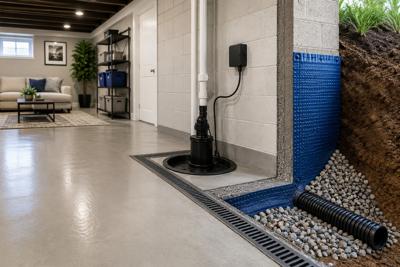

A basement has a way of being ignored until it becomes impossible to ignore. One day it is just the place where holiday bins, old paint cans, and the treadmill of good intentions live. The next day, there is a musty smell, a mysterious damp patch, or a small puddle with the confidence of a much larger problem.
That is why basement waterproofing matters. It is not only about keeping a lower level dry. It is about protecting the structure, comfort, air quality, storage space, and long-term value of the entire home. Water has very little respect for real estate investments, finished drywall, or the box labeled “important documents.”
A dry basement can make a home feel more usable, more comfortable, and more secure. Whether the space is finished, unfinished, used for storage, or waiting for a future remodel, moisture control should come before paint colors, flooring, furniture, or any ambitious plan involving a home theater and a popcorn machine.
Why Basement Waterproofing Protects More Than the Basement
Because basements sit below ground level, they are naturally exposed to soil moisture, rain runoff, groundwater pressure, and seasonal drainage changes. Even small leaks can become larger problems when they are ignored. Moisture can affect walls, flooring, stored belongings, insulation, wood framing, and indoor air quality.
The U.S. Environmental Protection Agency explains that the key to mold control is moisture control. That is the practical heart of basement waterproofing: find where the water is coming from, control it properly, and prevent the home from becoming a science experiment nobody signed up for.
Common Reasons Basements Get Wet
Basement water problems rarely appear out of nowhere. Most begin with drainage, grading, cracks, or pressure that slowly worsen over time. A damp corner or hairline crack may seem minor at first, but water is persistent. It does not need an engraved invitation.
Common causes include clogged gutters, short downspouts, soil that slopes toward the house, foundation cracks, poor exterior drainage, window well leaks, hydrostatic pressure, sump pump failure, and plumbing leaks. Sometimes the problem is outside the home. Sometimes it is inside. Sometimes it is both, because houses enjoy keeping things interesting.
Warning Signs Your Basement Has a Moisture Problem
Early warning signs are easy to dismiss, especially in an unfinished basement. A little mustiness, a faint stain, or a small patch of efflorescence may not feel urgent. However, these are often signals that moisture is present and should be addressed before it becomes more expensive.
- Musty odors that return after cleaning
- Damp air or high humidity
- Water stains on floors or walls
- White, chalky residue on masonry walls
- Peeling paint or bubbling wall coatings
- Visible mold or mildew
- Cracks in foundation walls or floors
- Wet carpet, warped trim, or damaged drywall
- Water collecting near window wells
- A sump pump that runs constantly or does not run at all
Start Outside With Gutters and Downspouts
Some of the most effective basement waterproofing steps begin above ground. Gutters and downspouts should move roof water away from the foundation, not politely deposit it right beside the basement wall. When gutters clog or downspouts end too close to the house, water can collect in the soil and increase pressure against the foundation.
Clean gutters regularly, check for leaks, and make sure downspouts extend several feet away from the home. Splash blocks, buried extensions, or properly designed drainage systems can all help move water farther from the foundation. This is not the glamorous part of homeownership, but neither is discovering that the basement rug has become aquatic.
Check the Grading Around the Foundation
The soil around a home should slope away from the foundation. If the ground slopes toward the house, rainwater naturally moves in the wrong direction. Over time, that water can collect near basement walls and increase the risk of seepage.
Regrading may be a simple fix in some homes and a larger project in others. The goal is to direct surface water away before it becomes a basement problem. Homeowners should also watch for settled soil near the foundation, especially around older homes, patios, walkways, and landscaping beds.
Interior Waterproofing Controls Water After It Enters
Interior waterproofing systems help manage water that has already made its way into or under the basement. These systems may include interior drains, sump pumps, vapor barriers, sealants, and dehumidifiers. They can be especially useful for homes where excavation is not practical or where water is entering through floor-wall joints.
Interior systems do not always solve the outside source of the water, but they can manage moisture effectively when designed and installed correctly. A sump pump, for example, can help move collected water away from the home. FEMA flood-protection guidance also notes that backflow valves can help prevent sewer backup in certain flood conditions, which is worth discussing with a qualified plumber if the home has backup risk.
Exterior Waterproofing Stops Water Before It Gets In
Exterior waterproofing is often more involved because it addresses the outside of the foundation. This may include excavation, waterproof membranes, drainage boards, footing drains, gravel, and proper backfill. It is more disruptive than many interior options, but it can also provide strong long-term protection when water pressure against the foundation is the main issue.
Exterior work should be handled carefully because foundation excavation affects drainage, landscaping, hardscape, and structural surroundings. It is not the kind of project where “we watched a video” should be the project plan.
Foundation Cracks Need the Right Repair
Not every crack means disaster, but every crack deserves attention. Hairline cracks, stair-step cracks in block walls, horizontal cracks, widening cracks, or cracks that leak after rain can point to different issues. Some may be sealed with injection systems, while others may require structural evaluation.
The important part is identifying whether the crack is only allowing moisture in or whether it suggests movement, pressure, or foundation stress. Cosmetic patching may hide the problem without solving it. A pretty patch over an active leak is just denial with texture.
Humidity Control Matters Even Without Standing Water
A basement does not need visible puddles to have a moisture problem. High humidity can make the space smell musty, damage stored items, encourage mold growth, and make finished areas feel uncomfortable.
ENERGY STAR notes that certified dehumidifiers use more efficient components to remove the same amount of moisture as conventional models while using less energy. A properly sized dehumidifier can help control basement humidity, especially in damp climates or homes where the basement feels clammy even when there is no obvious leak.
Basement Finishing Should Wait Until Moisture Is Solved
Finishing a basement before addressing moisture is one of the most expensive ways to learn patience. Drywall, flooring, insulation, trim, furniture, and built-ins can all be damaged if water problems continue behind the scenes.
Before turning a basement into a guest suite, gym, media room, office, or playroom, confirm that drainage, leaks, humidity, and foundation conditions are under control. FINE’s article on tips for a successful basement remodel is a helpful next step once the space is dry enough to design with confidence.
Do Not Ignore Mold or Musty Odors
Musty odors are not just a basement personality trait. They often mean moisture is present somewhere. The EPA’s mold guidance states that mold growth should be cleaned up and moisture sources should be eliminated because mold will continue returning if the moisture problem is not fixed.
Small, isolated mold issues may be manageable for some homeowners, but larger areas, recurring growth, or mold connected to flooding or hidden water damage may require professional remediation. The real goal is not simply to clean what is visible. It is to stop the conditions that let it grow.
Waterproofing Can Support Long-Term Home Value
Basement waterproofing is not always the most exciting improvement, but it is one buyers notice when it is missing. A damp basement can raise concerns about foundation condition, mold, stored belongings, future repairs, and whether the home has been maintained properly.
A dry, well-managed basement helps protect usable square footage and resale confidence. FINE’s article on basement waterproofing and long-term home value explores this connection in more detail.
Basement Waterproofing Checklist for Homeowners
- Clean gutters and check for overflow during rain.
- Extend downspouts away from the foundation.
- Make sure soil slopes away from the home.
- Inspect window wells and covers.
- Look for cracks in foundation walls and floors.
- Check for musty odors, stains, or efflorescence.
- Test sump pumps before storm season.
- Use a dehumidifier if humidity stays high.
- Keep stored items off the basement floor.
- Address leaks before finishing the space.
When to Call a Professional
Homeowners can handle basic prevention, such as cleaning gutters, extending downspouts, monitoring humidity, and checking for visible warning signs. However, recurring leaks, structural cracks, failing sump pumps, sewer backup concerns, mold growth, or water entering after every rain should be evaluated by qualified professionals.
A good basement waterproofing assessment should identify the source of moisture, not just cover the symptom. The right solution may be simple drainage correction, interior water management, exterior waterproofing, crack repair, humidity control, or a combination of approaches.
The Bottom Line on Basement Waterproofing
Basement waterproofing is one of the most practical ways to protect a home investment. It helps defend against moisture damage, mold, foundation concerns, damaged belongings, and costly repairs that tend to arrive with terrible timing.
A dry basement gives homeowners more options. It can remain reliable storage, become livable square footage, support future remodeling, or simply stop being the part of the house everyone avoids. Water may be persistent, but with the right prevention and repair strategy, it does not have to win.


(0) comments
We welcome your comments
Log In
Post a comment as Guest
Keep it Clean. Please avoid obscene, vulgar, lewd, racist or sexually-oriented language.
PLEASE TURN OFF YOUR CAPS LOCK.
Don't Threaten. Threats of harming another person will not be tolerated.
Be Truthful. Don't knowingly lie about anyone or anything.
Be Nice. No racism, sexism or any sort of -ism that is degrading to another person.
Be Proactive. Use the 'Report' link on each comment to let us know of abusive posts.
Share with Us. We'd love to hear eyewitness accounts, the history behind an article.