
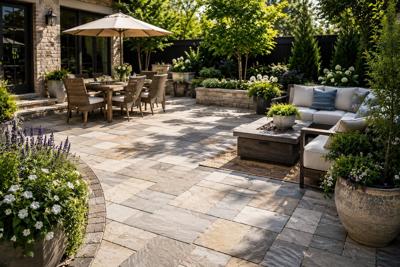
A patio can have beautiful furniture, good lighting, and a table set for summer entertaining, but if the paving looks tired, uneven, or oddly matched to the house, the whole space feels unfinished. Patio paving is the foundation of the outdoor room, both literally and visually. It decides whether the space feels polished, practical, and intentional or like someone paved one weekend and hoped personality would arrive later.
The best patio paving ideas balance beauty with function. The surface has to work with the home’s architecture, handle weather, support furniture, manage water, and still look good after real life happens on it. That includes muddy shoes, dropped drinks, patio chairs scraping back and forth, and the occasional grill incident we will all politely pretend never happened.
Whether you are refreshing an existing patio or planning a new outdoor living space, these paving and decorative ideas can help create a patio that feels more finished, more elegant, and far more usable.
Choose Patio Paving That Matches the Home
The best patio paving does not compete with the house. It complements it. A modern home may look beautiful with large-format concrete pavers, porcelain tile, or clean linear slabs. A traditional home may feel better with brick, natural stone, or textured pavers. A Mediterranean, coastal, or cottage-style property may call for warmer tones, irregular stone, gravel borders, or softer edges.
Color matters as much as material. Paving that is too stark can look harsh in bright sun, while paving that is too dark may absorb heat and make the patio uncomfortable during the day. Neutral stone, warm beige, soft gray, taupe, sand, and weathered earth tones often age more gracefully than trendy high-contrast choices.
Look at the home’s exterior before choosing a surface. Roof color, stucco, siding, trim, doors, stonework, and garden walls should all inform the paving decision. When the patio material feels connected to the house, the entire outdoor space looks more expensive.
For homeowners still planning the broader patio layout, FINE’s 7 Patio Design Mistakes to Avoid is a useful companion before committing to permanent materials.
Use Large-Format Pavers for a Clean, Modern Look
Large-format pavers are one of the easiest ways to make a patio look modern and uncluttered. Their scale creates a calm, architectural look that works especially well with contemporary homes, pool areas, and minimalist outdoor spaces.
These pavers can be laid in a grid, staggered pattern, or stepping-stone style with gravel, groundcover, or turf between them. The cleaner the lines, the more important the installation becomes. Uneven spacing, poor grading, or mismatched cuts will show quickly.
Large pavers also work well when the goal is to create flow between indoor and outdoor spaces. If the patio sits just beyond sliding doors or large windows, a simple paving pattern can make the transition feel more seamless.
The key is restraint. Let the scale of the pavers do the work. Too many colors, busy borders, and competing patterns can make a modern patio feel restless instead of refined.
Try Natural Stone for a Timeless Patio
Natural stone gives a patio texture, character, and a sense of permanence. Flagstone, limestone, slate, travertine, sandstone, and bluestone can all create beautiful outdoor surfaces, depending on the climate, budget, and style of the home.
Stone works especially well in gardens because it feels organic. It can soften the transition between the house and landscape, especially when paired with flowering borders, ornamental grasses, citrus trees, or climbing vines.
There are practical considerations. Some stone can become slippery when wet. Some surfaces may require sealing. Some materials may absorb heat. Others may weather beautifully but need careful installation to avoid uneven surfaces.
For a luxury look, avoid choosing stone by color alone. Texture, thickness, edge style, installation pattern, and joint material all affect the finished patio. A beautiful stone laid poorly will still look poor. Expensive materials do not rescue sloppy installation, which is rude but true.
Use Brick or Herringbone Patterns for Charm
Brick paving has a classic charm that works beautifully with traditional, cottage, historic, and garden-style homes. It can feel warm, established, and slightly romantic without trying too hard.
Pattern changes everything. Running bond feels simple and classic. Basketweave adds old-world character. Herringbone feels more tailored and can make a patio or pathway look instantly more designed. A herringbone brick patio under a tree, near a garden wall, or beside a dining area has the kind of charm that makes people say, “This must have always been here,” which is usually the dream.
Brick can also be used as a border around larger pavers or natural stone. This is a smart way to add detail without making the entire patio feel busy. Borders help define the shape of the space and can make simple paving look more finished.
As with any paving material, think about drainage, leveling, and maintenance. Brick patios need proper base preparation so they do not shift, dip, or become a trip hazard over time.
Add Gravel, Pebbles, or Decorative Stone for Texture
Gravel and decorative stone can soften a patio and add texture without the cost of a fully paved surface. They work especially well in garden paths, seating nooks, side yards, fire pit areas, and transitions between patio zones.
Pea gravel, decomposed granite, crushed stone, and river rock each create a different look. Pea gravel feels relaxed and European. Decomposed granite can feel clean and casual. Larger decorative stones can create contrast around planters, pavers, or water features.
Gravel is also useful around large-format pavers because it emphasizes the geometry of the layout. A few stepping pavers set into gravel can look chic and intentional, especially when paired with sculptural plants and good lighting.
The tradeoff is maintenance. Gravel can migrate, collect leaves, or become difficult under certain furniture legs. Use edging, proper base preparation, and furniture with stable feet to keep the area functional.
Consider Permeable Paving and Drainage Early
Drainage should never be an afterthought. A patio that holds water, slopes toward the house, or creates runoff problems can become expensive quickly. Good paving should look beautiful, but it also needs to move water responsibly.
Permeable pavers, gravel joints, rain gardens, planted borders, and proper grading can help reduce water issues depending on the site. The U.S. Environmental Protection Agency notes that rain gardens can help collect and filter stormwater runoff from areas such as roofs, patios, lawns, and driveways.
This does not mean every patio needs to become a full environmental engineering project. It means water needs a plan. Where will it go during a storm? Will it pool near the house? Will it run toward planting beds? Will it erode soil? Will it create slippery areas?
These questions are not glamorous, but neither is discovering after a heavy rain that your new patio has become a shallow decorative pond.
Use Planting Between Pavers for a Softer Look
Planting between pavers can make a patio or pathway feel charming, relaxed, and connected to the garden. Low-growing plants such as creeping thyme, dwarf mondo grass, or other suitable groundcovers can soften hard lines and add a more natural look.
This approach works best where foot traffic is moderate and the plants are chosen for the climate, sun exposure, and water conditions. Not every plant wants to be stepped on, baked in afternoon sun, or wedged between stone and then expected to flourish politely.
Planted joints are especially effective in garden paths, stepping-stone patios, and informal seating areas. They can make the paving feel less rigid while still providing structure and movement through the outdoor space.
For homeowners who want the garden around the patio to feel more alive, FINE’s When a Garden Feels Alive: How Birds Elevate Outdoor Living offers a useful next read.
Frame the Patio With Borders and Edging
Borders are one of the most overlooked patio paving ideas, yet they can make a simple surface feel much more polished. A border creates definition, adds contrast, and gives the patio a finished edge.
Brick borders, stone bands, gravel edges, metal edging, or contrasting pavers can all work depending on the style of the home. Borders are especially useful when the main patio material is simple. A concrete paver patio, for example, can look far more intentional with a stone or brick edge.
Edging also has a practical role. It helps keep gravel, soil, mulch, and planting beds where they belong. Proper paver edge restraints can also help keep the paving system stable and prevent individual pavers from shifting over time. Without it, the patio can slowly blur into the landscape in a way that feels less “English garden” and more “we lost control in April.”
If the patio connects to pathways, use borders to guide the eye and create continuity. This makes the entire backyard feel designed rather than pieced together over several weekends and one optimistic hardware-store trip.
Decorate the Patio Surface With Outdoor Rugs
Paving provides the foundation, but outdoor rugs help define how the patio is used. A rug can make a seating area feel like an outdoor living room, soften a dining zone, or add pattern without changing the hardscape.
Choose outdoor rugs that are designed to handle moisture, sun, and foot traffic. The scale should fit the furniture. In a lounge area, the front legs of chairs and sofas should ideally sit on the rug so the grouping feels connected. In a dining area, the rug should be large enough for chairs to remain on it when pulled out.
A rug is especially helpful when the patio paving is very simple. It adds warmth and style without requiring permanent changes. It also gives you a way to refresh the space seasonally.
For more on this design layer, see FINE’s Outdoor Living: How Outdoor Rugs Can Enhance Your Patio Experience.
Let Lighting Highlight the Paving
Good lighting does more than help people find their way to the table. It can make paving look more beautiful at night. Path lights, step lights, uplights, lanterns, and low-voltage landscape lighting can bring out texture, define edges, and make the patio feel more luxurious after sunset.
Lighting is especially important around steps, level changes, pathways, and outdoor dining areas. A patio may be gorgeous in daylight, but if people cannot safely move through it at night, the design is not finished.
Warm lighting usually works best. It softens stone, flatters plants, and makes outdoor spaces feel inviting instead of commercial. Cool lighting can make even expensive paving look harsh.
If the patio is used for entertaining, lighting should support both mood and function. FINE’s How to Design a Patio for Effortless Outdoor Entertaining offers more ideas for creating a patio guests actually want to linger in.
Make the Patio Feel Connected to the Garden
The most successful patios do not feel dropped into the yard. They feel connected to the garden around them. Planting, pathways, borders, furniture, lighting, and material choices should all help the patio belong to the larger outdoor space.
Use planting beds to soften hard edges. Add planters where the patio meets the house. Repeat materials from the patio in nearby pathways or garden walls. If the patio is formal, keep the surrounding landscape more structured. If the garden is relaxed, let the paving feel softer and more organic.
The National Wildlife Federation recommends native blooming trees, shrubs, and wildflowers to help provide pollinators with nectar and pollen, which can make the landscape surrounding a patio feel more vibrant and alive. See its pollinator guidance for more background.
For more garden-focused ideas, see FINE’s Garden Upgrade Ideas That Make Your Outdoor Space Look More Expensive.
The Right Paving Makes the Patio Feel Finished
Patio paving is not just the surface under the furniture. It sets the tone for the entire outdoor space. The right material, pattern, color, border, drainage plan, and surrounding landscape can make a patio feel more polished before a single cushion or cocktail glass is added.
Start with the home’s architecture, then choose paving that supports how the space will be used. Dining patios, lounge areas, garden paths, poolside spaces, and fire pit zones each have different needs.
The strongest patio paving ideas are the ones that make the outdoor space look beautiful and work better. That is the sweet spot: a patio that feels designed, lives comfortably, handles real life, and does not require explaining to guests why one corner always turns into Lake Patio after rain.

(0) comments
We welcome your comments
Log In
Post a comment as Guest
Keep it Clean. Please avoid obscene, vulgar, lewd, racist or sexually-oriented language.
PLEASE TURN OFF YOUR CAPS LOCK.
Don't Threaten. Threats of harming another person will not be tolerated.
Be Truthful. Don't knowingly lie about anyone or anything.
Be Nice. No racism, sexism or any sort of -ism that is degrading to another person.
Be Proactive. Use the 'Report' link on each comment to let us know of abusive posts.
Share with Us. We'd love to hear eyewitness accounts, the history behind an article.