
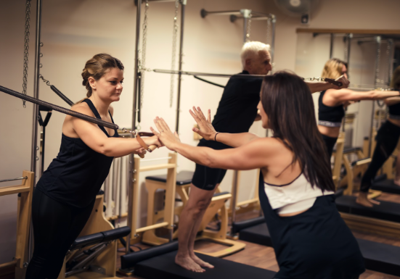

Choosing the right Pilates instructor training program can feel confusing. Many people worry about what they need to learn and how to get certified. This blog will break down what to expect from Pilates instructor training, including key topics like anatomy, teaching skills, and practice hours.
Get ready for clear tips that make your next steps easy.
Types of Pilates Instructor Training Programs
You can choose from several Pilates instructor training programs. Each program teaches specific skills and knowledge for different class settings.
Mat Instructor Training
Most Mat Pilates instructor training courses last 4 to 8 weeks. Programs often include at least 100 hours of combined study, practice teaching, and observation. "A good mat instructor program covers the basics of anatomy and safe body alignment," says fitness educator Jessica Valant, PT.
Trainees learn how to teach beginner to advanced exercises on a simple mat without special equipment.
Courses also teach class design and client modifications so instructors can work with many types of people. Some programs require students to pass both written and practical exams for certification before starting their Pilates teaching careers.
Reformer Instructor Training
Reformer Instructor Training focuses on using the reformer machine. This equipment helps create resistance and support for various Pilates exercises. In this training, you will learn how to teach clients safely and effectively.
You'll study proper form and alignment to avoid injuries.
The program includes lessons on anatomy and biomechanics. Understanding these topics is crucial for effective instruction. You also get hands-on practice with the reformer during your training sessions.
This experience builds your confidence as a future instructor. By completing Reformer Instructor Training, you gain skills that are important in teaching Pilates classes.
Comprehensive Instructor Training
Comprehensive Instructor Training covers all aspects of Pilates instruction. This program includes mat and reformer training. It teaches anatomy, biomechanics, and proper form. Instructors learn how to create classes that fit different clients.
They also focus on client modifications based on individual needs.
Students gain practical experience through hands-on learning. They practice teaching in real class settings. Comprehensive training builds a strong foundation for future instructors.
Graduates are well-prepared for certification as Pilates instructors after completing the program.
Key Components of a Training Program
A good training program includes strong learning about the body and how it moves. You will also learn how to guide clients through different exercises safely and effectively.
Anatomy and Biomechanics
Anatomy and biomechanics are key parts of Pilates instructor training. Understanding the human body helps instructors know how to teach effectively. Each muscle group plays a role in movement.
This knowledge allows trainers to help clients move safely and correctly.
Biomechanics focuses on how the body moves during exercises. Instructors learn about proper form and alignment through this study. They teach clients modifications based on individual needs.
Knowing anatomy also helps with client communication, making instructions clear and effective.
Proper Form and Alignment
Anatomy and biomechanics play a key role in Pilates. Proper form and alignment enhance safety during workouts. In instructor training, future teachers learn how to guide clients in executing movements correctly.
This helps prevent injuries.
Instructors focus on body positioning and movement quality. They teach clients to engage their core muscles while maintaining proper posture. Emphasizing alignment improves effectiveness in exercises.
Learning these techniques prepares instructors to assist clients with modifications as needed.
Class Programming and Client Modifications
Proper form and alignment leads to effective class programming. In Pilates instructor training, you will learn how to design classes that suit different clients' needs. This includes knowing which exercises work best for various skill levels.
Modifications are key in teaching. Every client has unique abilities and limitations. You will gain skills to adjust exercises so everyone can participate safely and effectively. Choosing the right modifications helps clients get the best results while enjoying their practice.
How to Choose the Right Training Program
Choosing the right training program is key to your success. Look for programs that offer hands-on learning. Check if the instructors are experienced and knowledgeable. Join a community that supports you even after graduation.
These factors will help you grow as an instructor. Keep reading to learn more about Pilates training!
Many trainees find that professional pilates training not only enhances their teaching skills but also deepens their understanding of anatomy and client needs.
Hands-on Learning Opportunities
Hands-on learning is a key part of Pilates instructor training. Students get to practice techniques in real classes. They work with clients and learn how to give corrections. This experience builds confidence and skills.
Being in the studio helps apply knowledge from lectures. It also allows for sharing tips with peers and instructors. The best training programs offer plenty of chances for this kind of practice, ensuring you’re ready for your future as an instructor.
Experienced and Knowledgeable Educators
Hands-on learning prepares you for real-life teaching. Next, look for experienced and knowledgeable educators in your training program. These professionals guide you through the coursework.
They share their skills and insights from years of practice. Learning from their examples helps you grasp complex topics like anatomy and biomechanics.
Great instructors know how to teach effectively. They can break down challenging concepts into simple ideas. Their experience allows them to offer valuable tips on form and alignment during Pilates sessions.
With their support, you will gain confidence as a future instructor in the fitness field. Choose a program with qualified educators to ensure your success as a Pilates teacher.
Community and Ongoing Support
Community and ongoing support are key parts of Pilates instructor training programs. Many programs offer a strong community for their students. You will meet fellow trainees who share your passion for fitness and teaching.
These connections can lead to friendships and future collaborations.
Support doesn't end after the program. Most schools provide resources even after you graduate. This may include workshops, online classes, or mentorship from experienced instructors.
Having a network helps you stay motivated in your career as a Pilates instructor, which is essential for growth and success in this field.
Next, let's explore what happens after completing the program.
What Happens After Completing the Program
After you finish the program, you will go through a certification process. This step helps you become a qualified Pilates instructor and start your career in fitness.
Certification Process
The certification process for Pilates instructors is straightforward. You will need to complete a training program and pass an exam. Many programs require both written tests and practical assessments.
These help ensure you understand anatomy, biomechanics, and teaching techniques.
After passing the exam, you receive your certification. This shows that you are qualified to teach Pilates classes. It also helps you stand out in the fitness industry. Gaining this credential opens doors to various job opportunities as an instructor.
Next comes building a career as a Pilates instructor.
Building a Career as a Pilates Instructor
Building a career as a Pilates instructor can be rewarding. Many instructors start with certification programs. These programs teach key topics like anatomy and biomechanics, proper form, and client modifications.
After finishing their training, graduates can pursue jobs in fitness studios or wellness centers.
Networking is important for success. Joining professional groups helps instructors connect with others in the field. They can share tips and advice on teaching techniques and class management.
Ongoing education keeps skills fresh and open doors for new opportunities in the fitness industry. Possible next steps include exploring the certification process needed to become a recognized instructor.
Pilates instructor training programs offer a lot. You will learn about anatomy and proper form. Many types of training are available, too, like mat and reformer classes. After finishing the program, you can get certified to teach.
This journey can lead to an exciting career in fitness.


(0) comments
We welcome your comments
Log In
Post a comment as Guest
Keep it Clean. Please avoid obscene, vulgar, lewd, racist or sexually-oriented language.
PLEASE TURN OFF YOUR CAPS LOCK.
Don't Threaten. Threats of harming another person will not be tolerated.
Be Truthful. Don't knowingly lie about anyone or anything.
Be Nice. No racism, sexism or any sort of -ism that is degrading to another person.
Be Proactive. Use the 'Report' link on each comment to let us know of abusive posts.
Share with Us. We'd love to hear eyewitness accounts, the history behind an article.