
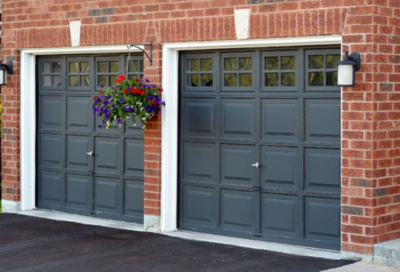

Most homeowners spend hours picking paint colors and zero minutes thinking about insulation ratings. Yet your garage door covers one of the largest openings in your home's envelope — and in climates with real temperature swings, that gap matters. A premium overhead garage door isn't just about looks. It's about how your home performs year-round.
Why Climate Is the Starting Point
The door that works perfectly in coastal California will fail in Minnesota winters. Material expansion, moisture infiltration, thermal bridging — these aren't edge cases. They're what happens when you ignore climate in the selection process.
Start with your region's temperature range. If you regularly see below-freezing winters or summers pushing past 100°F, you need a door engineered for thermal stability — not one that happens to look good in the catalog photo.
Material Performance Under Pressure
Steel Doors in Cold and Hot Climates
Steel is the most popular choice — and for good reason. It holds its shape, resists warping, and handles both heat and cold better than wood. But not all steel doors are built the same.
Single-layer steel offers no meaningful insulation. Double- and triple-layer construction sandwiches polyurethane or polystyrene foam between steel skins. The difference in thermal performance is significant — triple-layer doors with polyurethane cores can reach R-values of 12–18, compared to roughly R-2 for a bare single-layer panel.
In climates where your garage doubles as a workshop or living space, that gap in R-value translates directly into heating and cooling costs.
Wood and Wood Composite in High-Humidity Regions
Wood looks stunning. It also absorbs moisture, swells, warps, and rots if you live somewhere with heavy rainfall or high humidity — think the Gulf Coast, Pacific Northwest, or Florida.
Wood composite offers a middle ground: the visual warmth of wood grain with better dimensional stability. Still, even composites need proper sealing and maintenance in wet climates. This is where many homeowners underestimate long-term upkeep costs.
Aluminum and Glass in Coastal Environments
Near saltwater, corrosion is the enemy. Aluminum naturally resists rust, making it a strong candidate for coastal homes. Paired with tempered or insulated glass panels, it also lets natural light into the garage — a genuine quality-of-life upgrade.
The tradeoff: aluminum dents more easily than steel and offers lower insulation values unless you spec a thermally broken frame. Worth knowing before you commit.
Understanding Insulation Ratings
R-value measures resistance to heat flow. Higher is better — but context matters.
Key thresholds to understand:
R-6 to R-9: adequate for mild climates or garages used only for parking
R-10 to R-13: solid choice for mixed climates with moderate heating and cooling loads
R-14 and above: recommended for extreme cold, heated garages, or garages attached to living spaces
One number people overlook: the U-factor, which measures heat loss across the entire door assembly — not just the panel. A door with a high R-value panel but poorly sealed edges and an uninsulated frame will underperform its rating in real conditions.
Weather Seals and Bottom Gaskets
Insulation alone won't save you if the door leaks air around the edges. Weather stripping and bottom gaskets are the last line of defense against drafts, water infiltration, and pests.
In climates with heavy snow or rain, look for:
Bulb-style bottom seals that compress evenly across uneven garage floors
Brush or fin seals along the sides for tight contact with the door frame
Top seals that prevent wind-driven rain from entering at the header
Replace these every 3–5 years regardless of visible wear. They harden and crack before they look obviously damaged.
When Professional Selection Makes the Difference
Here's where most homeowners get tripped up — they research materials online, then buy whatever's available at the big-box store. The product range there is deliberately limited. You're choosing from what moves in volume, not what's right for your specific climate zone, home construction, or usage pattern.
Premium Overhead Garage Door approaches this differently. Their team assesses your specific situation — climate zone, garage attachment type, existing insulation, how you actually use the space — before recommending a door system. Not a product. A system.
Their lineup includes high-R steel doors built for harsh winters, corrosion-resistant options for coastal installs, and composite designs for homeowners who want wood aesthetics without the maintenance burden. Each installation includes properly fitted seals and hardware matched to the door weight and usage frequency.
This matters more than most people realize. A door installed without the right spring tension and seal compression will underperform regardless of its specs on paper.
The Right Door Pays for Itself
Heating and cooling account for roughly 50–70% of home energy use. An attached garage with a poorly insulated door is a thermal hole in your building envelope — one that runs up utility bills every month.
Choosing correctly from the start — right material, right R-value, right seals — is the kind of decision that pays back over years, not just seasons. Premium Overhead Garage Door makes that selection process straightforward, whether you're replacing an aging door or spec'ing a new build. The consultation costs nothing. Getting it wrong costs considerably more.


(0) comments
We welcome your comments
Log In
Post a comment as Guest
Keep it Clean. Please avoid obscene, vulgar, lewd, racist or sexually-oriented language.
PLEASE TURN OFF YOUR CAPS LOCK.
Don't Threaten. Threats of harming another person will not be tolerated.
Be Truthful. Don't knowingly lie about anyone or anything.
Be Nice. No racism, sexism or any sort of -ism that is degrading to another person.
Be Proactive. Use the 'Report' link on each comment to let us know of abusive posts.
Share with Us. We'd love to hear eyewitness accounts, the history behind an article.