
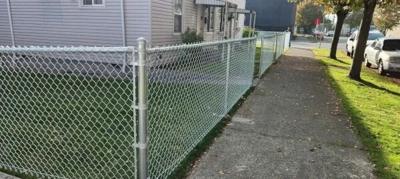

Chain-link fencing often gets a bad reputation. Many people see it as outdated or only suitable for industrial spaces. But in reality, chain-link fencing continues to be a practical and smart option for many residential properties.
Across suburban, semi-rural, and even urban neighborhoods, homeowners still rely on chain-link fences for safety, flexibility, and affordability. When chosen for the right reasons, this fencing style can meet real needs without unnecessary complexity.
Let’s explore why chain-link fencing remains a sensible choice for many homes today.
What Chain-Link Fencing Is Designed to Do
Chain-link fencing is built for function. It creates a clear boundary while keeping sightlines open. Unlike solid fencing, it doesn’t block views, light, or airflow.
This makes it especially useful for:
Backyards
Side yards
Large lots
Dog runs
Garden protection
Pool enclosures
Its simple structure allows it to adapt easily to uneven ground and long fence lines.
Safety Without Feeling Closed In
One of the biggest advantages of chain-link fencing is how it balances security and openness.
Solid fences can make a yard feel boxed in or disconnected from the surrounding area. Chain-link fencing provides a clear barrier while still allowing visibility beyond the property line.
This is helpful for:
Parents supervising children
Homeowners watching pets
Seeing approaching visitors
Monitoring nearby activity
For people deciding how to secure their yard, chain-link fencing often feels like a practical middle ground between no fence and a fully enclosed one.
A Practical Solution for Large Properties
Fencing large areas can become expensive very quickly. Chain-link fencing remains popular because it allows homeowners to cover more ground without dramatically increasing costs.
It’s commonly used on:
Wide backyards
Corner lots
Properties with extended boundaries
Semi-rural or rural homes
Because of its straightforward materials and installation process, chain-link fencing offers efficiency where coverage matters most.
Minimal Maintenance Over Time
Homeowners who prefer low-maintenance solutions often gravitate toward chain-link fencing.
Unlike wood, it doesn’t:
Rot
Warp
Crack
Attract insects
It also doesn’t require regular painting or staining. Occasional cleaning and basic inspections are usually enough to keep it in good shape.
For people who want a fence that works without constant upkeep, chain-link fits well into everyday life.
A Strong Option for Pet Owners
Chain-link fencing is especially popular with pet owners, and for good reason.
It creates a secure enclosure while still allowing pets to see outside the yard. This can help reduce boredom and anxiety, especially for dogs.
Common pet-focused uses include:
Dog runs
Fully enclosed yards
Side-yard fencing
Temporary containment areas
Because it’s easy to customize height and layout, chain-link fencing can be adapted to different pet sizes and activity levels.
Blends Well With Landscaping When Planned Properly
Some homeowners worry that chain-link fencing looks too plain. But with thoughtful landscaping, it often blends into the background.
Ways people soften its appearance include:
Planting hedges or shrubs along the fence line
Growing climbing plants through the links
Using privacy slats in select areas
Combining chain-link with wood or greenery accents
This makes it a flexible option for homeowners who want structure without dominating the yard’s visual appeal.
Works Well in Shared or Visible Spaces
Chain-link fencing is often used in areas where visibility is important or where properties share boundaries.
These include:
Homes near parks or open land
Yards facing alleys
Shared driveways
Community-facing property lines
In these situations, chain-link fencing creates clear boundaries without blocking sightlines or causing tension with neighbors.
Many homeowners find that working with a contractor who handles the entire fencing process helps ensure the layout works smoothly in these shared environments.
Easy to Modify as Needs Change
Another advantage of chain-link fencing is how easy it is to adjust over time.
Homeowners can:
Extend the fence later
Add or move gates
Adjust height in specific sections
Combine it with other fencing styles
This flexibility makes chain-link fencing a good choice for homes that may evolve, whether due to family growth, new pets, or changing outdoor uses.
Performs Well in Different Weather Conditions
Chain-link fencing holds up well in a variety of climates. Its open design allows wind to pass through, reducing pressure during storms.
It also doesn’t trap moisture the way solid fencing can, which helps it perform well in wet or damp conditions.
This makes it suitable for:
Windy areas
Rain-heavy regions
Uneven terrain
Properties exposed to changing weather
When Chain-Link May Not Be the Best Fit
While chain-link fencing offers many benefits, it isn’t right for every home.
It may not be ideal if:
Full privacy is the main goal
Noise reduction is a priority
A decorative statement fence is desired
However, for homeowners focused on practicality, visibility, and adaptability, chain-link fencing continues to deliver real value.
Chain-link fencing remains popular because it solves real problems. It provides safety without isolation, covers large areas efficiently, and adapts to changing needs over time.
Rather than seeing it as outdated, it’s worth recognizing chain-link fencing as a practical solution that still makes sense for many homes today.
When chosen thoughtfully and planned correctly, it continues to be a reliable option for residential properties of all sizes.
(0) comments
We welcome your comments
Log In
Post a comment as Guest
Keep it Clean. Please avoid obscene, vulgar, lewd, racist or sexually-oriented language.
PLEASE TURN OFF YOUR CAPS LOCK.
Don't Threaten. Threats of harming another person will not be tolerated.
Be Truthful. Don't knowingly lie about anyone or anything.
Be Nice. No racism, sexism or any sort of -ism that is degrading to another person.
Be Proactive. Use the 'Report' link on each comment to let us know of abusive posts.
Share with Us. We'd love to hear eyewitness accounts, the history behind an article.