
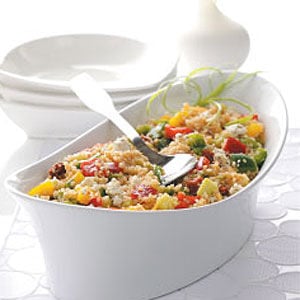
A good summer salad should do more than occupy the empty corner of a dinner plate.
It should have enough texture to remain interesting, enough acidity to taste refreshing and enough substance to work as lunch when the afternoon is too warm for anything heavier. This Mediterranean summer quinoa salad does all three.
Fluffy quinoa is combined with crisp cucumber, sweet cherry tomatoes, bell pepper, fresh herbs, briny feta, sun-dried tomatoes and toasted pistachios. A bright lemon-herb vinaigrette ties everything together without the sweetness or heaviness of bottled dressing.
The result is colorful, fresh and practical. It travels well, improves after a short rest and can be prepared ahead for picnics, patio dinners, weekday lunches or a larger summer gathering.
Unlike the original version of this recipe, the quantities are designed for a realistic six-serving salad rather than a bowl large enough to feed an entire neighborhood.
The Quick Answer
To make a Mediterranean summer quinoa salad, cook one cup of rinsed quinoa in 1¾ cups of water or vegetable broth. Cool it completely, then toss it with cucumber, cherry tomatoes, bell pepper, scallions, herbs, sun-dried tomatoes, feta and pistachios.
Dress the salad with a homemade vinaigrette made from olive oil, lemon juice, red wine vinegar, Dijon mustard, garlic and oregano.
Serve it chilled or at cool room temperature. For the best texture, add the pistachios shortly before serving.
Mediterranean Summer Quinoa Salad Recipe
Prep time: 25 minutes
Cook time: 20 minutes
Cooling time: 20 minutes
Total time: Approximately 1 hour
Yield: About 7 cups
Serves: 6 as a side or 4 as a light meal
Ingredients
For the quinoa salad
1 cup uncooked white, red or tricolor quinoa
1¾ cups water or low-sodium vegetable broth
¼ teaspoon fine sea salt
1 English cucumber, diced
1½ cups cherry or grape tomatoes, halved
1 medium red or yellow bell pepper, diced
3 scallions, thinly sliced
⅓ cup oil-packed sun-dried tomatoes, drained and finely sliced
½ cup crumbled feta cheese
½ cup chopped fresh flat-leaf parsley
¼ cup chopped fresh mint or basil
⅓ cup roasted unsalted pistachios, roughly chopped
For the lemon-herb vinaigrette
⅓ cup extra-virgin olive oil
3 tablespoons fresh lemon juice
1 tablespoon red wine vinegar
1 teaspoon Dijon mustard
1 small garlic clove, finely grated or minced
½ teaspoon dried oregano
¼ teaspoon fine sea salt
Freshly ground black pepper
½ teaspoon honey or maple syrup, optional
Rinse the Quinoa First
Place the quinoa in a fine-mesh sieve and rinse it thoroughly under cool running water for approximately 30 seconds.
Quinoa naturally contains saponins, compounds on the surface that can create a bitter or slightly soapy flavor. Many packaged varieties are pre-rinsed, but a quick rinse remains worthwhile and requires very little effort.
Shake the sieve well to remove excess water before transferring the quinoa to the saucepan.
Cook the Quinoa
Combine the rinsed quinoa, water or vegetable broth and salt in a medium saucepan.
Bring the liquid to a boil over medium-high heat. Once boiling, reduce the heat to low and cover the pan.
Simmer gently for 15 minutes, or until the liquid has been absorbed. Remove the saucepan from the heat and leave it covered for another five to ten minutes.
Uncover and fluff the quinoa with a fork. Properly cooked quinoa should be tender but still retain a slight bite, with the small spiral-like germ visible around the grains. MedlinePlus recommends allowing cooked quinoa to stand briefly after the heat is turned off so the remaining liquid can be absorbed.
Cool the Quinoa Without Making It Clumpy
Hot quinoa should not be mixed immediately with cucumber, herbs and feta. The heat can soften the vegetables, wilt the herbs and partially melt the cheese.
Spread the cooked quinoa in a thin layer across a rimmed baking sheet or large platter. This releases steam and helps it cool much faster than leaving it in the saucepan.
Allow it to cool for approximately 20 minutes. It does not need to be refrigerator-cold, but it should no longer feel warm.
Fluff it once or twice during cooling to separate the grains.
Make the Lemon-Herb Vinaigrette
In a small bowl or glass jar, combine the olive oil, lemon juice, red wine vinegar, Dijon mustard, garlic, oregano, salt, black pepper and optional honey.
Whisk until the vinaigrette looks slightly thickened and unified. When using a jar, close the lid securely and shake vigorously.
Taste before adding it to the salad.
The vinaigrette should taste a little sharper on its own than you want the finished dish to taste. Once combined with quinoa, vegetables and cheese, the acidity becomes softer.
Add another squeeze of lemon for brightness, a few drops of honey when the lemon is unusually tart or more black pepper for a stronger savory finish.
Assemble the Salad
Place the cooled quinoa in a large serving bowl.
Add the cucumber, tomatoes, bell pepper, scallions, sun-dried tomatoes, parsley and mint or basil.
Pour approximately three-quarters of the vinaigrette over the salad and toss gently but thoroughly.
Add the feta and toss again with a lighter hand so the cheese remains visible rather than disappearing into the quinoa.
Taste and add the remaining vinaigrette as needed.
Fold in half of the pistachios. Reserve the rest for the top immediately before serving.
Let the Flavors Settle
The salad can be served immediately, but it becomes more cohesive after resting for 20 to 30 minutes in the refrigerator.
This short resting period allows the quinoa to absorb some of the lemon, herbs and olive oil without becoming soggy.
Before serving, toss the salad again and check the seasoning. Cold food often needs a little more salt or acidity than it did at room temperature.
Finish with the reserved pistachios, additional herbs and a small amount of feta.
Why This Version Works
The original summer quinoa salad relied on bottled reduced-fat dressing and an unusually large quantity of raw peppers and onions. It also used two cups of dry quinoa, producing far more salad than most households need.
This version is more balanced.
One cup of dry quinoa creates enough structure without overwhelming the vegetables. Cucumber and fresh tomatoes supply moisture and freshness. Sun-dried tomatoes add concentrated flavor without dominating the bowl.
Feta brings salt and creaminess, while pistachios provide the crunch that many grain salads lack. The fresh herbs keep the salad from tasting heavy, and the vinaigrette is acidic enough to remain lively after chilling.
No single ingredient controls the entire dish.
White, Red or Tricolor Quinoa
Any common quinoa variety will work, but each produces a slightly different result.
White quinoa cooks into the lightest and softest texture. It blends easily into the salad and absorbs the dressing well.
Red quinoa has a firmer bite and tends to hold its shape particularly well in cold dishes. The University of Florida’s Institute of Food and Agricultural Sciences notes that red quinoa is especially useful in salads when a more distinct grain texture is wanted.
Tricolor quinoa combines white, red and black grains. It creates the most dramatic appearance and a slightly chewier texture.
For an elegant dinner or photographed presentation, tricolor quinoa gives the salad the strongest visual contrast. For the softest result, choose white.
How to Keep Quinoa Salad From Becoming Watery
Watery grain salad usually begins with vegetables rather than the dressing.
After rinsing the cucumber and tomatoes, dry them well. If the tomatoes are especially juicy, halve them and allow them to rest cut-side down on a paper towel while the quinoa cools.
Drain oil-packed sun-dried tomatoes before slicing. A small amount of their seasoned oil can add flavor, but too much will make the salad heavy.
Do not salt the cucumber far in advance. Salt draws moisture from fresh vegetables, which can collect at the bottom of the bowl during storage.
Finally, make sure the quinoa has absorbed all of its cooking liquid. If water remains in the saucepan, drain it before cooling.
Make It Vegan or Dairy-Free
The salad is vegetarian as written, but it is not dairy-free because it contains feta.
For a vegan or dairy-free version, omit the feta or replace it with a good dairy-free feta alternative. Kalamata olives can provide some of the briny flavor that would otherwise come from the cheese.
Use maple syrup rather than honey in the optional vinaigrette adjustment.
The remaining ingredients are naturally plant-based.
For readers following a strict gluten-free diet, verify that the Dijon mustard, vegetable broth and packaged ingredients are labeled gluten-free and have not been exposed to cross-contact during processing.
Add More Protein
Quinoa contributes some protein, but adding another substantial ingredient can turn the salad into a full meal.
Good options include:
one 15-ounce can of chickpeas, drained and rinsed;
grilled chicken;
grilled shrimp;
canned tuna packed in olive oil;
sliced hard-boiled eggs;
white beans;
baked or grilled tofu.
Chickpeas are the easiest plant-based addition. They require no additional cooking and work naturally with the lemon, feta and herbs.
When adding chicken, seafood or eggs, keep the salad properly chilled and follow standard food-safety precautions.
Other Variations
This recipe is flexible enough to change with the season or what is already available.
Replace the pistachios with toasted almonds, walnuts or pine nuts.
Use chopped roasted red peppers instead of fresh bell pepper for a softer, sweeter flavor.
Add chopped Kalamata olives, artichoke hearts or pepperoncini for a more assertive Mediterranean profile.
Fold in baby arugula shortly before serving for more greenery.
Add diced avocado only at serving time because it will soften and discolor during storage.
Fresh peaches or nectarines can work surprisingly well when paired with mint, feta and pistachios.
A successful variation should preserve contrast: something fresh, something salty, something crisp and enough acidity to connect everything.
Make It Ahead
The quinoa can be cooked up to two days ahead and refrigerated in a covered container.
The vinaigrette can also be made several days in advance. Shake or whisk it again before using because the oil and vinegar will separate.
For the best make-ahead texture, assemble the quinoa, vegetables, sun-dried tomatoes and most of the dressing up to one day in advance.
Add the herbs, feta and pistachios closer to serving. Fresh herbs remain brighter, feta keeps its shape and nuts stay crisp when they are not stored in the dressed salad for too long.
Storage and Food Safety
Store leftover quinoa salad in a covered container in the refrigerator at 40 degrees Fahrenheit or below.
USDA guidance recommends using most cooked leftovers within three to four days. For the best quality, this salad is usually at its strongest during the first two days, while the cucumber and herbs are still crisp.
Refrigerate the salad promptly rather than leaving it on a patio or buffet table for the entire afternoon.
For picnics and outdoor gatherings, transport it in a well-insulated cooler with ice or frozen gel packs. USDA guidance recommends keeping cold outdoor foods chilled rather than relying on ambient shade alone.
When the temperature is above 90 degrees Fahrenheit, be especially conservative about how long prepared food remains outside refrigeration.
What to Serve With It
Mediterranean summer quinoa salad is substantial enough for lunch but neutral enough to accompany a larger menu.
Serve it with:
grilled salmon or shrimp;
lemon-herb chicken;
lamb skewers;
grilled vegetables;
warm pita and hummus;
stuffed peppers;
a simple tomato tart;
chilled soup;
grilled halloumi.
For a casual outdoor meal, it pairs particularly well with seafood, corn and other summer sides. FINE’s guide to hosting a crawfish boil without losing your mind offers a relaxed entertaining format in which a cool, bright salad can balance the richer main event.
For a lighter patio gathering, serve the salad with marinated olives, hummus, flatbread and a chilled drink. FINE’s guide to turning a patio into a summer drink lounge includes additional ideas for drinks, snacks and an easy outdoor setup.
A Summer Salad Worth Making More Than Once
This is not a salad that depends on one perfect tomato or an elaborate garnish to succeed.
The quinoa gives it structure. The vegetables keep it crisp. Feta, sun-dried tomatoes and pistachios add enough richness and contrast to make each forkful different from the last.
Most importantly, the homemade lemon-herb vinaigrette gives the salad a fresh, clean flavor that bottled dressing cannot reproduce.
Make it for lunch, serve it beside dinner or carry it to a summer gathering. Double the recipe when the guest list requires it, but keep the proportions the same.
A good quinoa salad should taste bright, look generous and remain appealing after the first serving. This one does.
(0) comments
We welcome your comments
Log In
Post a comment as Guest
Keep it Clean. Please avoid obscene, vulgar, lewd, racist or sexually-oriented language.
PLEASE TURN OFF YOUR CAPS LOCK.
Don't Threaten. Threats of harming another person will not be tolerated.
Be Truthful. Don't knowingly lie about anyone or anything.
Be Nice. No racism, sexism or any sort of -ism that is degrading to another person.
Be Proactive. Use the 'Report' link on each comment to let us know of abusive posts.
Share with Us. We'd love to hear eyewitness accounts, the history behind an article.