
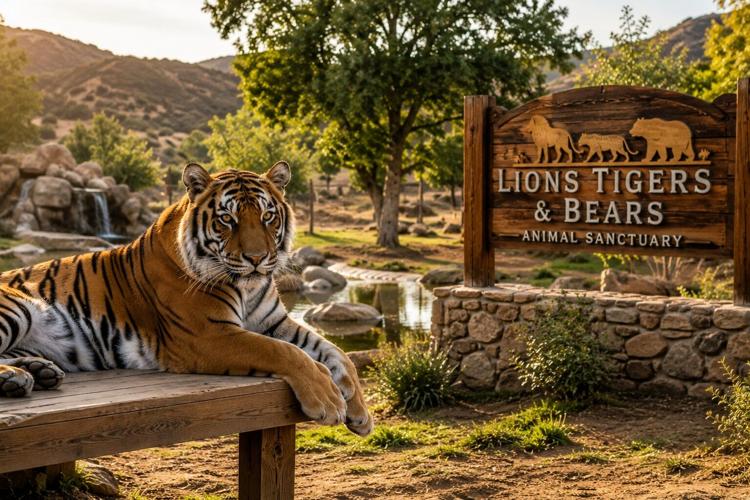
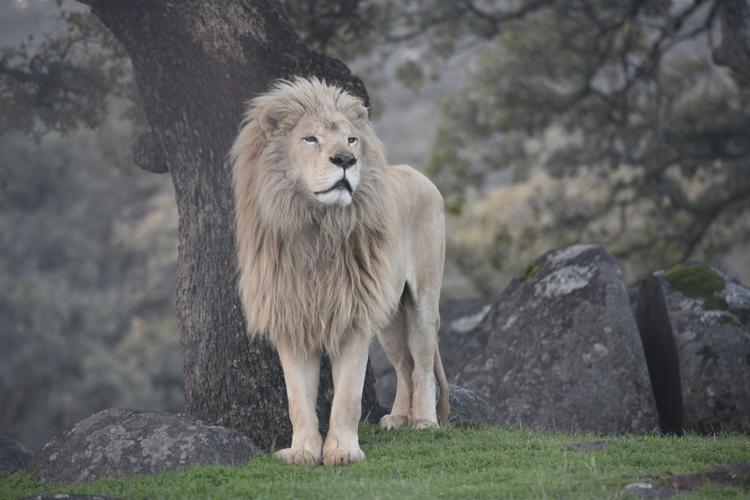
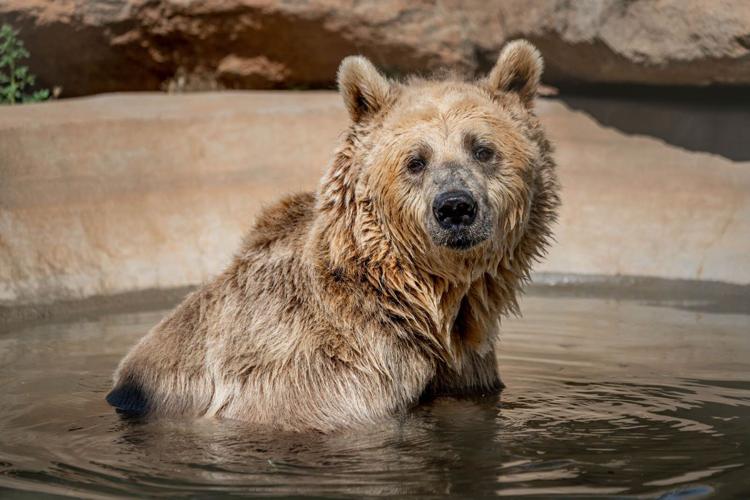

A lion resting beneath the East County sun may appear completely at ease. What visitors cannot see at first glance is the history that brought the animal to this quiet stretch of land in Alpine.
Some residents of Lions Tigers & Bears were once kept as private pets. Others came from roadside attractions, failed facilities or circumstances in which their owners could no longer provide safe, appropriate care. At the sanctuary, they are not expected to perform, pose for photographs or interact directly with visitors. Their public role is no longer entertainment.
Set on 142 acres in eastern San Diego County, Lions Tigers & Bears provides lifetime care for rescued exotic and domestic animals while educating visitors about the realities of private wildlife ownership and animal exploitation. The nonprofit sanctuary was founded in 2002 after Bobbi Brink helped secure the release of two Bengal tigers, Raja and Natasha, from a private owner.
Today, the sanctuary offers guided visits, carefully controlled feeding experiences and an overnight stay on the property. The experience can be deeply moving, but it is important to understand what visitors are—and are not—being invited to do.
This is not a petting zoo. It is not a wildlife performance. It is a working sanctuary in which the animals’ long-term welfare comes first.
The Quick Answer
Lions Tigers & Bears is a nonprofit wildlife sanctuary in Alpine, approximately an hour east of central San Diego. All visits require advance reservations.
The standard Member for a Day experience is a guided educational visit through the sanctuary. Visitors may also reserve a Feed a Wild One experience conducted within secure safety procedures or stay overnight through White Oak Wild Nights.
Guests should expect outdoor walking, changing East County temperatures and firm rules prohibiting direct contact with the animals. Current schedules, prices, age requirements and availability should always be confirmed with the sanctuary before visiting.
Why Accreditation Matters
The word “sanctuary” is not always enough to establish that a wildlife facility operates ethically.
Some attractions use rescue-oriented language while still breeding animals, permitting public contact, staging performances or placing animals in situations designed primarily for photographs and entertainment.
Independent accreditation gives visitors a more reliable way to evaluate a facility.
Lions Tigers & Bears has been recognized as an accredited sanctuary by the Global Federation of Animal Sanctuaries. GFAS evaluates organizations against standards involving animal care, housing, safety, governance, finances and ethical operations. The sanctuary has also described itself as a no-kill, no-breed and no-sell facility providing permanent care rather than moving animals through a commercial system.
For visitors, those standards create an important distinction. The objective is not to make wild animals available for human amusement. It is to give animals that cannot return to the wild a safe place to live.
Signs of a responsible wildlife sanctuary generally include:
- no direct public contact with dangerous wild animals;
- no breeding to produce display animals;
- no buying, selling or trading residents;
- no staged tricks or performances;
- secure habitats designed around animal needs;
- veterinary care and appropriate nutrition;
- clear education about the wildlife trade;
- lifetime care or responsible placement;
- transparent nonprofit and accreditation information.
A facility offering tiger selfies, cub handling or unprotected contact should not be confused with an accredited sanctuary.
A Sanctuary That Began With Two Tigers

Lions Tigers & Bears began after Brink encountered classified advertisements offering exotic animals for private sale.
Her first major intervention involved Raja and Natasha, two Bengal tigers whose circumstances had become unsafe. Their rescue in 2002 became the foundation for the Alpine sanctuary and a broader mission involving displaced big cats, bears and other animals.
The sanctuary has since participated in or supported many additional rescues. Its residents have included lions, tigers, leopards, jaguars, mountain lions, bobcats, servals, black bears, grizzly bears and domestic ranch animals.
The animals’ histories vary. Some were acquired as exotic pets when young and became unmanageable as adults. Others came from facilities that closed or failed to meet appropriate care standards.
These stories are central to a visit, but the strongest tours do not rely only on the shock of past mistreatment. They also explain the daily reality of sanctuary care: specialized diets, veterinary monitoring, enrichment, secure habitats and the financial responsibility of supporting a large animal for the remainder of its life.
Rescue is an event. Sanctuary is a lifelong commitment.
What Visitors Experience

The primary daytime option is the Member for a Day guided visit.
Rather than wandering independently through the property, guests are led through the sanctuary while learning about individual animals, their backgrounds and the issues surrounding private exotic-animal ownership.
That structure matters. A sanctuary visit should provide context instead of treating each habitat as another display to pass quickly.
Visitors may see big cats and bears resting, moving through their habitats or responding to normal activity around them. No particular behavior can be guaranteed. An animal may choose to remain out of view, sleep in the shade or move away from the group.
That is part of ethical wildlife viewing. The animal is not required to perform on schedule.
The sanctuary states that all visits must be reserved in advance. Because schedules and program details can change, guests should consult the official Lions Tigers & Bears visitor information before making the drive to Alpine.
What Feed a Wild One Actually Means
The Feed a Wild One experience allows eligible visitors to participate in a feeding under keeper supervision.
The name may suggest a casual or highly interactive encounter, but this is not hand-feeding and does not involve entering an animal’s primary living space.
Participants remain within controlled areas and follow the keepers’ instructions. The sanctuary describes the experience as entering a secure habitat perimeter with a keeper and helping feed a lion, tiger, bear, leopard or another resident.
The safety distinction should be clear:
visitors do not touch the animals;
visitors do not pose beside an unrestrained big cat;
visitors do not enter the main enclosure;
feeding is conducted through established barriers and procedures;
the keeper controls the encounter.
Age, footwear and participation requirements may apply. These should be checked before booking, especially when visiting with children.
The value of the experience is not simply being close to a large animal. It is seeing how trained caregivers work while maintaining the boundaries required for animal welfare and human safety.
Staying Overnight at White Oak Wild Nights
White Oak Wild Nights provides an overnight option on the sanctuary property.
The experience combines private accommodations with access to the surrounding ranch and sanctuary setting. The sanctuary has described stays as including a Member for a Day guided visit, with additional experiences potentially available depending on the reservation.
An overnight stay may appeal to couples, families or small groups who want more time in East County rather than making the drive home immediately after a visit.
However, the stay should not be presented as sleeping inside an animal enclosure or enjoying unrestricted access to wildlife. Guests remain in dedicated accommodations, and the sanctuary’s no-contact rules continue to apply.
Before reserving, confirm:
the number of bedrooms and maximum occupancy;
which tour or visit is included;
check-in and checkout times;
whether meals are provided;
age policies;
pool or ranch amenities;
accessibility;
cancellation terms;
whether feeding experiences require a separate reservation.
Rates and packages can change, so current details should come directly from the sanctuary rather than an older travel article.
How to Prepare for a Visit
Alpine’s weather can feel very different from the San Diego coast.
Summer afternoons may be hot, while mornings and evenings can cool quickly. Winter visits may bring cold temperatures, wind or rain. Much of the experience takes place outdoors, so clothing should be chosen for the forecast rather than for photographs.
Wear sturdy, comfortable shoes suitable for dirt, grass and uneven outdoor surfaces. Bring water, sun protection and a layer that can be removed or added as conditions change.
Visitors should also prepare children before arriving. Explain that the animals cannot be touched, called over or expected to behave like zoo performers. Running, shouting or attempting to attract an animal’s attention may disrupt the experience.
Photography rules should be confirmed during the tour. Avoid flash or anything else the guide identifies as potentially stressful.
Because all visits require reservations, do not arrive expecting to purchase an unrestricted walk-in admission.
Questions to Ask Before Booking
Program schedules, prices and participation rules can change. A brief review before reserving can prevent misunderstandings.
Ask:
How long is the selected tour?
What ages may participate?
How much walking is involved?
Are wheelchairs or mobility devices accommodated?
Are service animals permitted, and under what conditions?
Is the visit appropriate for very young children?
What happens during extreme heat or rain?
Are photographs allowed throughout the property?
Are food and drinks available?
Is a feeding experience included or booked separately?
How early should guests arrive?
The sanctuary’s remote setting is part of its appeal, but it also makes advance planning important.
How Admission Supports the Animals
Large carnivores require specialized food, secure habitats, veterinary services and trained care over many years.
Visitor revenue, donations, memberships and fundraising events help support those costs. Lions Tigers & Bears states that its programs contribute to animal care, habitat maintenance, medical needs and rescue work.
That does not mean an editorial article should repeat every fundraising claim uncritically. Visitors should still review nonprofit information, accreditation and program details for themselves.
What distinguishes an ethical sanctuary visit is that revenue supports permanent care rather than breeding, performances or animal sales.
People who cannot visit can help in other ways:
donate through verified official channels;
sponsor or symbolically adopt a resident;
attend a legitimate fundraiser;
volunteer through an established program;
contribute approved supplies;
share accurate information about exotic-animal ownership;
avoid attractions offering wild-animal contact or photo opportunities.
Compassion is most useful when paired with informed decisions.
Why Exotic Animals Do Not Belong in Private Homes
Young exotic animals can appear manageable in photographs or online videos. Their needs change rapidly as they mature.
A tiger, lion or bear requires secure space, species-appropriate nutrition, specialized veterinary care and professional handling systems. Private owners may underestimate the expense and danger until the animal becomes too large or powerful to manage.
Even well-intentioned ownership can end with an animal confined in inadequate conditions, transferred repeatedly or surrendered to an already limited sanctuary network.
The lesson is not that wild animals are unusually difficult pets. It is that they were never domesticated companion animals in the first place.
Responsible admiration does not require possession or physical contact.
Pairing the Visit With an East County Day
The sanctuary’s Alpine location makes it possible to build a fuller East County outing without forcing too much into the day.
Keep the sanctuary reservation as the main activity. Allow enough driving time, arrive early and avoid making a tightly timed lunch reservation immediately afterward.
Depending on the season, visitors can continue into Alpine for a relaxed meal, explore another East County community or plan a separate walk on a nearby trail.
For readers interested in spending more time outdoors, FINE’s guide to five great hikes in East County San Diego offers additional ideas for another day.
FINE’s feature on Southern California’s most captivating trails also includes regional outdoor inspiration for travelers who want to extend the experience beyond San Diego’s coastline.
A Different Kind of Wildlife Experience
A visit to Lions Tigers & Bears is memorable not because it brings people into direct contact with wild animals, but because it refuses to.
The barriers, reservation system and controlled encounters are not obstacles to the experience. They are evidence that the animals’ safety and dignity come before a visitor’s desire for access.
The sanctuary gives rescued animals somewhere to live without being bought, sold, bred or required to entertain. It gives visitors a close look at the responsibilities that follow a rescue and a clearer understanding of why exotic-animal ownership can have lifelong consequences.
Come prepared to walk, listen and learn. Respect the rules. Ask questions. Notice the difference between observing an animal and demanding something from it.
That difference is what makes a true sanctuary worth visiting.


(0) comments
We welcome your comments
Log In
Post a comment as Guest
Keep it Clean. Please avoid obscene, vulgar, lewd, racist or sexually-oriented language.
PLEASE TURN OFF YOUR CAPS LOCK.
Don't Threaten. Threats of harming another person will not be tolerated.
Be Truthful. Don't knowingly lie about anyone or anything.
Be Nice. No racism, sexism or any sort of -ism that is degrading to another person.
Be Proactive. Use the 'Report' link on each comment to let us know of abusive posts.
Share with Us. We'd love to hear eyewitness accounts, the history behind an article.