
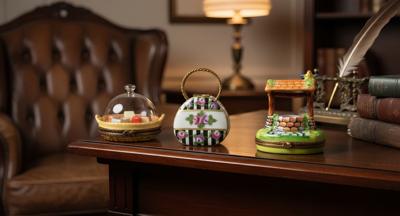

The Origins of a Classic Porcelain Art
The story of these boxes reaches back to the eighteenth century when artisans in the Limoges region discovered deposits of kaolin clay. This pure white clay allowed them to produce porcelain with a smooth texture and bright translucent finish. As workshops learned to refine and shape this material, the region became known for porcelain that stood out for its clarity and durability.
Artists experimented with forms and decorative techniques, and in time they began creating small hinged boxes that offered both charm and practicality. These early creations often held small personal items or tokens and were appreciated for their delicate craftsmanship.
Collectors soon recognized the appeal of these miniature works because they represented not only beauty but also the artistic traditions of the region. Over many generations the craft continued to grow, shaped by the hands of artisans who took pride in preserving the methods passed down to them.
Why Miniature Creations Capture the Imagination
There is something naturally captivating about artwork created on a small scale. When you study a miniature porcelain box, the fine brushstrokes and delicate curves draw your attention in a way that larger objects rarely do. The limited space challenges the artist to convey emotion and detail with remarkable precision.
Miniatures create an intimate experience because they require personal engagement. You hold them carefully, observe them from different angles, and appreciate how much attention has been devoted to each tiny feature. These boxes also spark imagination because they often depict charming or nostalgic themes that remind you of memories, travels, or special moments.
Their size makes them feel personal and easy to connect with, almost like small windows into a story. Many collectors describe the experience of discovering a new piece as a moment of delight because each miniature invites its own interpretation.
Details That Reflect Time Honored Artistic Skill
When you examine one of these porcelain pieces, you can see the amount of discipline and patience behind its creation. The process begins with shaping the porcelain, which is fired repeatedly to achieve strength, smoothness, and a flawless surface that will accept paint. Each firing stage requires careful timing and attention to temperature. Once the surface is ready, the artist begins painting the design.
This stage demands a steady hand because the space is small and every brushstroke contributes to the character of the finished work. Colors are layered gradually to create shading, depth, and expressive details. After the painting is complete, metalworkers take part in the process by fitting the box with small clasps and hinges.
The combination of hand painting and fine metalwork shows how many different skills come together in each finished piece. When you hold one in your hand, you can feel the result of hours of focused effort.
Themes That Speak to Personal Taste
One of the most engaging aspects of these porcelain boxes is the wide range of themes that artists explore. You can find pieces that feature delicate flowers, charming animals, picturesque landmarks, or scenes that bring to mind special moments from daily life. Some designs reflect classic French elegance while others lean into playful or imaginative imagery.
Many collectors enjoy choosing themes that relate to favorite hobbies, meaningful memories, or places that hold significance. The act of selecting each box becomes part of the experience, as you discover designs that resonate with your own taste and personality.
Over time your collection begins to tell a story because each piece carries an emotional or aesthetic link to your life. This is one reason these boxes continue to appeal to both new enthusiasts and longtime collectors.
Caring for Your Porcelain Keepsakes
If you enjoy displaying or collecting these miniature works of art, thoughtful care helps maintain their beauty for many years. Even though the porcelain is durable, the hand painting and metal fittings benefit from gentle handling. When opening or closing a box, supporting the hinge with a light touch reduces strain and helps the piece function smoothly. Soft cloths are ideal for removing dust without affecting the painted surface or metal details.
Many collectors also choose to keep their pieces in cabinets or areas where they are protected from strong sunlight or shifting temperatures. These small steps help preserve the colors and finish, keeping each piece as vivid as the day it was made. Humidity can affect porcelain and metal over time, so placing the collection in a stable environment supports long-term preservation.
The Appeal of Rare and Retired Pieces
Collectors often speak about the excitement that comes from finding a rare or retired piece. These designs are usually produced in limited quantities or discontinued after a certain period, which gives them a sense of individuality.
Many retired themes feature unique artwork or unusual motifs that stand out within a larger collection. This adds character and depth, giving you something that feels both personal and distinctive. Searching for these pieces can be an enjoyable part of the collecting experience as you learn about past releases, explore different artistic periods, and follow the stories behind various designs.
Why These Boxes Continue to Represent French Elegance
What makes these porcelain boxes so enduring is the blend of tradition, creativity, and cultural history they represent. They embody the spirit of French craftsmanship while also offering a personal connection to art you can hold in your hand. When displayed in your home or given as a thoughtful gift, they carry a quiet sense of refinement that feels timeless.
As you explore the history, themes, and craftsmanship behind these porcelain boxes, it becomes clear why they continue to inspire admiration. Each piece carries the spirit of the artists who shaped it and the traditions that helped it endure through generations. Whether you collect many or simply appreciate the artistry of a single box, the charm lies in the quiet stories they tell and the sense of connection they create.

(0) comments
We welcome your comments
Log In
Post a comment as Guest
Keep it Clean. Please avoid obscene, vulgar, lewd, racist or sexually-oriented language.
PLEASE TURN OFF YOUR CAPS LOCK.
Don't Threaten. Threats of harming another person will not be tolerated.
Be Truthful. Don't knowingly lie about anyone or anything.
Be Nice. No racism, sexism or any sort of -ism that is degrading to another person.
Be Proactive. Use the 'Report' link on each comment to let us know of abusive posts.
Share with Us. We'd love to hear eyewitness accounts, the history behind an article.