

As if moving isn’t stressful enough, a high-rise move in Manhattan or Brooklyn adds another layer of stress. Tight elevators, strict building rules, service entrances that seem hidden on purpose — all these details matter.
And with both boroughs growing again, schedules inside these buildings run even tighter. Manhattan saw a 1.7% population rise from mid-2023 to mid-2024, with Brooklyn close behind at 1.0%, which means one thing: more residents, more move-ins, and less room for error.
If you’re preparing for a high-rise move while also dealing with the usual demands of moving NYC, you need a plan, one that makes sense.
We’re here to help you out.

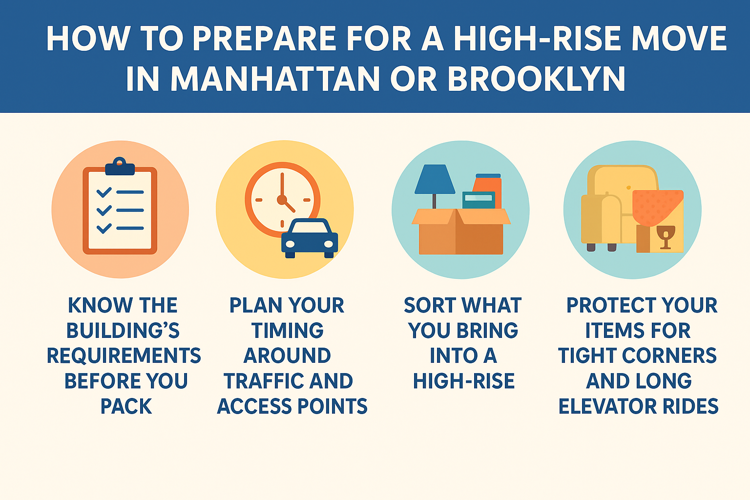
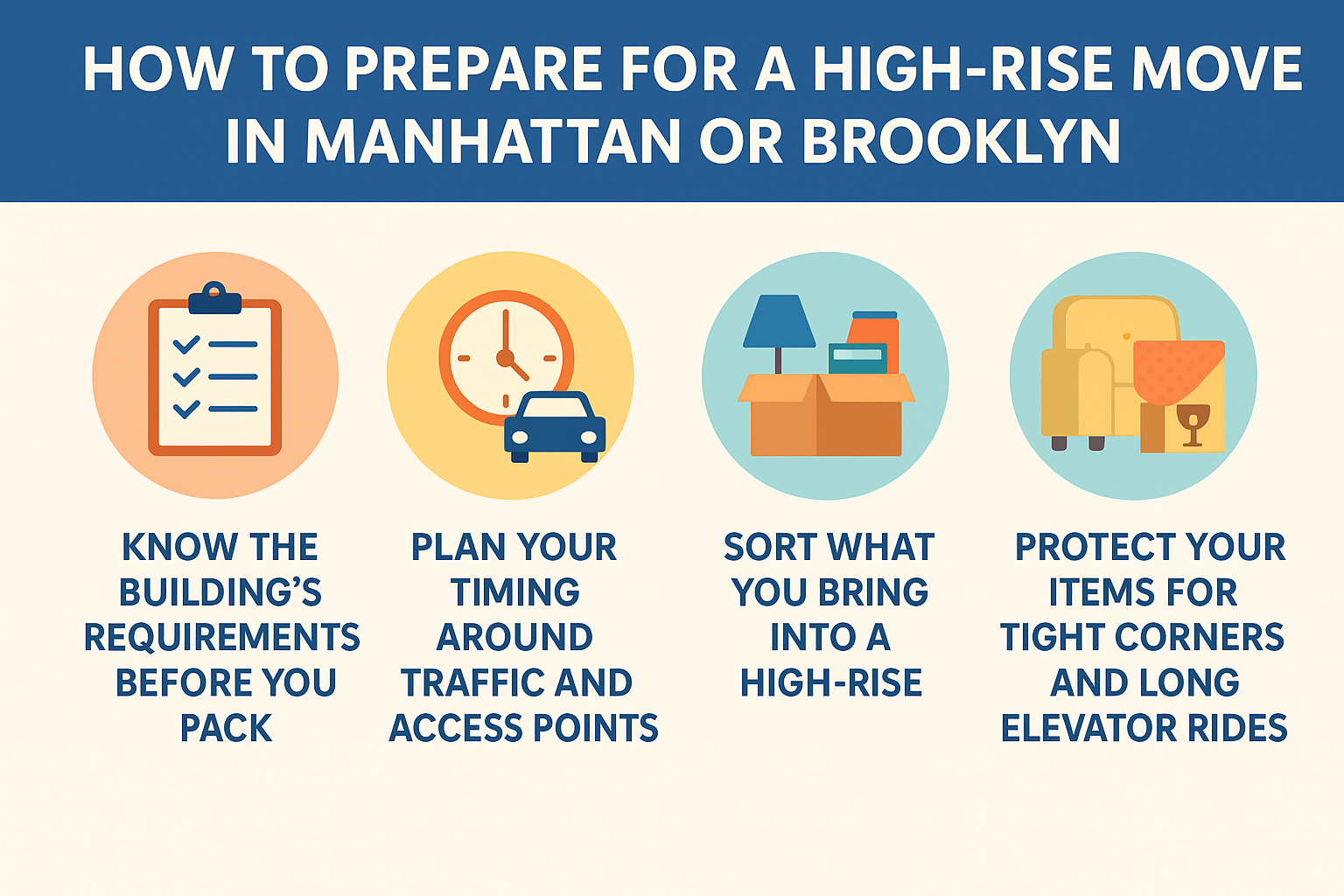
Know the Building’s Requirements Before You Pack
What’s specific about this type of move is that every high-rise has its own playbook, and you’re expected to follow it from the moment your movers arrive.
So, before you even begin packing, you should reach out to management and get a clear list of rules. You’ll save yourself from surprises that can slow your move or even stop it outright.
Here’s what to confirm ahead of time:
elevator reservations and the exact time window you’re allowed to move
insurance documents your movers must provide
whether the building requires you to use a service entrance or loading dock
Plan Your Timing Around Traffic and Access Points
Timing affects the entire move, especially when your building sits on a busy block or has limited curb access. What happens outside the building can slow you down as much as what happens inside, so you want a plan that accounts for both.
Gowanus is a good example of why this matters. The area is going through major changes, with the potential to add as many as 8,000 residential units in Brooklyn’s 6th Community District.
Here’s the math: construction continues, new residents arrive, and as a result, traffic patterns change (for the worse), and curb space becomes tighter.
If your move touches that part of Brooklyn, or any neighborhood going through the same thing, expect added delays and plan your schedule with that in mind.
Give yourself enough time for loading, parking adjustments, and elevator access.
Sort What You Bring Into a High-Rise
High-rise living rewards selectiveness. Floor plans can be tight, storage is limited, and hallways aren’t always made for oversized furniture.
This is another important thing to think of early, so that you can decide what you’re bringing with you and what no longer fits your space or routine.
Your first task should be the largest items.
Measure your sofa, dresser, bed frame, and any piece that might challenge a narrow elevator or doorway. If something barely worked in your current place, it may slow the move or create headaches in your new one (in other words, it’s probably time to say goodbye).
Then review smaller items and decide what actually deserves a spot in your new home.
Protect Your Items for Tight Corners and Long Elevator Rides
High-rise moves excel at something — test how well your items are packed. Tight turns, long elevator rides, and shared hallways leave little or no room for mistakes, so it’s all about the way you prepare your belongings.
How you do it depends on what you’re packing, but here are some general tips:
wrap furniture to prevent marks on walls, doors, and the items themselves
label each box by room to speed up unloading once you reach your floor
secure fragile pieces so they hold up through long vertical transport
Prepare for Move Day in a Way That Reduces Delays
Now that the planning part is over, it’s time for execution. Your move day can be smooth, but only if you set the stage before your movers arrive.
On that note, start by clearing walkways in your current home so boxes don’t block the path to the door.
Keep essential documents in one spot — building confirmations, elevator reservations, and any permits the movers need to display.
If your block has strict parking rules, confirm whether your movers must secure a permit or if you need to reserve space through the building or the city.
To create a steady flow from your apartment to the elevator, make sure boxes are grouped near the entrance, with heavier items closest to the door and lighter ones stacked safely.
Many people don’t think about this step, but have water available for your crew and set aside gratuity if you plan to tip.
It’s obvious this entire process asks for the right choices and preparation, but the payoff is worth it. It’s real once you reach your new place and close the door behind you.
So, treat the entire move with structure instead of rushing through it, and you’ll give yourself room to settle in faster and with less friction.
Keep your focus on what you can control, stay in close touch with your building, and let each step move you forward.
(0) comments
We welcome your comments
Log In
Post a comment as Guest
Keep it Clean. Please avoid obscene, vulgar, lewd, racist or sexually-oriented language.
PLEASE TURN OFF YOUR CAPS LOCK.
Don't Threaten. Threats of harming another person will not be tolerated.
Be Truthful. Don't knowingly lie about anyone or anything.
Be Nice. No racism, sexism or any sort of -ism that is degrading to another person.
Be Proactive. Use the 'Report' link on each comment to let us know of abusive posts.
Share with Us. We'd love to hear eyewitness accounts, the history behind an article.