
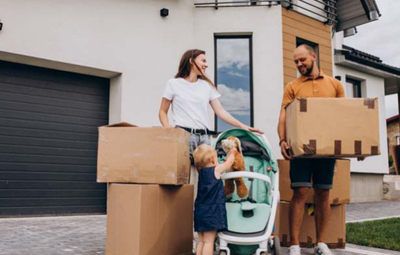

The smartest move you can make in a luxury home is building sustainability in from day one — not as a compromise, but as an upgrade.
There’s a version of moving into a luxury home that looks like this: a skip on the driveway, flatpack boxes piled on the kerb, three trips to the hardware store, and a recycling bin overflowing with plastic wrap by the end of week one. It’s incredibly common. And it’s entirely avoidable.
Moving is one of the most resource-intensive things most people ever do. But when you’re moving into a home at the top end of the market, you also have something most people don’t: the time, budget, and agency to do it differently. The choices you make in the first weeks of living somewhere new set the tone for years. Getting them right from the start isn’t just better for the planet — it’s better for the home.
Here’s how to approach the move intelligently.
Before You Move: Edit, Don’t Just Pack
The instinct before a big move is to pack everything and decide later. Resist it. Every item you carry into a new home is an item you’ll eventually have to deal with — and in a well-designed space, clutter is the enemy of the aesthetic you’ve invested in.
The more considered approach is to treat the move as a genuine edit. Go through every room and ask honestly whether each piece belongs in the life you’re building. Furniture that doesn’t fit the new scale, art that doesn’t suit the new light, kitchenware accumulated over years that you’ve never actually used — all of it has a better destination than a skip.
Sell before you skip. High-quality furniture and homewares sell well on specialist platforms like Vinterior, Chairish, and 1stDibs — and quickly if priced honestly. A dining table that doesn’t work in a new room isn’t a loss; it’s a sale waiting to happen. What doesn’t sell can go to charity or auction.
Think about the materials you’re leaving behind. Old paint tins, cleaning products, electronics, batteries — these all have proper disposal routes through local recycling centres. Sending them to landfill because it’s easier is the kind of oversight that tends to accumulate into something significant over time.
Every item you carry into a new home is one you’ll eventually have to deal with. In a well-designed space, clutter is the enemy of the aesthetic you’ve invested in.
The Move Itself: Rethinking What Goes in the Truck
The packing stage generates more single-use plastic than most people ever account for — bubble wrap, plastic tape, plastic film on furniture, bin bags full of odds and ends. None of it is necessary. There are direct swaps for all of it that cost roughly the same and leave nothing behind.
Skip the bubble wrap. Your soft furnishings — blankets, throws, cushions, towels, clothing — are already in the truck. They make excellent packing material for fragile and valuable pieces. A cashmere throw wrapped around a piece of art protects it better than bubble wrap and costs nothing extra. In the affluent city of Sydney professional removal companies moving high-value items often work this way already.
Use paper tape, not plastic. Standard plastic packing tape bonds to cardboard and contaminates it in the recycling stream. Paper tape is a direct swap — same strength, fully recyclable, available from any good packaging supplier. If you’re using a removal company, it’s worth asking them to use it too. Many will if asked.
Source boxes second-hand. Buying new boxes for a move is one of the easier things to avoid. Supermarkets, wine merchants, and office buildings all have quality cardboard in regular supply. Freecycle and local community groups move boxes quickly before and after moves. If you’re using a removal company, ask about box hire — though second-hand cardboard, properly recycled afterwards, often has a lower overall footprint than reusable plastic crates.
One thing worth knowing: according to the UK Government’s waste statistics, only 44% of household waste in the UK is currently recycled. A significant part of the gap is contamination: recyclable materials mixed with non-recyclables, or plastic tape on cardboard. Small decisions at the packing stage have a genuine downstream impact.
Arriving: The First Weeks Set the Pattern
The first weeks in a new home are disproportionately important. The routines you establish — where you shop, how you get around, what you default to when you need something — tend to stick. Building good ones early is far easier than trying to change established habits later.
Unpack fully before you buy anything. It sounds obvious, but in the excitement of a new home it’s easy to buy things you already own because you can’t find them yet. A full unpack before any non-essential shopping prevents a surprising amount of unnecessary duplication — and the packaging that comes with it.
Choose quality and provenance for the things you do buy. A luxury home is not the place to compromise on the things that matter. When you need to buy — furniture, art, textiles, kitchen equipment — buying well once is always more sustainable than buying cheaply twice. Look for pieces with a story: makers who work with natural materials, local craftspeople, antique dealers. These choices improve the home aesthetically and avoid the environmental cost of manufacturing new.
Transport your vehicles. Rather than selling a perfectly running family vehicle or statement vintage motorcycle prior to moving to your luxury home and buying a new vehicle. Work out the logistics of transporting a motorbike with custom motorbike transporters on Vehiclemove, this will be far more cost effective in the long run than buying new or collecting pieces again.
Find the good food near you before you default to delivery. Farmers markets, specialist grocers, and fishmongers operate in most affluent neighbourhoods and offer better produce than supermarket alternatives. Finding them early — before you’ve established a delivery habit — makes them the path of least resistance rather than a deliberate effort.
Redesigning and Renovating: Where the Real Impact Lies
If you’re moving into a home that needs work — renovation, redecoration, a kitchen or bathroom redesign — the sustainability decisions at this stage are the ones with the highest stakes. Construction and demolition waste accounts for a significant share of total waste in most developed countries, and much of it is avoidable with better planning.
Building well once is always more sustainable than building cheaply twice. The same principle applies to every decision in a luxury home.
Retain before you replace. Before anything gets stripped out, ask whether it can be worked with rather than removed. Original flooring, period features, existing cabinetry in good condition — these have embodied energy and character that new materials can’t replicate. A skilled designer can work around almost anything. Replacement should be the last option, not the first.
Specify natural and durable materials. The most sustainable material is one that lasts decades without needing replacement. Stone, solid hardwood, handmade tile, natural plaster — these have significantly longer lifespans than their synthetic equivalents, look better with age, and don’t shed microplastics into the environment. They also tend to add more to a property’s long-term value.
Ask your contractor about waste disposal before work starts. Good contractors separate waste on site — metal, timber, plasterboard, and aggregate all have recycling routes. Waste that goes into a mixed skip typically ends up in landfill. It’s a reasonable question to ask, and the answer will tell you something about how the contractor operates.
Consider second-hand and salvage for character pieces. Architectural salvage yards carry original fireplaces, period doors, reclaimed timber, vintage sanitary ware, and antique tiles that give a home something new materials simply cannot. For a luxury renovation, salvage isn’t a compromise — it’s often the source of the most distinctive elements in the finished space. The challenge is finding someone who has the equipment and expertise to transport whatever you have purchased safely, fortunately you can book experienced furniture movers based on the Movingle platform in any location in New Zealand to help ease this roadblock.
The Longer View: Building a Home That Lasts
The most sustainable luxury home isn’t one filled with the latest eco-certified products. It’s one that’s been thoughtfully edited, well-built with durable materials, and designed to age gracefully rather than require constant refreshing. That’s also, not coincidentally, what tends to hold its value and retain its appeal over decades.
Sustainability and quality are not in tension at the top end of the market. They’re the same thing, expressed differently. Buying less but better, keeping materials in use longer, making choices that reflect how you want to live rather than what’s convenient in the moment — these are the principles behind both a well-run home and a well-run life.
The move is the moment to get that right. Everything that follows is easier when the foundation is solid.


(0) comments
We welcome your comments
Log In
Post a comment as Guest
Keep it Clean. Please avoid obscene, vulgar, lewd, racist or sexually-oriented language.
PLEASE TURN OFF YOUR CAPS LOCK.
Don't Threaten. Threats of harming another person will not be tolerated.
Be Truthful. Don't knowingly lie about anyone or anything.
Be Nice. No racism, sexism or any sort of -ism that is degrading to another person.
Be Proactive. Use the 'Report' link on each comment to let us know of abusive posts.
Share with Us. We'd love to hear eyewitness accounts, the history behind an article.