

Smoke detectors stand silently on ceilings throughout homes and businesses, often unnoticed until they sound an alarm—or worse, fail to sound when needed. Three out of five home fire deaths result from fires in properties without working smoke alarms, and the risk of dying in a home fire is cut in half in homes with working smoke alarms. These sobering statistics underscore a simple truth: functional smoke detectors save lives, but only when properly maintained and regularly tested.
More than one-third of home fire deaths result from fires in which no smoke alarms are present, yet many existing alarms fail during emergencies due to dead batteries, accumulated dust, or simple age. The question isn't whether smoke detectors are important—it's whether yours will work when seconds count.
Understanding Testing Frequency Requirements
Residential Testing Guidelines
According to the U.S. Fire Administration, you should check your smoke detectors monthly, though other sources suggest checking them twice a year. British Standard regulations stipulate that smoke alarm systems should be fully tested monthly, reflecting international consensus on the importance of frequent verification.
Whichever method you choose, the easiest way to keep up with your checks is to create a schedule—if you conduct them monthly, consider the first of the month, or if checking less frequently, test when daylight saving time begins and ends. This simple scheduling approach transforms testing from a forgotten task into a reliable habit.
Commercial and Professional Standards
According to NFPA 72, fire alarms should be tested annually, but certain components like smoke detectors may require more frequent testing—monthly or quarterly. The National Fire Protection Agency requires licensed professionals to conduct in-depth fire alarm system inspections at least once per year, with some industries such as healthcare or those with high fire risks requiring more frequent checks.
For facilities managers and building owners, specialised Smoke detector testers provide the precision and documentation necessary to meet these regulatory requirements whilst maintaining comprehensive safety standards.
The Testing Process Explained
Basic Functionality Testing
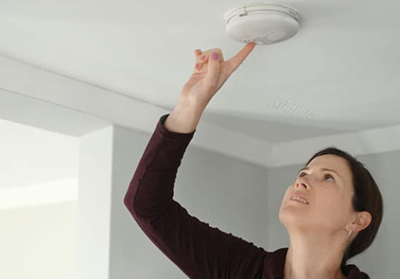
Press and hold the test button until a beep sounds—this signals the system is operational. This simple test verifies both the alarm's sound mechanism and power supply. The test button checks both the smoke sensor and the power supply, providing assurance that the detector can both detect smoke and alert occupants.
For interconnected systems, testing becomes more sophisticated. Professional contractors verify that triggering one detector activates alarms throughout the building, ensuring everyone is promptly warned of potential danger. This interconnection capability dramatically improves response times by alerting occupants regardless of fire location.
Sensitivity Testing for Commercial Systems
Per NFPA 72, smoke detectors must be checked within one year after installation, then every alternate year thereafter. A fire safety technician will use a specialised tool that introduces controlled smoke to the system to measure the sensitivity of each detector head in percentage per foot.
If the first two tests demonstrate the smoke detector is performing in the recommended range of sensitivity, the period between smoke detector sensitivity tests can be extended up to five years. This testing ensures detectors remain calibrated to detect smoke reliably without triggering false alarms that desensitise occupants.
Essential Maintenance Beyond Testing
Battery and Component Replacement
Replace batteries at least once every year, and replace the entire smoke alarm every 10 years. Most smoke detectors last a maximum of 10 years—when you conduct checks, remove units from the ceiling and check for a date stamped on the back, replacing the detector by this date.
For battery-operated smoke alarms, replace batteries when the alarm emits a chirping sound indicating low battery. This distinctive chirp serves as an early warning system, though many people delay replacement—a potentially fatal procrastination.
Cleaning and Environmental Management
Use a vacuum cleaner with a soft brush attachment to clear away dust and cobwebs from the outer casing every six months. Gently vacuum over and around the smoke alarm to remove dust and debris that could hinder its sensitivity.
Environmental factors like steam, high humidity, improper placement, and dust can cause sensors to malfunction. Understanding these vulnerabilities helps prevent both false alarms and genuine detection failures.
The Consequences of Neglect
False Alarms and Complacency
When every smoke detector is calibrated to the correct sensitivity range, you won't have to worry about overly sensitive detectors that sound the alarm and disrupt your facility for evacuation, potentially desensitising your staff to the importance of the alarm. This desensitisation represents a genuine safety risk—occupants who experience frequent false alarms may delay evacuation during actual emergencies.
System Failure During Emergencies
If a unit fails to sound or produces a weak alarm, potential issues include depleted power sources, faulty wiring in hardwired smoke alarms, or malfunctioning sensors. Failing to check your smoke alarms regularly increases the likelihood that they'll fail if a fire erupts in your home, placing your family in harm's way.
Frequently Asked Questions
How do I test a smoke detector properly?
Press and hold the test button until you hear a loud alarm sound. If no sound occurs, check the power source first—replace batteries or verify electrical connections. For interconnected systems, ensure triggering one detector activates all units throughout the property.
What's the difference between testing and maintenance?
Testing confirms that the system works when triggered, whilst maintenance ensures all components are in good condition and functioning properly. Both activities are essential—testing verifies immediate functionality, whilst maintenance prevents future failures through cleaning, battery replacement, and component inspection.
Why do smoke detectors need professional sensitivity testing?
Regularly testing and recalibrating smoke detectors extends the lifespan of detection systems whilst preventing potential workplace danger due to poor fire detection. Professional sensitivity testing uses specialised equipment to verify detectors operate within manufacturer-specified ranges, ensuring reliable detection without excessive false alarms.
Can I skip testing if my smoke detector is hardwired?
No. Smoke detectors that are wired into your home's electrical system still have backup batteries to ensure they continue working in the event of a power outage—these should be checked in the same manner as those with 9-volt batteries. Hardwired systems require both electrical system verification and backup battery testing.
What should I do if my detector keeps chirping after battery replacement?
Signs that you may need replacement include consistent chirping even after battery changes, failure to test correctly, or a visibly damaged device. If chirping persists, the detector has likely reached its 10-year lifespan and requires complete replacement rather than further troubleshooting.
Maintaining smoke alarms takes minutes, and it's worth it for the peace of mind it provides. The difference between life and death during a fire emergency often comes down to those crucial seconds when a functioning smoke detector alerts occupants to danger. Regular testing transforms smoke detectors from passive ceiling fixtures into active guardians of safety.
By investing time in smoke alarm maintenance and testing, you can significantly improve your home's fire protection and help create a safer environment for you and your loved ones. Whether you follow monthly testing schedules or biannual routines, the essential principle remains: working smoke detectors require active maintenance, not passive hope. Establish your testing schedule today, mark it in your calendar, and commit to the simple actions that could save lives tomorrow.


(0) comments
We welcome your comments
Log In
Post a comment as Guest
Keep it Clean. Please avoid obscene, vulgar, lewd, racist or sexually-oriented language.
PLEASE TURN OFF YOUR CAPS LOCK.
Don't Threaten. Threats of harming another person will not be tolerated.
Be Truthful. Don't knowingly lie about anyone or anything.
Be Nice. No racism, sexism or any sort of -ism that is degrading to another person.
Be Proactive. Use the 'Report' link on each comment to let us know of abusive posts.
Share with Us. We'd love to hear eyewitness accounts, the history behind an article.