
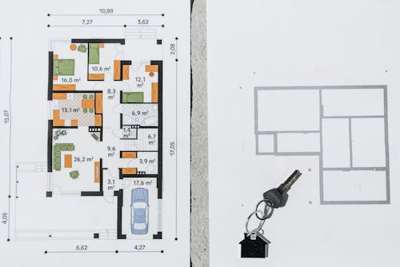

You priced it right, cleaned it up, and listed it on time, yet buyers keep walking away without a second look. In many Baltimore homes, the hidden culprit is the floor plan. Awkward layouts are one of the most common and most overlooked reasons a home sits on the market longer than it should.
What counts as an awkward floor plan?
Not every unusual layout is a dealbreaker, and not every quirky home struggles to sell. A problematic floor plan makes everyday living feel difficult, rooms that force you to walk through a bedroom to reach a bathroom, a kitchen buried at the back of the house with no connection to the main living area, or a layout where no room has a clear, logical purpose.
Baltimore has a lot of older rowhouses and early-century homes with layouts that worked fine in their time. Wide hallways that eat up square footage, separate parlor rooms with no modern use, or split staircases that divide the home awkwardly. These are the kinds of things that make buyers pause during a showing and quietly cross your home off their list.
It is worth remembering that size is not the main issue here. A well-flowing 1,300-square-foot home will often generate more interest and better offers than a choppy 1,800-square-foot home where rooms feel disconnected and movement through the house feels unnatural.
How Baltimore buyers actually react to odd layouts
Baltimore buyers tend to be practical. Many of them are shopping in neighborhoods like Hampden, Canton, Fells Point, Charles Village, and Govans. Areas full of character homes where some quirks are expected. A small oddity in an otherwise solid home often gets a pass, especially when the price reflects it.
Where sellers get surprised is when buyers say nothing at all during a showing and simply never follow up. Buyers rarely say, I didn't like the layout. They just disappear. That silence can leave sellers wondering what went wrong, lowering the price when the real problem was never addressed.
A layout that breaks basic privacy expectations, like a bedroom that only connects through another bedroom, or a bathroom that sits directly off the main living area, tends to be a hard stop for most buyers, regardless of price. Those issues signal a home that will be difficult to live in, not just difficult to appreciate aesthetically.
Some buyers cite layout as a top deal-breaker
38% Some buyers cite layout as a top deal-breaker | 21+ extra days on market for poor flow homes | 7–12% Typical price reduction needed to move |
Small fixes that make a real difference before listing
Sometimes a targeted, low-cost change can shift how buyers experience your home entirely. You do not need a full renovation to improve perceived flow. You need to remove friction from the way people move through and understand the space.
Removing a non-load-bearing wall between a cramped kitchen and the adjacent dining area is one of the highest-return changes a Baltimore seller can make. It costs relatively little, opens up the first floor dramatically, and makes the home feel modern without a full remodel. Adding a direct door between two disconnected spaces gives buyers a mental path they can follow, and that clarity matters during a 20-minute showing.
Staging also plays a bigger role than most sellers expect. A room staged with too much furniture looks smaller and more confusing. Strip each room down to one clear purpose and let the architecture speak for itself. Buyers need to be able to stand in a doorway and immediately understand what the room is for.
Quick fixes worth trying before you list
Open sightlines: Remove doors or non-load-bearing walls between connected spaces to improve perceived flow.
Intentional staging: Give every room one clear purpose, so buyers instantly understand how to use it.
Lighting refresh: Brighter, well-lit rooms feel larger, more open, and more inviting during showings
Pricing right when your layout isn't ideal
If the layout cannot be changed or if the cost of changing it outweighs what you'd gain at closing. Pricing becomes your most powerful lever. A home with a layout problem priced like a perfect home will sit on the market. Buyers have options, and they will choose a more functional home at a similar price point every time.
Look at genuinely comparable sales in your Baltimore neighborhood. If your comparable homes have open, logical layouts and yours does not, you need to price below them. The gap depends on the severity of the issue. A minor quirk might mean 3–5% under comparable homes. A serious flow problem: disconnected rooms, no clear master bedroom, poor privacy could mean pricing 8–12% lower to generate enough interest.
Working with a local Baltimore agent who knows specific neighborhoods well is worth it here. They will know how buyers in your zip code actually respond to layout issues and what price adjustment gets homes moving versus what price just creates long, expensive sits on the market.
If you want to skip that process entirely, Houses For Cash Baltimore connects sellers with cash buyers who purchase homes as-is: layout quirks, dated interiors, and all, without requiring repairs, staging, or lengthy negotiations.
Selling as-is: a smarter path for some sellers
For homes with genuinely difficult layouts, the traditional listing route is not always the right one. A hard-to-love floor plan tends to attract fewer showings, generate lower offers, and require repeated price cuts that chip away at your net proceeds month after month.
Selling directly to a cash buyer or investor skips all of that. You price the home knowing what it is, find a buyer who sees its value anyway, and close on a timeline that works for you. When you factor in agent commissions, carrying costs during a long listing period, staging expenses, and the discounts that come from repeated price reductions, a direct sale often puts more money in your pocket than a slow traditional listing.
Marketing moves that help sell an unusual home
How you present a home with an unusual floor plan matters as much as the price. Strong listing photography is your first line of defense. Wide-angle shots in well-lit rooms make spaces feel open and purposeful. Minimal furniture in photos lets buyers see the architecture itself rather than how cramped a room can look when filled with stuff.
Including a labeled floor plan diagram in your listing is genuinely useful when the layout is unconventional. Buyers who can study the layout before arriving show up mentally prepared rather than confused the moment they step inside. That preparation makes them far more open-minded about what they're seeing.
In your written description, be honest about the home's character without calling attention to weaknesses. Language like distinct, separated living spaces or cozy private rooms throughout frames the layout as intentional rather than problematic. Transparency builds trust with buyers, and trust keeps them engaged even when a home is not perfect.
Layout quirks that rarely hurt your sale
Worth remembering, not every odd layout is a liability. Some quirks attract exactly the right buyer and actually help you sell faster to someone who values what your home offers.
A separate formal dining room, which many sellers see as dated, is something a meaningful number of buyers actively prefer over open-plan living. An oddly shaped bonus room off the main hallway could be perfect for a buyer who needs a home office, a craft room, or a reading space. A sunken living room or a split-level entry that felt strange to you might feel full of personality to the right buyer.
The layouts that genuinely damage sales are those that break basic daily function, no direct access to a bathroom without walking through a bedroom, a master bedroom with no privacy, a kitchen with no logical connection to where people eat or gather. Those are the floor plan problems worth addressing before listing, whether through physical changes, pricing strategy, or a direct sale.
FAQs
1. Can an awkward floor plan really stop my Baltimore home from selling?
Yes, it can slow things down significantly. Buyers often struggle to picture daily living in a home where movement feels confusing or rooms lack purpose. Even if they don’t say it out loud, many will simply move on to a property that feels easier to live in.
2. What is considered the worst type of layout issue?
The biggest deal-breakers are layouts that affect privacy and function. Examples include bedrooms that must be passed through to reach another room, bathrooms opening directly into living spaces, or kitchens that feel completely disconnected from the rest of the home.
3. Should I renovate my layout before listing my home?
Not always. Small, strategic changes like opening sightlines or improving room flow can help. A full renovation only makes sense if the cost will be recovered in your sale price. In many cases, smart pricing and better presentation can achieve similar results without major construction.
(0) comments
We welcome your comments
Log In
Post a comment as Guest
Keep it Clean. Please avoid obscene, vulgar, lewd, racist or sexually-oriented language.
PLEASE TURN OFF YOUR CAPS LOCK.
Don't Threaten. Threats of harming another person will not be tolerated.
Be Truthful. Don't knowingly lie about anyone or anything.
Be Nice. No racism, sexism or any sort of -ism that is degrading to another person.
Be Proactive. Use the 'Report' link on each comment to let us know of abusive posts.
Share with Us. We'd love to hear eyewitness accounts, the history behind an article.