
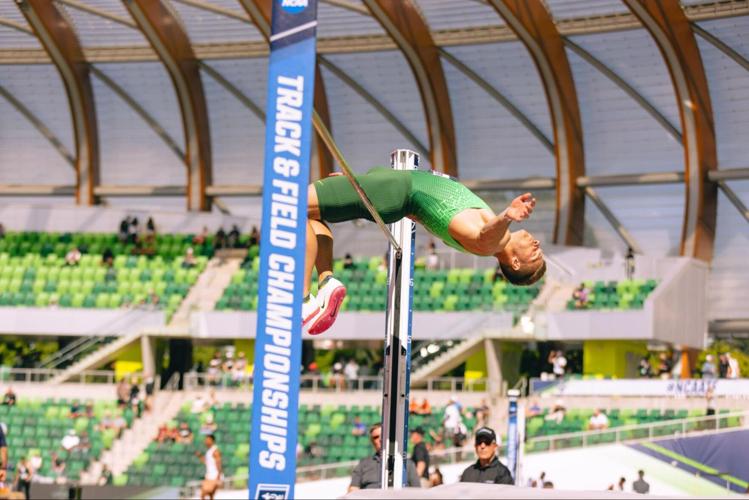

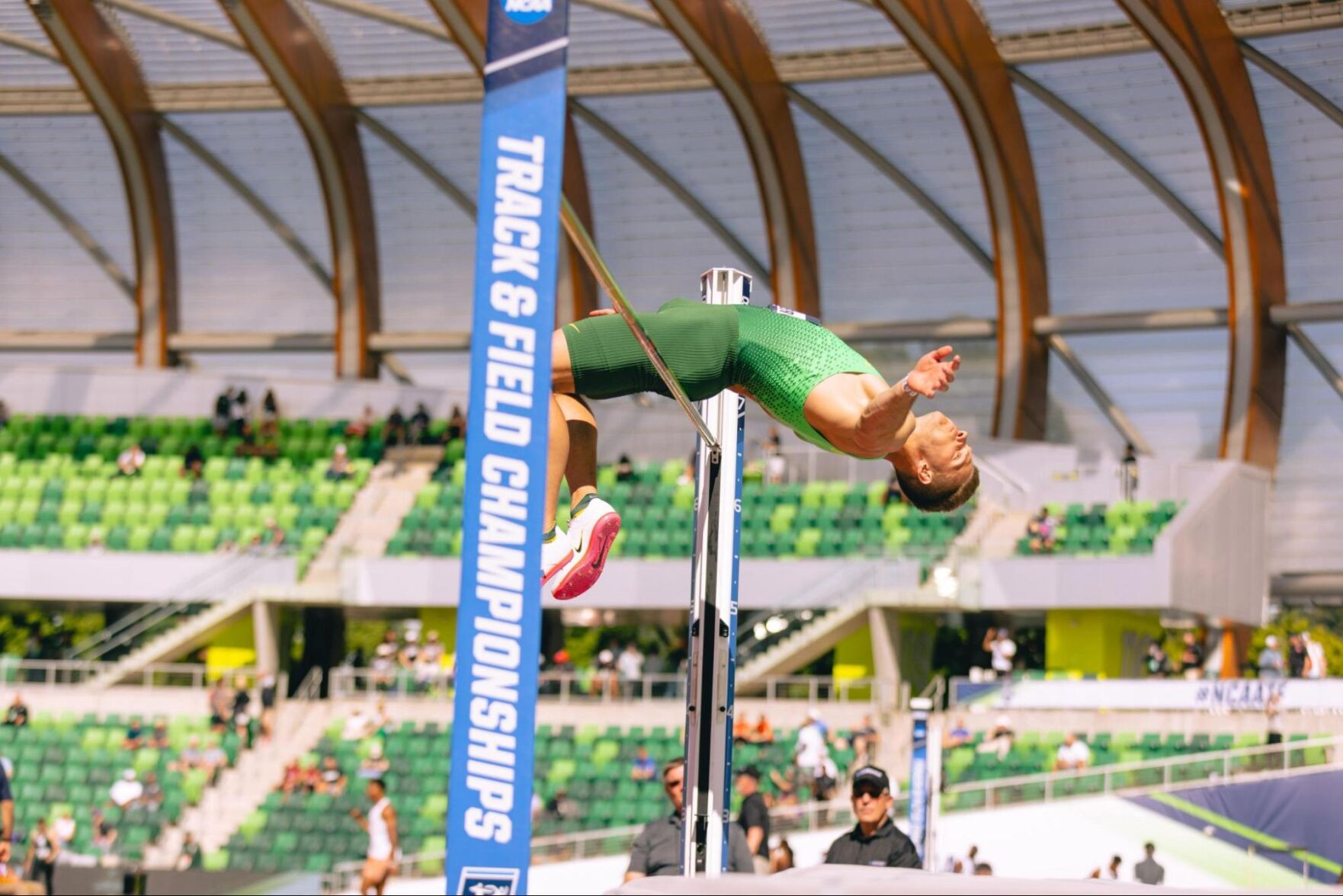
One of the best moments in Max Vollmer's athletic career was winning fourth place at the Junior European Championships. This result, along with others, reflected his many years of training. However, one thing that gave him the edge was not just his tireless hours training his body, but the time he spent training his mind for athletic success. Early on, he learned the benefits of meditative visualization in conjunction with physical training. Mental toughness and clarity of mind are necessities when engaging in a sport as intricate and intense as the decathlon, which involves ten separate athletic disciplines performed by competitors within two days.
Thus, visualization became a tool that would help Vollmer establish the proper performance routine. Competing in the US as a college athlete at the Division I level, Vollmer quickly established himself as one of the top combined events athletes. In addition to becoming a multiple-time NCAA first-team All-American, he earned the title of PAC-12 Champion for both indoor and outdoor events. Moreover, he ranked in the top five in both the heptathlon and decathlon categories for several consecutive NCAA seasons. Vollmer managed to score more than 8,000 points on several different occasions in multiple decathlon events, a rare feat for elite athletes. He went on to participate in Junior World and European Championships in this discipline.
Vollmer grew up in Ulm, Germany. He was involved in training at the Olympic Training Center for track and field, which took place amid a rigorous educational system that did not account for any athletic involvement. At 16, he had to live on his own and manage every single aspect of his life, since he had to attend school, train, eat appropriately, recover properly, and move on to competitions. Thus, his independence was the main driver of his discipline and structure.
In this regard, visualization became especially useful.
Since athletes engage in a combination of various activities, namely running, jumping, throwing, and endurance exercises, it is vital to practice each of them mentally and visualize oneself performing these activities flawlessly. This helps in preparing for the actual performance and removing doubts when executing a particular action or exercise. Consequently, before stepping into the competition venue, athletes know exactly what to do.
"You can't fake consistency in the decathlon," says Vollmer. "You either show up every day, or you don't survive."

During his time at the University of Oregon, a school known for its prestigious track and field program, Vollmer had to maintain high academic performance while balancing his athletic career. Apart from being an active participant in track and field competition, he earned a degree in business, minoring in economics and earning a spot on the Dean’s List several times during his college period. In this regard, visualization became an additional element of emotional management.
"What sports taught me," explains Vollmer, "was that belief without discipline is useless. And discipline without belief burns you out. You need both."
The mentioned mental attitude is critical for an athlete's career. For instance, athletes have to change their state of mind after every event and be ready to start a new exercise without being influenced by the previous one. Therefore, the mentioned approach to visualization was crucial to help maintain focus and be process-oriented. As a result, it provided Vollmer with a necessary mindset.
Furthermore, this approach became particularly relevant during the outbreak of the COVID-19 virus when it began affecting Vollmer's finances. Having to find new ways to make a living, he used a similar framework and approach to decision-making to manage his life effectively. He went on to apply his knowledge about structure and mental clarity to his burgeoning real estate business, Vollmer Real Estate Investments, which provided him with a source of steady income during the pandemic and beyond.
Currently, because of the high-risk nature of some of his operations, Vollmer employs the same visualization practices to improve his decision-making. Prior to making a big decision, Vollmer isolates himself from external inputs and uses the opportunity to concentrate.
"I don't make decisions when I'm reactive," says Vollmer. "I make them when I'm clear."
For him, visualization is not just a symbolic practice; rather, it is a useful mental technique that helps remove distractions, think logically, and structure one's actions and decisions. It worked the same way during his athletic competitions, when he had to perform without being affected by external factors.
"When you shut down external inputs," he says, "the right answer shows up."
At present, Vollmer still relies on the same framework as previously because it has helped him immensely during his athletic career. His mental and visualization skills have been one key to his success in both sports and real estate.

(0) comments
We welcome your comments
Log In
Post a comment as Guest
Keep it Clean. Please avoid obscene, vulgar, lewd, racist or sexually-oriented language.
PLEASE TURN OFF YOUR CAPS LOCK.
Don't Threaten. Threats of harming another person will not be tolerated.
Be Truthful. Don't knowingly lie about anyone or anything.
Be Nice. No racism, sexism or any sort of -ism that is degrading to another person.
Be Proactive. Use the 'Report' link on each comment to let us know of abusive posts.
Share with Us. We'd love to hear eyewitness accounts, the history behind an article.