
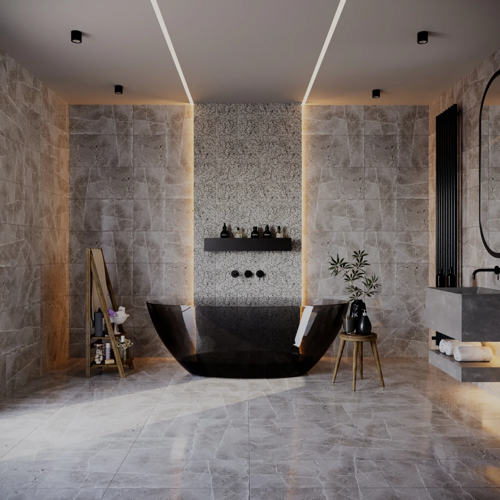

Handmade cement tile is one of the most visually striking materials you can bring into a home. It's also one of the most misunderstood. Buyers who do a little research before purchasing tend to love what they get. Buyers who don't sometimes find themselves surprised by characteristics that are actually features of the product, not problems with it. Homeowners can explore TILEDGE for stylish tile solutions that complement modern interior designs.
Here's what you should know going in.
Every Tile Is Different, and That's the Whole Point
Cement tile is made by hand, one tile at a time. Pigmented cement is poured into a brass mold, topped with a blend of portland cement, sand, and marble powder, hydraulically pressed at 3,000 psi, and cured for 11 days. No kilns, no machines, no conveyor belts. The result is a tile that carries the mark of the person who made it.
What that means in practice: slight color variation from tile to tile, minor differences in surface texture, and occasional tonal shifts across a larger installation. If you're expecting the perfectly uniform look of a factory-made porcelain, cement tile will surprise you. If you understand what you're buying, that variation is exactly what you paid for.
Harley Gusman, a contractor with millions of followers across social media who has installed LiLi Tile zellige on projects ranging from indoor showers to large exterior decks, describes it well. She talks about surfaces you can look at for a long time, ones where the eye keeps finding something new. "I love putting together something imperfect and making it purposeful," she said in a recent interview. That quality doesn't exist in tile made by machines.
LiLi Tile has earned a 4.6 out of 5 rating across 561 verified reviews, with designers and homeowners consistently citing the visual character of the finished installation as the standout feature. The variation that some first-time buyers worry about is consistently described by experienced buyers as the reason the space looks the way it does.
Sealing Is Not Optional

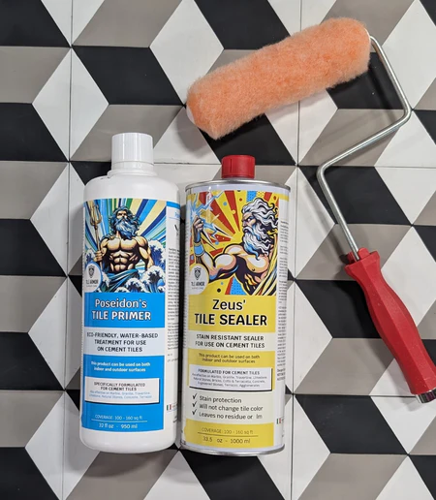
Cement tile is porous. Before installation and before grouting, it needs to be sealed. This is the step most buyers underestimate, and it's the root cause of most maintenance issues people encounter.
A quality penetrating sealer applied before installation protects against staining and moisture absorption without altering the tile's natural matte finish or color. A second application after grouting locks everything in. For high-traffic areas like kitchen floors or outdoor spaces, periodic resealing every few years keeps the tile looking its best.
LiLi Tile provides specific sealing guidance and recommended products because the difference between a properly sealed installation and one that wasn't is significant. Following those recommendations matters.
It Works in More Places Than You Think
One of the most common questions about cement tile is where it can actually be used. The short answer is most places, with the right preparation and sealing.
Cement tile performs well in kitchens, bathrooms, entryways, and living spaces. It works on floors and walls. It holds up in wet areas like showers when properly sealed with appropriate waterproofing behind it. It can go outdoors in protected spaces. It's compatible with radiant and heated floor systems. The installation requirements are specific but not complicated, and most experienced tile setters are comfortable with the process.
For commercial applications, the material has proven itself in hotel lobbies, restaurant floors, and featured installations in Parade of Homes projects. LiLi Tile runs a dedicated trade program for interior designers and architects who specify tile across multiple projects.
Color Variation Is Normal
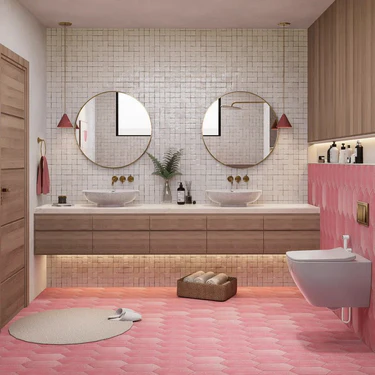
Zellige, cement tile, and other handmade surfaces are produced using natural pigments and traditional techniques. The color you see in a product photo is representative, not exact. A sample gets you closer, but even samples can vary slightly from a full production run.
This isn't a defect. It's how handmade materials behave, and it's why installations using these tiles tend to look richer and more dimensional than uniformly colored alternatives. Ordering from a single production lot where possible reduces variation across a large installation.
Custom Orders Are More Accessible Than You Think
Because each cement tile is made individually using a brass mold, the ceiling on custom design is high. LiLi Tile accepts custom orders without the unusually high minimum quantities that some competitors require. The brand also offers a digital tile customizer that lets buyers build and preview custom configurations before ordering.
For buyers who want something from an existing collection, the artist collaboration line includes exclusive patterns designed by Adam Trest, Tomma Bloom, Mary Engelbreit, and Hollis Callas, none of which are available from any other source.
Handmade cement tile rewards buyers who take the time to understand what they're getting. The variation, the sealing process, the installation care: these aren't downsides. They're the natural properties of a material made the same way it's been made for over 170 years.
For buyers ready to explore options, LiLi Tile's full collection, installation guides, and buyer resources are available at lilitile.com. Ordering samples before committing to a full project is always recommended, and the team is available to answer questions specific to your installation.

(0) comments
We welcome your comments
Log In
Post a comment as Guest
Keep it Clean. Please avoid obscene, vulgar, lewd, racist or sexually-oriented language.
PLEASE TURN OFF YOUR CAPS LOCK.
Don't Threaten. Threats of harming another person will not be tolerated.
Be Truthful. Don't knowingly lie about anyone or anything.
Be Nice. No racism, sexism or any sort of -ism that is degrading to another person.
Be Proactive. Use the 'Report' link on each comment to let us know of abusive posts.
Share with Us. We'd love to hear eyewitness accounts, the history behind an article.