
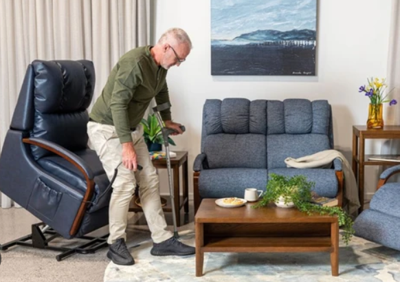

Last Tuesday, I walked through the front door after a long day, tapped a preset in the living room, and felt my shoulders ease within minutes. That short routine has changed my evenings. The right setup can cut daily tension, blend into a polished room, and cost only a few cents per session. If you live in Australia, doorway widths, power use, and service standards matter just as much as comfort.
Key Takeaways
The right model pays off when it fits your body, your room, and your routine.
Relief can show up fast. A well-fitted unit can lower felt stress and daily aches within 15 to 20 minutes, and trials on automated systems support that pattern.
Fit beats looks. Body-scan accuracy, roller depth, track reach, calf and foot work, and heat zones matter more than colour or speaker quality.
Plan the footprint early. Expect about 85 to 90 cm in width and up to 203 cm when fully reclined, though space-saving designs need far less rear clearance.
The running cost stays low. A 20-minute session usually costs about 1 to 4 cents on common Australian home tariffs.
Make it a habit. Two weeks of simple tracking will tell you whether the unit improves sleep, stress, and soreness.
How These Recovery Loungers Work
The best results come from knowing which parts do the work and which features are just extras.
massage chair
A massage chair is a motorized lounge that copies kneading, rolling, tapping, air compression, and heat. Body-scan sensors map your frame so the rollers start in the right place.
Mechanisms Decoded: 2D, 3D, And 4D Rollers
2D rollers move up, down, and side to side. 3D rollers add depth control, so they can press further into tight tissue. 4D rollers add speed and rhythm changes, which helps them slow down over tender spots and move faster through looser areas.
Track Types: S, L, And SL
An S-track follows the natural curve of your spine from the neck to the lumbar area, or lower back. An L-track keeps going under the glutes. An SL-track does both, which gives taller users better coverage if the model also supports their height range.
Air Compression, Heat, And Body Scan
Airbags squeeze the calves, arms, and hips to support circulation. Adjustable heat can ease tight calves and feet. The body scan checks shoulder height and spine shape, so a quick showroom test tells you whether the rollers actually hit the right spots.
Three Benefits You Can Feel In 15 Minutes
If the fit is right, you can usually feel the difference in one short session.
The evidence does not promise miracles, but it does point to clear daily benefits.
Stress Down Fast
A randomized controlled trial in healthcare professionals found that automated massage chair therapy lowered reported depression, stress, and muscle pain, especially in the calves and lower back. Another six-month trial of 80 adults aged 50 to 75 found lower afternoon cortisol trends, reduced DHEA-S, a hormone marker tracked in the study, and better perceived health and depression scores. Results still depend on fit and program intensity.
Everyday Pain Management And Recovery
Daily low to moderate sessions can ease neck and shoulder tightness from screen work and help with delayed onset muscle soreness, the stiffness that appears a day or two after exercise. Try a neck preset after laptop-heavy days and a calf or foot program after walks, runs, or long shifts on your feet.
Better Wind-Down For Sleep
In a randomized study of women with essential hypertension, six 30-minute sessions across three weeks lowered blood pressure and improved sleep quality. A simple habit works well here: use a gentle preset with dim lighting about 30 minutes before bed.
What To Check Before You Buy
Start with fit, then judge pressure, reach, and ease of daily use.
When you test a model in person, work through the same checks every time. That keeps bright lights and sales talk from steering the decision.
Fit First
Check the published height range, shoulder mapping, seat width, seat depth, and footrest extension. Taller buyers should look for clear support beyond 190 cm. Shorter buyers should confirm the neck rollers stop where the neck starts, not above it.
Roller Quality And Track Reach
Test low and mid intensity on the upper trapezius muscles, between the neck and shoulders, then between the shoulder blades and in the lower back. The motion should feel smooth, not choppy or harsh. If a deep mode feels punchy in the showroom, it will feel worse at home after a long day.
Calf, Foot, Heat, And Programs
Make sure foot pressure adjusts, especially if you have sensitive soles. Look for lumbar and calf heat with more than one level, and never use heat on bare skin. Two user memory profiles and quick presets matter more than dozens of modes you will never touch.
Materials And Smart Conveniences
Check upholstery feel, stitching, and seam placement where your shoulders and calves press hardest. Zero gravity, a reclined position that shifts weight off the spine, is genuinely useful. Voice control and Bluetooth audio are nice extras, but they cannot fix poor fit.
Priority | Best for Tall Users | Gentle Neck | Deep Calf/Foot | Space-Saving | Under $5k AUD
|
|---|---|---|---|---|---|
Track | SL-track, 190 cm+ | S-track, soft 3D | Extended L-track | Slide-forward recline | S-track or short SL |
Rollers | 4D, wide span | 3D, low min depth | Dedicated foot rollers | 3D compact | 3D basic |
Heat | Lumbar + calf | Neck + lumbar | Calf + foot | Lumbar | Lumbar |
Placement And Aesthetics
Good placement makes the unit easier to use and easier to live with.
modern living room
Measure the room, the doorway, and the delivery path before you order.
Footprint And Clearance
Plan for about 85 to 90 cm in width and up to 203 cm when fully reclined. Check hallway turns, apartment lifts, and front door widths before delivery day. Space-saving designs can reach a full zero-gravity position with only 7 to 8 inches of rear clearance, which helps in tighter rooms.
Sightlines, Styling, And Acoustics
Set it slightly off the wall on a low-pile rug, then add a slim side table and a low lamp so it looks intentional. Hide the power cord behind furniture and match metal finishes to nearby fixtures. Rugs and curtains also soften motor noise.
Running Costs In Australia
Power use is low enough that daily sessions barely show up on the bill.
Most units draw about 120 to 300 watts, depending on intensity and features. A 20-minute session at 300 watts uses about 0.1 kWh. At common Australian residential tariffs of roughly 25 to 35 cents per kWh, that works out to about 2.5 to 3.5 cents per session. At 150 watts, the cost drops to about 1.2 to 1.8 cents.
Care, Safety, And Longevity
A few simple habits keep the unit quieter, cleaner, and safer for years.
Wipe synthetic leather with mild detergent, avoid solvents, and vacuum lint from the footwell. Keep pets' claws away from the upholstery. Follow the auto shut-off limit, often around 16 to 19 minutes, instead of stacking session after session.
Service And Consumer Guarantees
Choose brands with local parts access and technicians, not just a long warranty card. Under Australian Consumer Law, consumer guarantees on acceptable quality and durability sit alongside any express warranty. Retailers cannot exclude those rights, so keep your receipt and document faults as soon as they appear.
The same principle applies to any long-term furniture investment in your home. If your setup includes a games room centred on a quality pool table, lining up trusted Australian specialists for pool table repairs pays off in the same way. Leveling the slate, re-clothing the bed, and replacing worn cushions at the right time keeps a table playing true for decades, much like timely roller service and cover care extend the life of a recovery recliner.
Safety Considerations
Most adults can use a unit daily at low to moderate intensity. Still, get medical advice first if you have a pacemaker or another implanted electronic device, an acute injury, uncontrolled hypertension, active DVT, short for deep vein thrombosis, pregnancy restrictions, or severe osteoporosis. Stop at once if you notice numbness, unusual pain, or reduced foot sensation.
A 14-Day Test Plan
A short test period shows whether the routine is helping or just taking up space.
Track a few numbers before you decide the purchase was worth it.
Baseline: Days 1 To 3
For the first three days, record stress from 0 to 10, neck and lower back soreness from 0 to 10, resting heart rate, and sleep quality in a diary or wearable app.
Intervention: Days 4 To 13
From days 4 to 13, use the unit for 15 to 20 minutes each night at low to medium intensity. Pick neck and shoulder programs after screen-heavy days and calf or foot programs after workouts. Keep the rest of your bedtime routine the same.
Review: Day 14
On day 14, compare your averages for stress, pain, time to fall asleep, and wake-ups during the night. If the numbers improve, save your preset and keep the routine. If they do not, lower the intensity, recheck the fit, or revisit the model.
Before you buy, shortlist a few models and book an in-store trial. Specs can narrow the field, but real fit is hard to judge on a product page, so once you have checked fit, pressure, track reach, room measurements, doorway access, local service support, and likely running costs, compare reputable retailers side by side with Australia's best massage chairs to find a premium option that suits your body and interior style.
Common Mistakes That Waste Your Investment
Even the right model can underperform when daily habits work against it.
A few small missteps show up again and again in buyer feedback.
Using maximum intensity from day one is the most common one. Tissue needs time to adapt, and starting too hard often leaves users sore the next morning.
Skipping the body scan before each session is another. The scan takes under a minute and keeps the rollers aligned with your actual shoulder height, not yesterday's position.
Running back-to-back sessions also backfires. The auto shut-off exists for a reason, and stacking cycles can irritate soft tissue instead of helping it recover.
Placement mistakes matter too. A unit shoved against a wall cannot recline fully, which limits zero gravity and puts extra stress on the frame over time.
When To Step Up Your Routine
Your needs will shift as your body adapts, so the preset that worked in month one may feel too light by month three.
Watch for a few signals.
If a medium program now feels gentle, try the next intensity level for two or three sessions before deciding.
If soreness clears faster than it used to, shorten the session instead of lengthening it. Fifteen focused minutes often beat 25 distracted ones.
If you start skipping days, the routine is probably too long or too intense. Scale back rather than stopping entirely.
Pairing It With Other Recovery Habits
The unit works best as one layer in a wider recovery routine, not a standalone fix.
Light stretching before a session helps the rollers reach deeper without discomfort. Hydration matters too, especially after calf and foot programs that move fluid through the lower legs.
A short walk earlier in the day primes the body for evening recovery. Screen-free time in the 30 minutes before a pre-sleep session amplifies the wind-down effect.
These habits cost nothing and make every session more effective.
FAQs
These quick answers cover the practical details people usually ask last.
How Often Should I Use It?
Start with 10 to 15 minutes a day on low intensity. Increase slowly as your body adapts, and stay within the session limit listed in the manual, which is usually around 16 to 19 minutes.
Can It Replace Sessions With A Therapist?
It supports professional care rather than replacing it. Use it for routine tension and daily recovery, and keep working with a therapist for injuries, pain that keeps returning, or anything that needs hands-on assessment.
Will It Fit Taller Or Shorter Users Comfortably?
Check the listed height range, the neck roller reach, and the footrest extension in store. Make sure the rollers cover your upper back through the glutes before you commit. Tall and short users both need a real test, not just a spec sheet.
How Much Space Do I Need?
Allow about 85 to 90 cm in width and up to 203 cm in reclined length. Some models need only 7 to 8 inches behind them, but you still need to measure the full delivery path, including tight hallway turns.
A Recovery Ritual That Earns Its Space
If your sleep, stress, and soreness improve over two weeks, the upgrade has proved its value.
That is the real test. When the fit is right, the room plan works, and daily use feels easy, you end up with a recovery habit that costs a few cents a session and never needs a booking.
(0) comments
We welcome your comments
Log In
Post a comment as Guest
Keep it Clean. Please avoid obscene, vulgar, lewd, racist or sexually-oriented language.
PLEASE TURN OFF YOUR CAPS LOCK.
Don't Threaten. Threats of harming another person will not be tolerated.
Be Truthful. Don't knowingly lie about anyone or anything.
Be Nice. No racism, sexism or any sort of -ism that is degrading to another person.
Be Proactive. Use the 'Report' link on each comment to let us know of abusive posts.
Share with Us. We'd love to hear eyewitness accounts, the history behind an article.