

A beautifully organized bathroom does more than make the morning routine easier. It changes the entire mood of the space. Suddenly, the counter is not a landing zone for every serum, razor, hair tie, hotel lotion, and mystery sample packet you have ever collected. The linen closet stops behaving like a fabric avalanche. The medicine cabinet no longer looks like a tiny archaeological dig through five eras of cold medicine.
Bathroom organization is one of those home projects that feels small until you do it properly. Then it feels life-changing. A clean, edited, well-planned bathroom can make even a busy weekday feel calmer, more efficient, and slightly more luxurious. It also helps protect the things you use every day, from skincare to towels to medication, because bathrooms are humid spaces that require smarter storage than a regular closet.
The key is not buying every pretty basket in sight. The key is creating a system that fits your daily habits, your storage space, and the way your household actually functions. These ten inspirational bathroom organization ideas will help turn a cluttered bathroom into a polished, practical, and easy-to-maintain retreat.
Start With a Serious Declutter
Every good bathroom organization project begins with taking everything out. Not some things. Not the easy things. Everything. Empty the drawers, cabinets, shower ledges, medicine cabinet, under-sink storage, linen shelves, and countertop trays. It may look worse before it looks better, which is usually the official beginning of any worthwhile home project.
Once everything is visible, sort items into clear categories: keep, relocate, donate, recycle, and dispose. Toss empty bottles, dried-out products, old razors, broken tools, and expired items. The American Academy of Dermatology notes that makeup and sunscreen should not be kept indefinitely, since old products can lose effectiveness or become less safe to use. That forgotten mascara from three summers ago has had its moment.
Medications deserve special attention. Expired or unused medicine should be handled safely, not casually thrown into a drawer for another decade. The U.S. Food and Drug Administration recommends using a drug take-back program as the best way to dispose of most unused or expired medicines.
After the first edit, only return the items you actually use, need, or love. Bathroom storage is valuable real estate. It should not be occupied by a conditioner you disliked in 2019 but somehow still feel emotionally responsible for finishing.
Create Zones for Daily Routines
Bathrooms become cluttered when everything lives everywhere. Creating zones gives every item a logical home and helps the room stay organized after the first big cleanup.
Start by thinking through your actual routines. You may need a skincare zone, dental-care zone, hair-care zone, makeup zone, shaving zone, bath zone, first-aid zone, cleaning zone, and guest-supply zone. In a shared bathroom, zones are especially helpful because everyone can see where items belong without asking the same question every morning.
Keep the most-used items in the easiest-to-reach places. Daily skincare belongs near the sink or vanity. Hair tools may belong in a heat-safe drawer organizer or cabinet caddy. Backup toiletries can go in a labeled bin under the sink or in a nearby linen closet. The goal is not to make the bathroom look staged for one photograph. The goal is to create a system that still works on a rushed Tuesday.
Use Clear Containers Where Visibility Matters
Clear containers are popular for a reason. They make it easy to see what you own, what you are running low on, and what has multiplied while you were not paying attention. They are especially helpful for cotton rounds, bath salts, floss picks, hair accessories, travel-size toiletries, and small skincare products.
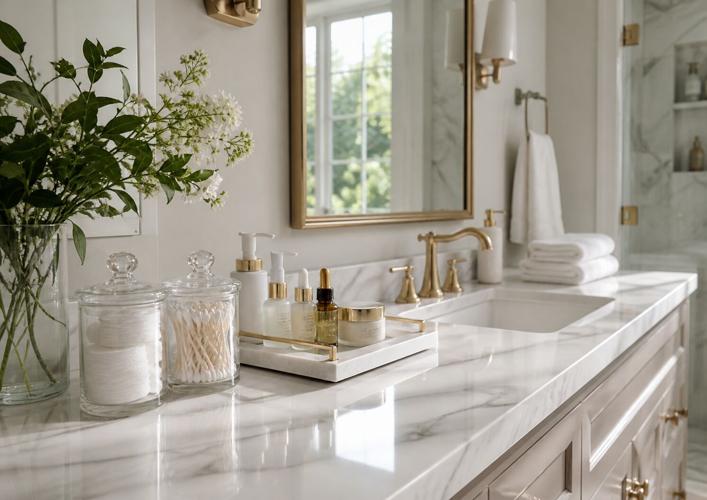
Glass canisters add a polished, spa-like feeling on open shelves or vanity counters. Clear acrylic bins work well inside drawers and cabinets because they are lightweight, easy to wipe clean, and available in many sizes. For a more elegant look, choose matching containers rather than a random mix of plastic bins, old jars, and one suspiciously sticky travel pouch.
The trick is to avoid turning every single item into décor. Cotton swabs in a glass jar can look lovely. A visible pile of mismatched foot creams, dental samples, and half-used self-tanner rarely has the same effect. Use clear storage when visibility helps. Use closed storage when the view is better left private.

Add Shelving Without Overcrowding the Room
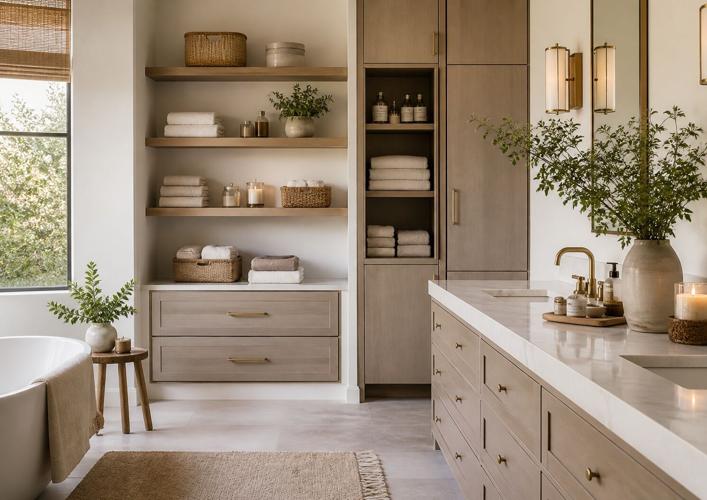
Shelving is one of the easiest ways to add storage without taking up floor space. Floating shelves above the toilet, a slim shelf near the vanity, or a small built-in niche can create room for towels, baskets, candles, greenery, and daily essentials.
The best bathroom shelves balance beauty and usefulness. A small stack of hand towels, a lidded jar, a pretty basket, and one decorative object can look intentional. Ten products lined up like a drugstore aisle can quickly make the room feel chaotic again.
Before installing shelves, consider the bathroom’s moisture level and wall structure. Bathrooms need materials that can handle humidity, especially near showers and tubs. The EPA emphasizes that bathroom ventilation is important for removing moisture and helping prevent mold and mildew. Good storage should make the room function better, not create new places for damp clutter to gather.
Take Advantage of Vertical Space
Small bathrooms often have more storage potential than they first appear to have. The secret is looking up. Vertical space can be used for hooks, wall-mounted racks, towel bars, ladder shelves, slim cabinets, and over-the-door organizers.
Hooks are especially useful because they are simple, inexpensive, and forgiving. A robe hook behind the door, a few towel hooks near the shower, or a small hook for a hair towel can keep items off the floor and out of the laundry pile. In a family bathroom, hooks often work better than towel bars because people are more likely to use them correctly. That is not a design theory. That is lived experience.
Inside the shower, consider a wall-mounted caddy, corner shelf, or built-in-style organizer that keeps shampoo and body wash off the floor. Choose rust-resistant materials and avoid overloading the shower with every product you own. The shower is not a storage unit with plumbing.

Use Drawer Organizers for the Small Things
Bathroom drawers are where small items go to disappear. Bobby pins, tweezers, lip balm, nail clippers, hair ties, sample packets, and travel toothpaste can become one chaotic little junk drawer if there is no structure.
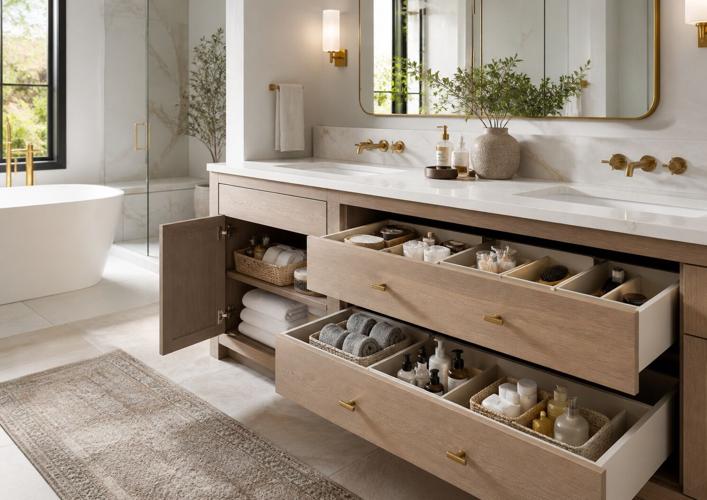
Drawer organizers solve this quickly. Use divided trays for makeup, slim inserts for dental care, small bins for hair accessories, and deeper compartments for skincare or shaving supplies. Adjustable bamboo or acrylic drawer dividers can make a vanity feel custom without requiring a full remodel.
Try to keep only daily or weekly items in prime drawer space. Special-occasion makeup, backup products, and rarely used tools should live somewhere else. The drawer you open every morning should not require negotiation.
Label Storage in Shared Bathrooms
Labels are not just for people who own label makers and alphabetize spices. In a bathroom, labels can make a system easier for everyone to follow. They are especially useful in children’s bathrooms, guest bathrooms, linen closets, and shared vanities.
Use simple labels for categories such as first aid, dental, hair tools, skincare, travel toiletries, cleaning supplies, backup soap, and guest towels. Chalkboard labels or removable labels work well if the contents change often. Printed labels look more polished for permanent categories.
Labels also help prevent overbuying. When you can see that there is already a bin for extra toothpaste and it is full, you are less likely to buy another three-pack because it was on sale and looked emotionally reassuring in the store.
Invest in Storage That Belongs in a Bathroom
Bathroom storage needs to handle moisture, frequent use, and the occasional product leak. That means the prettiest basket is not always the best basket. Choose materials that are sturdy, washable, and appropriate for a humid room.
For under-sink storage, consider stackable bins, pull-out drawers, handled caddies, or modular organizers that fit around plumbing. For open storage, woven baskets, lidded boxes, and fabric bins can soften the room while hiding less attractive necessities. For cleaning supplies, use a removable caddy so everything can be lifted out at once.
This is also where quality matters. Flimsy organizers crack, sag, stain, and usually make the cabinet look messy again within a month. Good bathroom organization should feel calm, not temporary.
Use Decorative Baskets With Restraint
Decorative baskets can make a bathroom feel warm, finished, and less clinical. They are perfect for rolled hand towels, washcloths, extra toilet paper, bath products, and guest essentials. A beautiful basket can also disguise very ordinary items, which is one of the quiet miracles of good home design.
However, baskets work best when they are not treated as clutter camouflage. If every shelf has a basket and every basket is full of random products, the system is only pretending to be organized. Assign each basket a specific purpose and keep similar items together.
For a polished look, choose baskets in consistent materials or tones. Wicker, seagrass, wire, canvas, and washable woven bins can all work depending on the style of the bathroom. In a luxury bathroom, restraint is often what makes the space feel expensive. One beautiful basket usually looks better than six anxious ones.
Consider Wall-Mounted Cabinets for Hidden Storage
Wall-mounted cabinets are ideal for bathrooms that need more storage but do not have room for additional furniture. A cabinet above the toilet, beside the vanity, or over an unused wall section can hold extra toiletries, towels, cleaning supplies, and daily essentials without taking up floor space.
Closed cabinets are especially helpful when the bathroom has a lot of visual activity already. Patterned tile, decorative mirrors, bold lighting, or open shelving can make a space feel busy. A simple wall cabinet adds storage while keeping the room visually quiet.
Before mounting anything, check the wall type, weight limits, and placement. A cabinet filled with towels and products can become heavy quickly. If you are unsure, have it installed professionally. Bathroom organization should not end with a cabinet making a dramatic exit from the wall.
Do a Quick Maintenance Edit Every Month
The secret to a consistently organized bathroom is maintenance. Once a month, take ten minutes to reset the space. Toss empty bottles, wipe bins, check expiration dates, refill cotton rounds, restock toilet paper, and return wandering products to their proper zones.
This small habit prevents the bathroom from slowly returning to its previous state. It also helps you notice what you actually use. If a product has been moved around the bathroom for six months but never opened, it may not need to live there anymore.
Bathroom organization is not about perfection. It is about making the room easier to use, easier to clean, and more pleasant to spend time in. When everything has a place, the bathroom becomes less of a cluttered utility room and more of what it should be: a clean, calm, beautifully functional part of the home.
(0) comments
We welcome your comments
Log In
Post a comment as Guest
Keep it Clean. Please avoid obscene, vulgar, lewd, racist or sexually-oriented language.
PLEASE TURN OFF YOUR CAPS LOCK.
Don't Threaten. Threats of harming another person will not be tolerated.
Be Truthful. Don't knowingly lie about anyone or anything.
Be Nice. No racism, sexism or any sort of -ism that is degrading to another person.
Be Proactive. Use the 'Report' link on each comment to let us know of abusive posts.
Share with Us. We'd love to hear eyewitness accounts, the history behind an article.