
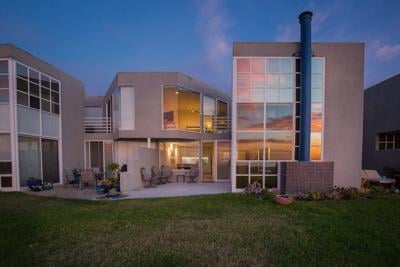
Just as fashion is cyclical, architecture trends today seem to draw upon the success of eras gone by. The modernist movement during the mid-1900s embodied the same appealing elements that contemporary styles adopt today, like clean lines, open space, and natural light. Combined with the ocean views of coastal California, this became the perfect place for budding modernism to thrive. Sean Caddell, local expert in modern and contemporary architecture and agent with Willis Allen Real Estate, describes two beautiful examples in Solana Beach and Cardiff-by-the-Sea.
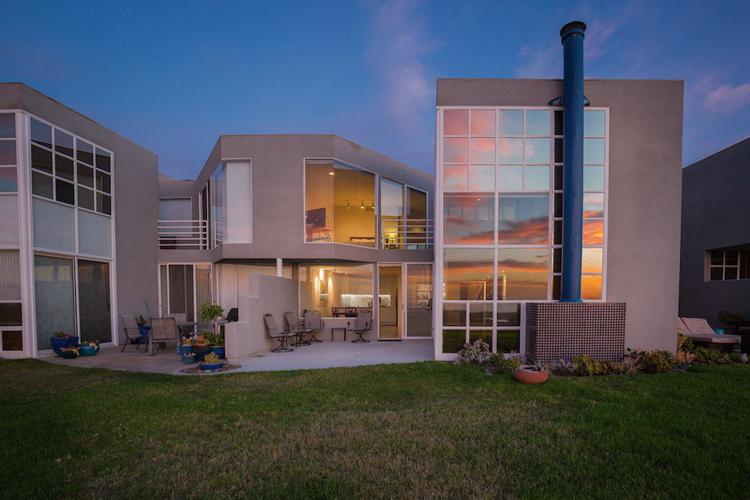
At first glance, the stark contrast and distinctly contemporary style of this Solana Beach home – whose enormous floor-to-ceiling windows are flooded with warm natural light and exquisite views of both the ocean and the San Dieguito Lagoon – makes it appear like there may not be much history behind this place. Modern aesthetic, is just that: modern. Right?
Hardly. Looking closer, it’s easy to see the geometric influence, clean lines and simple industrial elements that inspired a school of thought that’s nearly a century old – the bauhaus.

Sean Caddell
Bauhaus was a school of thought that originated in Germany in 1919 and innovated the use of industrial materials, geometric elements and color in simple, clean architectural and interior designs. Here in California, it’s evolved into the definitive coastal contemporary style and proven itself to be timelessly elegant almost a hundred years later.
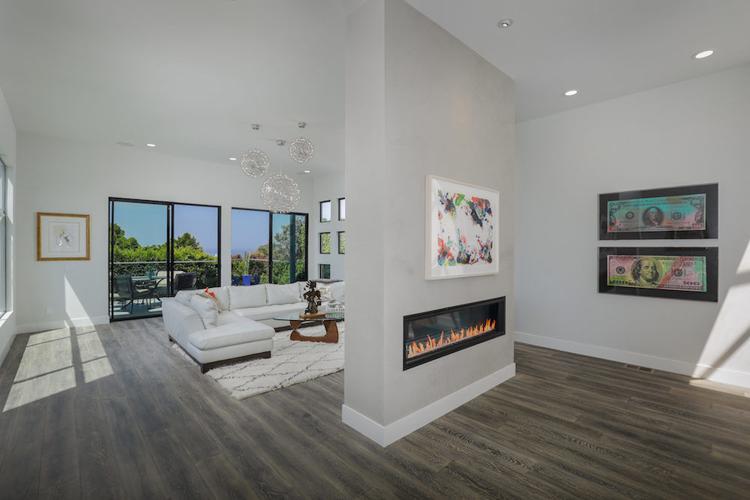
"A common misconception about contemporary design is that the spaces are cold," Caddell says. "They’re not. The simplicity of the style lends itself to personal expression and displays of art."
The neutral walls of this home, and many others in this style, have a museum quality that’s flexible and adaptable to any kind of art. Minimalist and classical art can fit in the same room happily, and traditional pieces with antique, ornate gilded frames add texture and color that may be otherwise lacking.

Sean Caddell
"These houses are much more personal and alive to me," Caddell says. "A home should be a collection of things over time that are special and important, not just something that matches the furniture." Even if the walls were bare of art, they would not be stark and cold – and that’s due to the windows.
In bauhaus and modernist style, towering windows and ceilings were used to create an inviting space that soon came to define international style. Those tall windows are designed to draw in natural light, adding the warmth that is sometimes missing from modernism. They also function to bring the outdoors in, making even a contemporary living space feel connected to the scenery.
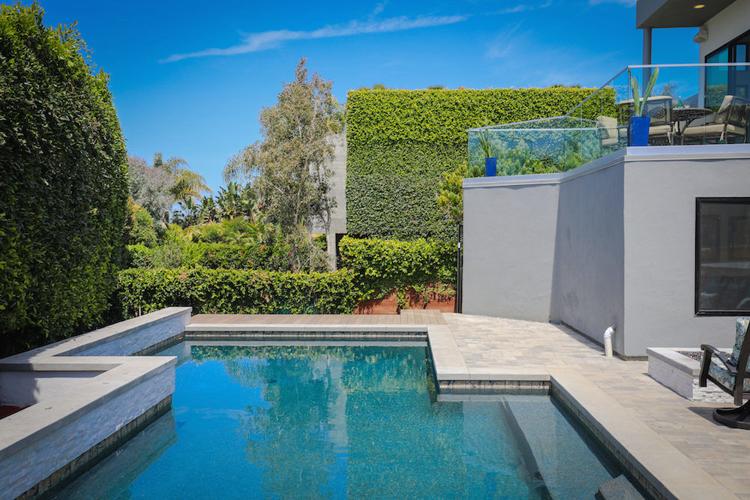
In the innovative and efficient (but beautiful) home in Cardiff, this effect is imperative to the home’s design. From the balcony, a view of the Pacific Ocean stretches into the horizon, adding life and vibrancy to the home, as if it were a living piece of art on the wall. But it serves as more than just a stunning sight. Open the windows and the house is filled with an ocean breeze and sheets of sunlight that help heat and cool the home without electricity.

Sean Caddell
"In a contemporary home, all ele- ments of the Earth are here," Caddell says. "There’s a multitude of textures
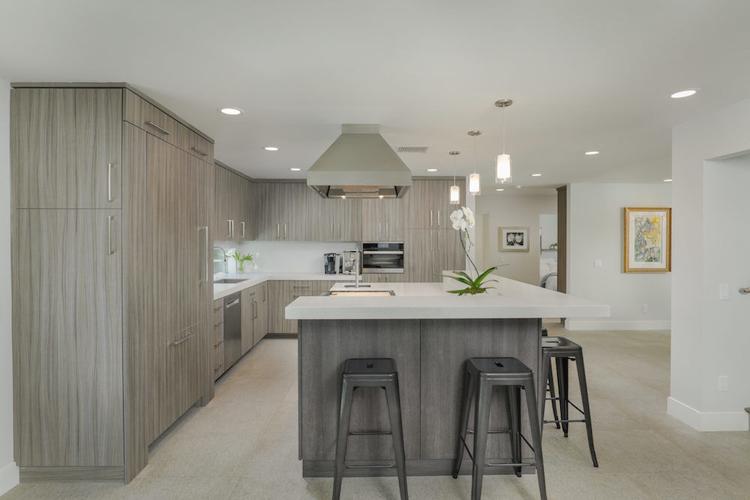
– wood, tile, metal, glass, concrete. That’s part of the industrial trend in modernism, but even the water and the light are incorporated because so much of the environment is invited inside."
Glass is everywhere in the Cardiff home, from the glorious windows in every room, to the railings both inside and outside, even to the kitchen backsplash. Space and light are carefully considered here, and it functions not only to immerse oneself in nature, but also to provide an integral connection to every other part of the house.
One thing is clear: this trend is here to stay. Actually, it’s more of a staple in home aesthetic by now. Modernism has already proven its longevity in the previous century, and with the addition of smart home technology, energy efficient design and natural elements, it has real staying power for years to come.
For Related Articles Try:
Tips for Organizing a Home Office
4 Chic Styles of Outdoor Seating


(0) comments
We welcome your comments
Log In
Post a comment as Guest
Keep it Clean. Please avoid obscene, vulgar, lewd, racist or sexually-oriented language.
PLEASE TURN OFF YOUR CAPS LOCK.
Don't Threaten. Threats of harming another person will not be tolerated.
Be Truthful. Don't knowingly lie about anyone or anything.
Be Nice. No racism, sexism or any sort of -ism that is degrading to another person.
Be Proactive. Use the 'Report' link on each comment to let us know of abusive posts.
Share with Us. We'd love to hear eyewitness accounts, the history behind an article.