
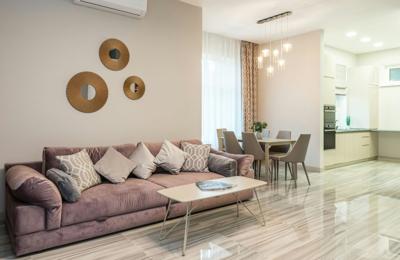

What does any household wish for? It is common knowledge that most people wish to have their homes be comfortable and their energy bills remain affordable. Unfortunately, sometimes these two factors tend to be at loggerheads.
However, it does not always have to be this way. The difference between living comfortably and efficiently tends to boil down to a handful of practices.
Why Comfort and Energy Efficiency Often Do Not Align
The issue is mostly rooted in reactive temperature management. It's hot somewhere; consequently, the temperature regulator lowers the set temperature. Later, when someone is cold, the temperature regulator raises the temperature again. It leads to an inability of the device to stabilise, its unnecessary additional workload, and uncomfortable temperatures within the room.
Summer overcooling and winter overheating are the most frequent results of such temperature management. Overcooling and overheating both require higher expenses compared to maintaining a reasonable temperature level. Excessive heating/cooling of the room wastes extra amounts of energy.
Temperature distribution unevenness between various rooms should be considered as well. If you have one west-oriented room and one that faces away from direct sunlight, it is hardly possible to regulate them with the same fixed temperature.
Wiser Strategies for Managing Indoor Climate Control
Contrary to what might be expected, moving from reactive management strategies to more proactive ones is not as difficult as one would think. The change simply requires that adjustments be made based on how the climate needs to be rather than how an individual feels.
Today’s advancements in the area include smart climate control systems which aim to keep indoor temperatures constant and minimise wastage of energy. As opposed to operating at full capacity until something is done about it, the system operates constantly, making any necessary changes in response to prevailing conditions. For individuals who have been managing climate control manually, the differences will become obvious quite soon.
How Automated Control Minimises Energy Loss without Compromising Comfort
The manual control system depends on personal preference. However, personal preferences can be subjective and not necessarily accurate for the house's requirements.
Adjustments are made according to need and not whims. Instead of working to adjust to changes in the setting, the device operates on how the climate demands its services. In the long run, such efficiency leads to minimised energy loss that becomes apparent through operating expenses.
There is also an advantage regarding comfort. Areas with consistent temperature levels are more comfortable to live in compared to areas that alternate between hot and cold due to the operator. "Consistency" and "efficiency" end up being synonymous more often than one thinks.
Managing Comfort Across the Whole Home
Keeping one room comfortable is manageable. A whole home is a different challenge, especially when different rooms face different conditions throughout the day depending on orientation, insulation, and how they are used.
Trying to handle all of that manually means either accepting that some rooms will always feel slightly off or spending a disproportionate amount of time adjusting settings that never quite land where they should.
A modern smart climate control system helps coordinate heating and cooling across different areas of the home, ensuring balanced comfort without overuse of energy. Each zone gets what it actually needs rather than a blanket setting applied across spaces with genuinely different requirements. In larger homes especially, that coordination makes a real difference to both comfort and running costs.
Practical Changes That Help Right Now
Smarter systems are valuable, but everyday habits matter just as much. A few straightforward changes make an immediate difference without requiring any new equipment.
Start with the thermostat. For cooling, 24 to 26 degrees Celsius is a comfortable and practical range for most homes. For heating, 18 to 20 degrees provides genuine warmth without pushing the system harder than necessary. Settling on a consistent setting and leaving it alone for a few days is one of the simplest ways to improve both comfort and efficiency at once.
Reducing heat entering the home helps considerably in warmer months. Closing blinds and curtains during the hottest part of a summer day reduces how much the aircon has to compensate for heat coming through glass. In cooler months, letting sunlight in through north-facing windows during the day and closing up before the evening temperature drops helps retain natural warmth without leaning entirely on the heating.
Zoning is worth using if your system supports it. Directing output to occupied rooms rather than conditioning spaces nobody is using cuts running time without sacrificing comfort where it counts.
Comfort and Efficiency Can Coexist
The idea that staying comfortable means accepting higher running costs comes from reactive habits and systems that were never set up to manage both outcomes well.
When a home runs on consistent settings, sensible habits around heat gain and insulation, and climate control that responds to actual conditions, the two stop competing. 'Comfortable' and 'efficient' become the same result rather than opposing ones.
That outcome is within reach for most households. It does not require a major investment or a full renovation. It mostly requires a willingness to move away from the reactive approach that makes home climate management harder and more expensive than it needs to be.


(0) comments
We welcome your comments
Log In
Post a comment as Guest
Keep it Clean. Please avoid obscene, vulgar, lewd, racist or sexually-oriented language.
PLEASE TURN OFF YOUR CAPS LOCK.
Don't Threaten. Threats of harming another person will not be tolerated.
Be Truthful. Don't knowingly lie about anyone or anything.
Be Nice. No racism, sexism or any sort of -ism that is degrading to another person.
Be Proactive. Use the 'Report' link on each comment to let us know of abusive posts.
Share with Us. We'd love to hear eyewitness accounts, the history behind an article.