
Having your own creative space helps you develop habits that further influence your unique artistic style and make you stand out. You become more comfortable with your artistic process, which in turn feeds your artistic confidence. This holds true regardless of whether you are a painter, sculptor, stop-motion animator, or costume designer.
Large personal art studios have always been the playground of a select few, sometimes by virtue of patronage rather than their own personal resources. The good news is that you don’t need an 800-square-foot open space in a fancy downtown brownstone to make your art. All it takes is a little know-how! Here are some tips on how you can convert almost any space in your home into a studio that fits your needs.

Choose the Right Space for Your Art Studio
The first step is to choose the space in your home that you will convert into a studio, and then clear out any furniture or items that aren’t directly related to the work you’ll be doing there. Try to create as much empty space as possible so you can let your mind wander and not feel cramped by everyday items and everyday thoughts.
Remember that while you get very up close and personal with your work, many people will see it from a distance in a gallery or a display. You have to be able to walk around your studio and observe your work from various angles and distances to see what your audience sees.

Take Care of Your Flooring
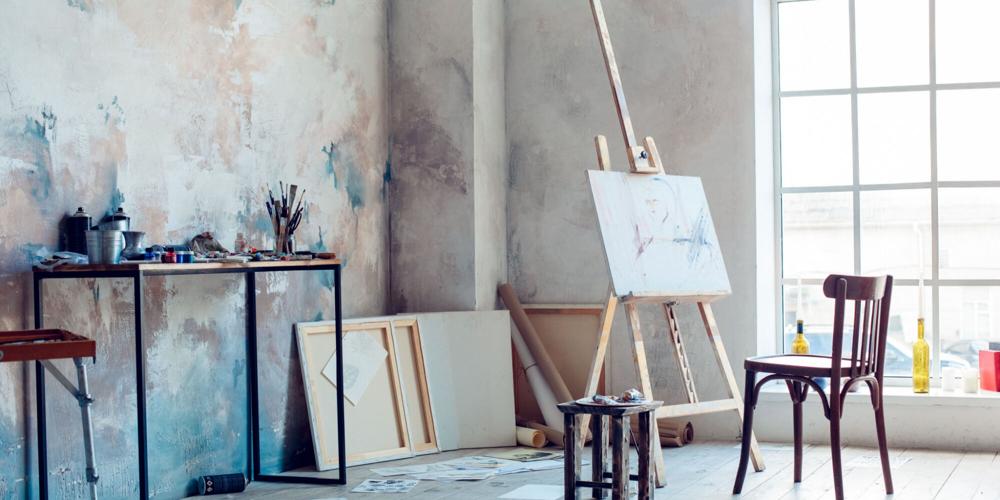
The floor of your art studio can be a canvas in itself, like a visual history of spilled paint, dropped clay or fallen rock dust. When your studio is at home, however, it pays to have more care especially if you are renting. Wooden floors are the most susceptible to damage, which is why you should consider applying vinyl tiling or at least a protective plastic tarp around the areas that are most likely to get messy. Ceramic tiling or concrete fare better against artistic accidents, but they’ll still crack or dent if heavy objects fall on them.
The one thing you don’t want on your art studio floor is a carpet – leave that to the music studios. It’s not only extremely difficult, if not impossible, to get paint out of it, but it will also trap unbelievable amounts of dust.
Use as Much Light as You Can Get
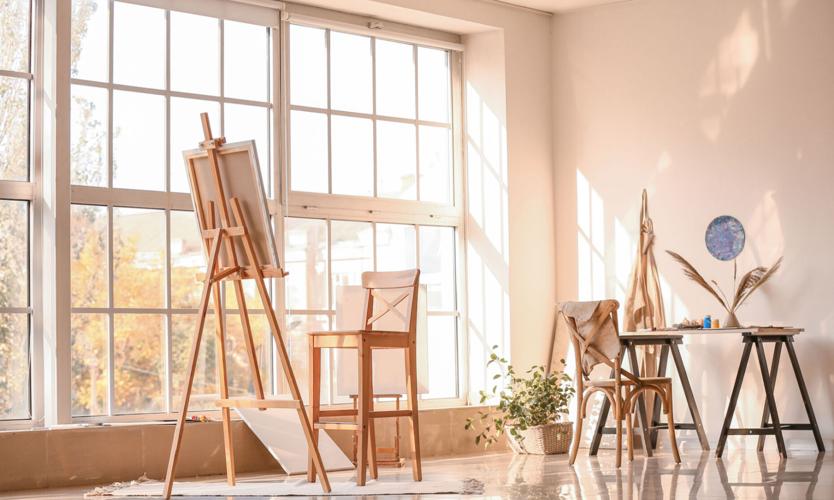
Light is absolutely paramount to having a proper art studio setup at home or anywhere. Pick a space with as many windows as possible and make sure they aren’t obstructed, to ensure the maximum amount of light and ventilation. South facing windows get the most sun over the course of the year.
If for whatever reason you find the light coming through your windows to be insufficient, you can use studio lamps as an alternative. These are also great because they offer consistent, controllable lighting throughout the day, unlike sunlight which varies greatly in intensity, color temperature and angle as the day goes on.
If your available space is on the smaller side, having power cables and extendable stands strewn across the floor can be a nightmare. Consider having the lights attached to articulated ceiling mounts, or at the least look for floor stands with a small footprint. It’s best to go for lights with adjustable color temperature as this can give you a better idea about how your finished work will look under different displaying conditions.
Just as important as having enough light is being able to block it out completely. Blackout curtains are made for this and will allow you to turn day into the night whenever you want. This level of light control is especially important when you want to take high quality pictures of your work for your portfolio.
Don’t Forget About Ventilation

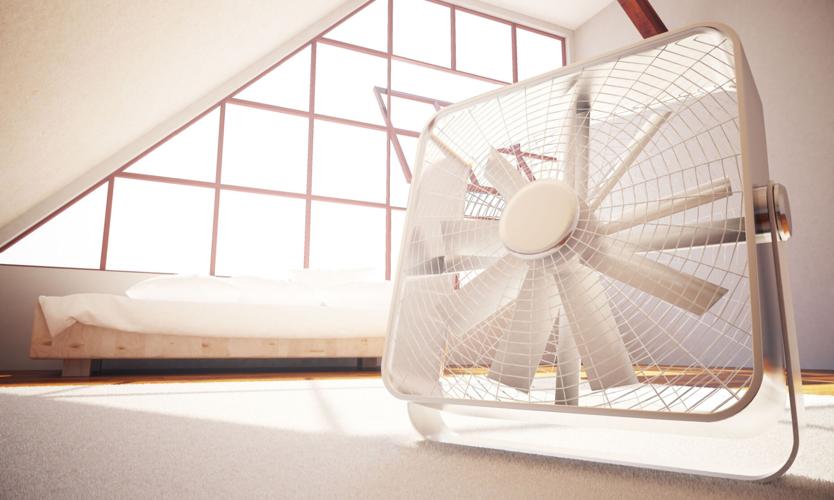
Finally, make sure your art studio is well ventilated. Dust from rock and dried clay as well as fumes from paints and solvents are the biggest health risks when working in an art studio. If your particular space and climate don’t allow for open windows, then air conditioning is a must have. Even if it’s a simple window fan it’s still better than nothing – for your creative mind to breathe freely, your lungs must do the same.
Use Self Storage as Much as You Can
Just as every home is different, every studio conversion will be different and will come with its own challenges. However, a lot of time and hassle can be saved by taking advantage of self storage units nearby. This has several advantages, not only when converting your space but long after as well.
The first and most obvious use is for storing the furniture you’ve cleared from your studio or for keeping items temporarily while you work on the new flooring, walls and fixtures. This way you have the option of bringing it back in later if you redesign or repurpose your art room
Secondly, if you’re selling your art and you often do bulk shipments, having the packages at the ready in a storage unit can make things a lot simpler logistically and it will prevent them from slowly usurping your creative space at home.
Thirdly, works of art are notoriously sensitive to temperature and humidity. Just ask Leonardo’s Last Supper! Your finished canvasses, ceramics, sculptures and other projects will live longer and maintain their value better if stored in a climate-controlled storage unit until they are ready for the admiring looks of the public. And since self storage is a lot cheaper than renting a dedicated studio, that means more investment available for what you love most – making art!

(0) comments
We welcome your comments
Log In
Post a comment as Guest
Keep it Clean. Please avoid obscene, vulgar, lewd, racist or sexually-oriented language.
PLEASE TURN OFF YOUR CAPS LOCK.
Don't Threaten. Threats of harming another person will not be tolerated.
Be Truthful. Don't knowingly lie about anyone or anything.
Be Nice. No racism, sexism or any sort of -ism that is degrading to another person.
Be Proactive. Use the 'Report' link on each comment to let us know of abusive posts.
Share with Us. We'd love to hear eyewitness accounts, the history behind an article.