
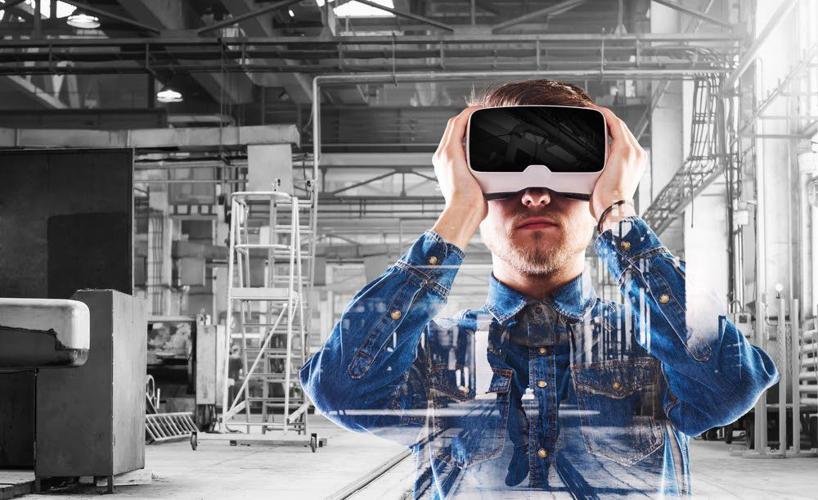
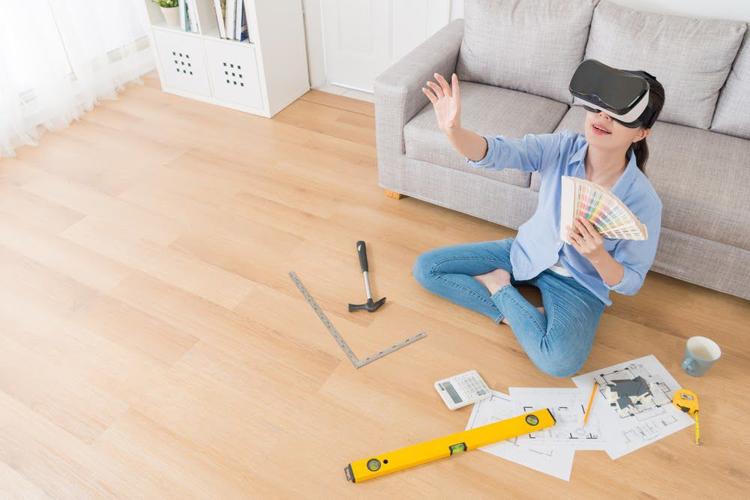

The latest technology is having a major impact on many areas of our lives today. Virtual reality and augmented technology are on the rise and it’s pervading through so many elements of the world around us. Most of us think of VR and AR as only being relevant in the gaming industry, with VR headsets becoming widespread in the homes of keen gamers and AR being incorporated into popular games like Pokemon GO and online live dealers, however these new advancements can actually be found in many other industries and sectors, changing the way that things are done.
One of the industries that is increasingly being shaped by virtual reality is the design sector. Here, we take a closer look at the impact that this technology is having on this key industry.
Furniture Design And Retail

Virtual reality technology is already being harnessed by designers of furniture and furniture retailers. By using cutting-edge techniques, it’s now possible for consumers to see just how furniture could fit into their properties and how different pieces will look from all angles. AR has also been harnessed in this way with IKEA developing their Place app which enables customers to preview over 2000 different products in their range, placing three-dimensional furniture that is true to scale into their homes by using their iPhone camera lens.
Three-Dimensional Clip Art In VR Environments
Traditionally, the realm of graphic design was purely about two-dimensional creations, however, virtual reality has brought about changes in three-dimensional design and graphic designers can now piggyback on this development. Illustrations and graphics can be transformed with the aid of the latest VR technology. Google has recently experimented with Poly, a digital library of three-dimensional objects that can populate the augmented and virtual reality worlds. Users can create and contribute designs of their own, allowing Poly to function as a clip-art library that stocks an enormous choice of 3D items including buildings, animals, and entire environments.
The Shared VR Experience
Although dystopian future movies such as Blade Runner 2049 present digital technology’s future as being one of increasing social isolation, many of the latest virtual reality products are working around this idea, finding ways to make VR gaming more inclusive and social. The Flow headset is just one option for opening up the VR experience into a shared one that others can participate in. The screen on its headset mirrors the virtual experience that the player is in so spectators can see exactly what the player is seeing.
The Power Of Touch Screen Projections
Tomorrow’s homes will look very different from those today thanks to the IoT. Devices that transmit their data to an external source in the Internet of Things model is quite a disturbing prospect, but VR is now being used to bring a humanistic edge to interiors that are digitally enhanced. For example, the HTC Vive lamp has been created to be attached to a ceiling or wall in the kitchen. Through this projection, it becomes possible to set the oven’s temperature and obtain cooking advice about how to prepare ingredients and make portion sizes.
Two-dimension design is Going Three-Dimensional With VR
Although graphic design is traditionally in two dimensions, virtual reality is already transforming those designs into completely immersive three-dimensional creations. One project which is exploring virtual reality’s potential in the graphic design sector is Singularity. This program allows designs for VR to be taken from the gaming sector rather than the traditional graphic design industry and utilizes them to create even more immersive experiences.
VR’s Future Within The Design Sector
Traditionally, the design sector has always embraced the possibilities associated with the latest technology, so it comes as no surprise that more designers than ever before are already beginning to experiment with mixed, augmented, and virtual reality when carrying out their work. Many of the big-name businesses such as Facebook and Microsoft are already investing large amounts in developing products related to virtual reality, so it’ll come as no surprise when more changes appear within the design sector connected with virtual reality in the near future. Designers of all kinds will be using VR for many more applications within the foreseeable future, and the possibilities are endless.


(0) comments
We welcome your comments
Log In
Post a comment as Guest
Keep it Clean. Please avoid obscene, vulgar, lewd, racist or sexually-oriented language.
PLEASE TURN OFF YOUR CAPS LOCK.
Don't Threaten. Threats of harming another person will not be tolerated.
Be Truthful. Don't knowingly lie about anyone or anything.
Be Nice. No racism, sexism or any sort of -ism that is degrading to another person.
Be Proactive. Use the 'Report' link on each comment to let us know of abusive posts.
Share with Us. We'd love to hear eyewitness accounts, the history behind an article.