
A failed finish can turn a good-looking front door into an expensive repair faster than most people expect.
A friend of mine learned that the hard way when her satin-nickel entry set pitted and discolored within eight months of installation, three blocks from the beach in Encinitas.
The set looked perfect in the showroom. It matched the cabinet pulls, fit the plumbing finishes, and felt solid in the hand.
Nobody asked whether the finish could survive salt air.
Door hardware sits where design, daily use, security, building code, and climate all meet. Along the Southern California coast, marine corrosion can matter as much as style.
The right choice depends on finish, grade, climate, code, and fit. Get those pieces right, and the hardware should work quietly for years.
Key Takeaways
Good hardware looks right, works smoothly, and survives the conditions around it.
Use finish trends as a guide, not a rule. Recent kitchen renovation choices skew toward brushed nickel at 31 percent, black at 19 percent, brass at 17 percent, bronze at 14 percent, and chrome at 5 percent.
Check the BHMA grade before you judge by weight. Grade 1 is tested to 1,000,000 cycles, Grade 2 to 400,000, and Grade 3 to 200,000.
Plan around California code early. At least one egress door must open from inside without a key, and garage-to-house doors need self-closing, self-latching hardware.
Measure before you order. Standard prep is usually a 2-1/8-inch face bore, a 1-inch edge bore, and a 2-3/8-inch or 2-3/4-inch backset.
Coastal homes need better exterior materials. Use 316 or 316L stainless steel, or a high-quality PVD finish, and match hinges, screws, latches, and strikes to that same spec.
Smart locks still need good mechanics. Choose a strong lock body, a clear battery plan, and a keyed override that remains easy to use.
What Door Hardware Includes
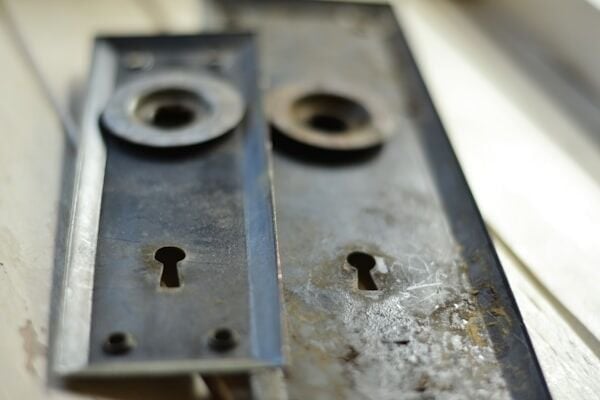
Door hardware is every working part you touch or depend on when a door opens, closes, or locks.
That includes knobs, levers, deadbolts, handlesets, hinges, latches, strikes, the metal plates on the frame, and closers, which pull a door shut automatically.
It also includes pocket-door kits, smart locks, and the trim used on multipoint locks, which secure the door at several points. It does not include the door slab or the frame.
Each item has a job. Passage sets do not lock. Privacy sets lock bedrooms and bathrooms. Entry sets are keyed for exterior doors. Dummy trim is decorative and usually sits on the fixed side of a pair of doors.
These parts also shape how a home feels. A lever with light spring pressure and a clean latch return feels quiet and intentional. A sticky latch or loose trim feels cheap every single day.
Why Good Hardware Choices Matter
Thoughtful hardware choices improve style, comfort, and safety at the same time.
Build a Cohesive Finish Plan
Pick a primary finish and repeat it across most openings. The result feels calm, even if you mix in a smaller accent finish for a powder room, pantry, or bar.
Standard finish codes help. ANSI/BHMA A156.18 uses codes such as US15 or 619 for satin nickel and US19 or 622 for flat black, which makes matching across brands much easier.
Improve Daily Use and Accessibility
Levers are easier to use than round knobs, especially when hands are full or grip strength is limited. California accessibility guidance also favors hardware that does not require tight grasping, pinching, or wrist twisting.
Test the action before you buy. A heavy lever spring, a stiff thumbturn, or a smart lock that binds during manual use will annoy you long before the finish wears out.
Avoid Security and Code Problems
On the required egress door, egress means the main exit path, California Residential Code R311.2 requires a door that opens from the inside without a key or special knowledge. Garage-to-house doors must be self-closing and self-latching under California Residential Code R302.5.1.
That affects product choices early. Skip interior-keyed deadbolts on the main exit door, and plan for self-closing hinges or a closer on the garage door. Use 3- to 4-inch screws at key strikes and hinges so the hardware anchors into framing, not just the jamb.
How to Choose Hardware by Door and Finish
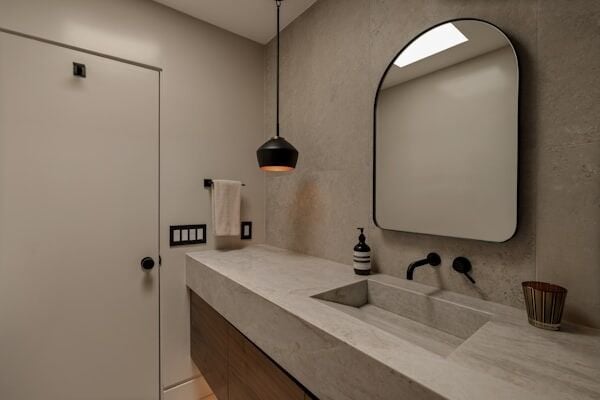
The best specification starts with the door's job, then narrows by finish, climate, and fit.
door finishes
Match Hardware to Door Type
Front doors usually need a handleset and a deadbolt in BHMA Grade 1 or Grade 2. BHMA, the Builders Hardware Manufacturers Association, tests how long hardware lasts under repeated use. Grade 2 is the practical baseline for most homes, while Grade 1 makes sense for heavy-use households, rentals, or oversized doors.
Bedrooms and bathrooms need privacy levers. Halls and closets use passage levers. Side doors do well with a keyed lever and separate deadbolt. Pocket and sliding doors need hardware made for that door type, not a workaround kit.
Choose Finishes That Age Well
Finish is not just a color decision. It affects maintenance, scratch visibility, and how well the hardware matches nearby lighting, plumbing, and cabinet pulls.
Homeowners still lean toward brushed nickel first, with black, brass, and bronze close behind. Satin nickel hides fingerprints well, flat black gives strong contrast, and brass adds warmth. Unlacquered brass develops patina, which can look rich indoors but will change quickly if you expect it to stay bright.
Plan for Coastal Exposure
Near the coast, salt air changes the rules. Standard plated sets that look perfect in a showroom can pit, stain, or flake in less than a year on an exposed entry.
For exterior doors, gates, and any opening that gets direct marine air, specify 316 or 316L stainless steel, which resists chlorides better than 304, or use a high-quality PVD finish. PVD, short for physical vapor deposition, bonds a hard coating to the metal and usually outlasts standard lacquered plating.
Match the hinges, screws, latch, and strike to the same corrosion-resistant level so one weak part does not fail first. If that sounds excessive, think about replacement cost: rekeying, fresh drilling, paint touch-up, and a finish mismatch if the product line changes.
Pick Smart Locks With Solid Backups
Smart locks are common enough to be practical, but they still need sound mechanical parts. Parks Associates reported in March 2026 that 11 percent of U.S. internet households had a smart lock, which shows steady growth without making it a universal choice.
Start with the lock body, not the app. Look for BHMA-certified hardware, a clear battery plan, and a keyed override that still works smoothly. Bluetooth or Thread setups usually use less power than always-on Wi-Fi, and most homes should expect battery changes every 6 to 12 months.
Measure the Door Before Ordering
Most residential doors are already drilled to a standard pattern, but not every door matches every trim set. The face bore is usually 2-1/8 inches across, the edge bore is usually 1 inch, and the backset, the distance from the door edge to the center of the bore, is usually 2-3/8 or 2-3/4 inches.
Most interior doors are about 1-3/8 inches thick, and most exterior doors are about 1-3/4 inches thick. If you want a separate deadbolt above a lever, center-to-center spacing is often 5-1/2 inches, so verify that too. A beautiful set that does not fit standard prep becomes an expensive return.
Translate Trends Into Long-Term Style
Trends are useful when they help you name a look, but they should not force every room into the same finish. Black levers work well with white oak, warm stone, and modern coastal interiors. Brass or bronze fits plaster, limewash, and Mediterranean-inspired spaces.
Textured grips, such as knurled or reeded details, can add tactility without visual clutter. Keep the overall shape simple, and let one or two details carry the design. That approach ages better than a door full of ornate trim plates.
Where to Buy and Specify Hardware
Where you buy matters because finish accuracy, grade, and lead time vary more than most people expect.
Designer showrooms are best for testing lever action and comparing finish samples in person. Big-box and online retailers are faster, but product photos rarely show how one brand's satin nickel differs from another brand's satin nickel. Always confirm grade, swing direction, backset, and finish code before you buy.
Specialized suppliers are useful when a home starts to blur into light commercial needs. A side gate, an accessory dwelling unit entry, a pool equipment room, or a heavily used mudroom may need heavier lock bodies, closers, or panic hardware that standard residential catalogs do not show clearly. Reviewing a focused range of commercial door hardware can help you compare those options in one place before you decide what belongs in the house and what is more than the project needs.
Whatever the source, order hardware by room, not by product category. Keep each door's lockset, hinges, latch, strike, and finish together on the schedule. For specialty finishes, keeping one extra hinge or finish-matched trim piece on hand can save a long wait later.
Mistakes That Lead to Rework
Most hardware problems start with a good-looking product chosen before the door conditions are confirmed.
The first mistake is buying a finish in isolation. A showroom sample can look warm under store lighting and cold at home next to your plumbing or cabinet pulls, so compare finishes in daylight before you place the order.
The second mistake is mixing durability levels. A corrosion-resistant lever with plain steel screws or bargain hinges will still fail at the weak point, especially on a coastal exterior door.
The third mistake is treating every opening the same. A powder room, a garage door, and a front entry do not need the same lock, grade, or closer, and forcing one package across the whole house usually creates compromises.
The last mistake is skipping a door schedule, a simple room-by-room list of lock type, finish, swing direction, and special notes. It sounds formal, but it prevents wrong boxes on install day.
How to Check Hardware After Installation
A short post-install check catches problems before they turn into callbacks.

Run a simple audit the day the installer finishes and again after the weatherstripping settles.
Test one-hand egress: The main exit door should open from the inside without a key, every time.
Check latch alignment: The latch and deadbolt should throw cleanly with no scraping or shoulder pressure.
Verify screw length: Key strikes and at least one hinge per door should have long screws driven into framing.
Review smart lock setup: Add user codes, confirm battery level, and test the manual key override.
Plan basic care: Rinse coastal exterior hardware with fresh water quarterly and tighten loose fasteners before they wear the trim.
Make Hardware Work for the Long Term
Good hardware should disappear into daily life because it works, not because it was forgotten during design.
Choose a finish plan that suits the whole house, match lock grade to door use, and treat coastal exposure as a material problem, not a cleaning problem. Then confirm code issues, door prep, and post-install alignment before the job closes out.
Do that, and the door will feel solid every time you touch it, with no corroded lever, no sticky latch, and no surprise refit a year later.
(0) comments
We welcome your comments
Log In
Post a comment as Guest
Keep it Clean. Please avoid obscene, vulgar, lewd, racist or sexually-oriented language.
PLEASE TURN OFF YOUR CAPS LOCK.
Don't Threaten. Threats of harming another person will not be tolerated.
Be Truthful. Don't knowingly lie about anyone or anything.
Be Nice. No racism, sexism or any sort of -ism that is degrading to another person.
Be Proactive. Use the 'Report' link on each comment to let us know of abusive posts.
Share with Us. We'd love to hear eyewitness accounts, the history behind an article.