
In architecture, the smallest exterior decisions often carry outsized visual impact. Few elements demonstrate this better than fencing. While often treated as a functional afterthought—privacy, security, or code compliance—a well-chosen fence can act as a critical architectural extension of the structure itself. When done right, fencing reinforces proportion, material harmony, rhythm, and intent. When done wrong, it distracts, dates, or actively conflicts with the building’s design language.
This article explores how to thoughtfully select fence styles and materials that complement architectural design, with real-world examples and practical styling guidance for residential and light commercial projects.
Fences as Architectural Elements, Not Accessories
A fence is rarely neutral. It creates the first physical boundary between public and private space and often forms the visual “frame” through which a building is experienced. Just as trim, fenestration, and exterior cladding are selected with intention, fencing should be treated as part of the architectural system.
Good fence design aligns with:
Architectural era and style
Material palette
Scale and proportion
Sightlines and transparency
Context (urban vs rural, residential vs commercial)
Ignoring these relationships often leads to mismatched materials, awkward heights, or fence designs that visually overpower the structure they’re meant to support. Working with a fence company that understands this principle is vital.
Modern & Contemporary Architecture: Clean Lines, Minimal Disruption
Modern architecture prioritizes simplicity, geometry, and intentional restraint. Fences in this context should feel designed, not decorative.
Recommended materials and styles
Horizontal wood slats with tight, consistent spacing
Powder-coated steel or aluminum panels
Composite or engineered systems with concealed fasteners
Styling advice
Match fence lines to architectural lines (rooflines, window heads, parapets)
Avoid ornate pickets or decorative post caps
Use darker or neutral finishes (black, charcoal, natural cedar, muted grays)
Real-world example
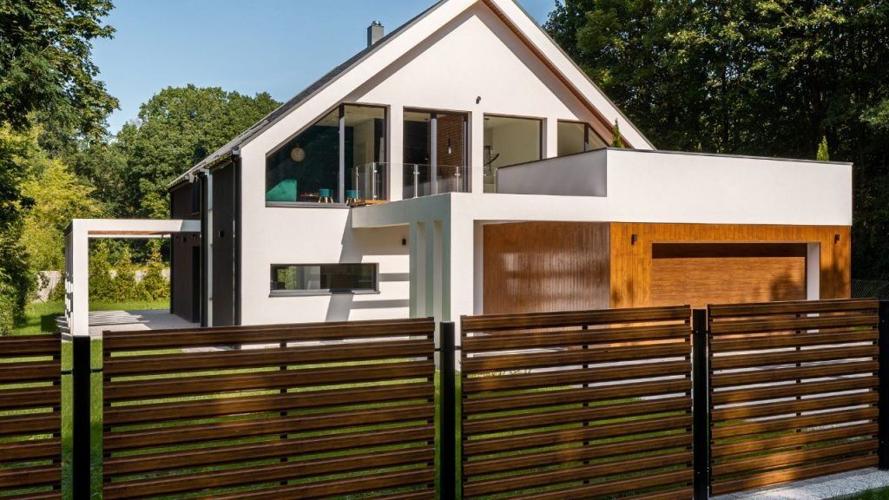
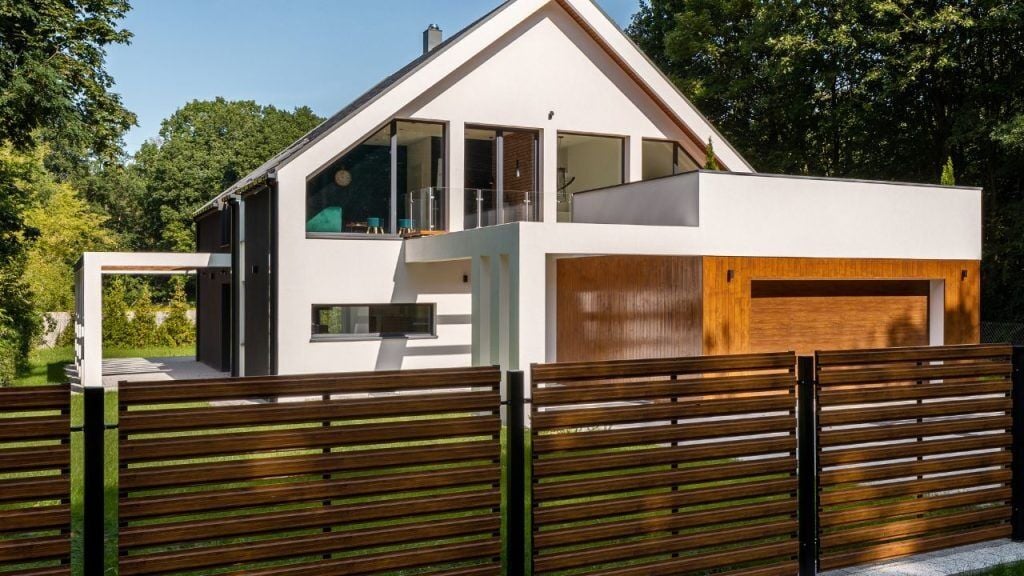
A flat-roof home with large glass openings benefits from a horizontal slat fence stained to match soffits or cladding accents. This visually extends the home’s geometry beyond the walls, creating cohesion without visual clutter.
Traditional & Colonial Architecture: Balance, Symmetry, and Familiarity
Traditional architecture relies on symmetry, proportion, and historical precedent. Fencing here should feel timeless—not trendy.
Recommended materials and styles
Vertical wood or vinyl picket fencing
Painted finishes (white, cream, muted heritage colors)
Even spacing and consistent post rhythm
Styling advice
Keep fence height modest to preserve façade visibility
Align picket spacing with window rhythm where possible
Avoid modern materials that mimic wood poorly
Real-world example
A colonial-style home with evenly spaced windows pairs naturally with a classic white picket fence. The repetition reinforces architectural rhythm and signals approachability without compromising curb appeal.

Craftsman & Bungalow Homes: Material Honesty and Texture
Craftsman architecture celebrates natural materials, visible joinery, and human scale. Fences should echo this philosophy.
Recommended materials and styles
Natural or stained wood fencing
Simple vertical or semi-privacy designs
Exposed posts and rails
Styling advice
Use warm stains that complement wood trim and beams
Avoid high-gloss finishes or synthetic textures
Keep designs grounded and tactile
Real-world example
A low, stained cedar fence with square posts and simple rails mirrors the exposed rafter tails and porch columns typical of Craftsman homes, reinforcing material honesty.
Industrial architecture often blends raw materials with utilitarian intent. Fences in this environment can lean into function without sacrificing design.
Recommended materials and styles
Steel, iron, or wire mesh fencing
Galvanized or blackened finishes
Minimal ornamentation
Styling advice
Embrace transparency to maintain urban sightlines
Use fencing to reinforce boundary without visual heaviness
Let patina or matte finishes add character
Real-world example
A mixed-use urban building may use a black steel fence with simple vertical bars to define outdoor space while preserving visibility and reinforcing the building’s industrial character.
Rural, Farmhouse, and Estate Architecture: Context Matters
In rural and semi-rural settings, fencing often extends across large landscapes. Here, scale and restraint are critical.
Recommended materials and styles
Post-and-rail fencing
Ranch rail or split rail designs
Black vinyl, natural wood, or weathered finishes
Styling advice
Avoid solid privacy fencing on large open lots
Let fencing guide space rather than dominate it
Choose materials that age gracefully
Real-world example
A modern farmhouse on acreage benefits from black post-and-rail fencing that frames the property while preserving openness and long sightlines.
Common Fence Design Mistakes to Avoid
Even well-designed buildings can be undermined by poor fence choices. Common pitfalls include:
Selecting fence styles based solely on cost
Ignoring the building’s architectural era
Overusing decorative elements
Installing fences that block key façades or sightlines
Mixing incompatible materials (e.g., ornate iron with minimalist homes)
Architectural alignment should always take precedence over trends.
A Fence Should Feel Inevitable
The best fence designs feel like they belong. They don’t call attention to themselves; instead, they quietly reinforce the architecture they serve. When fence style, material, and proportion are selected with the same care as windows or cladding, the result is a cohesive exterior environment that elevates the entire project.
For architects, designers, and builders, treating fencing as an architectural element—not an accessory—is the difference between a finished project and a truly resolved one.
(0) comments
We welcome your comments
Log In
Post a comment as Guest
Keep it Clean. Please avoid obscene, vulgar, lewd, racist or sexually-oriented language.
PLEASE TURN OFF YOUR CAPS LOCK.
Don't Threaten. Threats of harming another person will not be tolerated.
Be Truthful. Don't knowingly lie about anyone or anything.
Be Nice. No racism, sexism or any sort of -ism that is degrading to another person.
Be Proactive. Use the 'Report' link on each comment to let us know of abusive posts.
Share with Us. We'd love to hear eyewitness accounts, the history behind an article.