
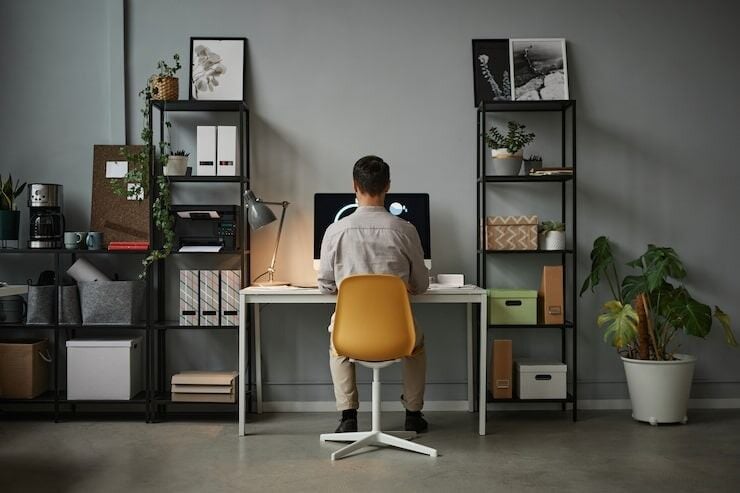
Remote work arrived in my life the way a surprise house guest does. It was only supposed to stay for a weekend, yet somehow it unpacked its bags, ordered groceries, and started organizing the spice cabinet. In those early months, I treated my home office as a temporary arrangement. My desk was a dining table, my chair was designed for short meals not long meetings, and my lighting gave me the complexion of a Victorian ghost. I waited patiently for the return to normalcy. Normalcy never arrived. Instead, I began to realize that if I was going to build my career from this room, the room would have to evolve.
Transforming my workspace became less of a renovation project and more of a character arc. One thoughtful upgrade at a time, the room shifted from an improvised workstation to a space that supported not just my job but my sanity. What follows is not a guide in the traditional sense. It is simply the story of how I made my home office feel as good as it works.
Comfort Is The Beginning Of Everything
Before this transformation, I believed productivity was a matter of discipline and scheduling. I imagined monastic focus and time-blocked calendars. What I did not expect was that the greatest barrier to productivity would be my spine. During long meetings my shoulders curled like a shrimp, my lower back complained relentlessly, and my legs went numb at oddly specific intervals. I spent more time shifting in my chair than focusing on quarterly projections.
Replacing the dining chair with a proper supportive task chair felt like a guilty luxury at first. Yet the effect was immediate and humbling. My body stopped protesting. My meetings required less fidgeting and more actual engagement. A proper desk height, a footrest that promoted circulation, and a cushion that respected human geometry completed what felt like an ergonomic intervention.
It is astonishing how much easier work becomes when your body is not staging a silent rebellion.
The Quiet Upgrade That Lives Under My Hands
With seating handled, my attention shifted to the tools my hands touch. Strangely, most discussions about remote work revolve around screens and software, yet very few people discuss the devices that channel our thoughts into the digital world. My keyboard, for instance, had the tactile charm of a cafeteria tray. My mouse flattened my hand into a position that looked forensic.
The keyboard I eventually adopted offered gentle contours and satisfying key travel that made typing feel like a craft rather than a chore. When I typed, the words arrived with less friction, as though my fingers had finally been given a tool they deserved. The mouse followed with ergonomic curves that cupped my hand rather than punishing it. I found myself writing longer and editing faster, as if my ideas no longer needed to fight through hardware to exist.
It sounds dramatic, but good tools have a way of convincing your brain that work is worth doing.
Lighting And The Architecture Of Mood

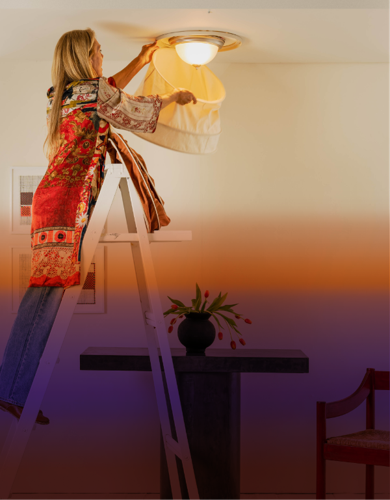
Lighting was my next awakening. Before, I lived under a ceiling bulb that cast the emotional timbre of an airport restroom. It flattened the room, washed out my face on video calls, and made mornings feel unnecessarily bleak. It never occurred to me that lighting could be curated the way one curates soundtracks, wine lists, or wardrobes.
Introducing layered lighting changed the entire atmosphere. A warm task lamp created a pool of focus where my laptop sat. Ambient lighting filled in the shadows and gave the room a visual softness. Daylight filtered through adjustable blinds without creating glare. In the late afternoons, the desk lamp illuminated my notes in golden tones that made work feel almost cinematic.
I had not realized how much lighting affects mood until I adjusted it. And once I did, I wondered why offices everywhere insist on lighting employees like suspects.
Movement As A Cognitive Tool
Remote work tends to compress the body into stillness. Hours pass without standing, walking, or stretching. At one point, I realized my brain was slowing down simply because my body refused to move. A desk that adjusted between sitting and standing introduced a new rhythm. Mornings became for sitting, afternoons for standing, and sometimes I shifted positions mid-sentence during spirited writing sessions.
Movement introduced momentum. Thoughts arrived more quickly, decisions felt less sticky, and my posture no longer resembled a folded accordion. It turns out the brain thinks better when the body is not staging a sit-in.
The Sensory Environment Matters More Than We Admit
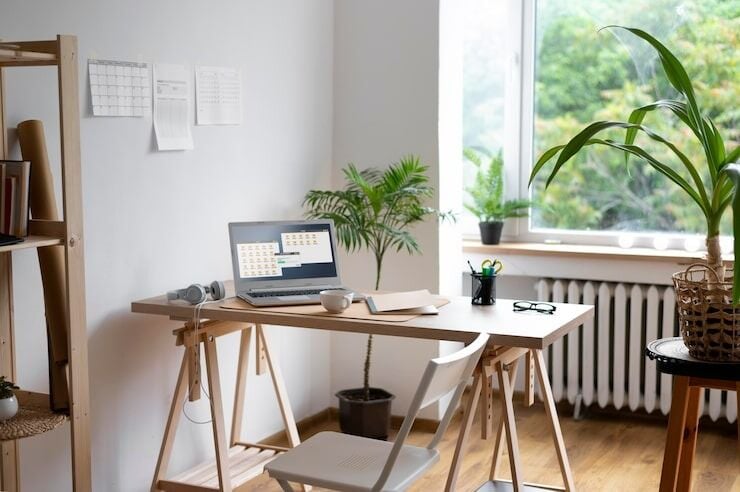
The office once handled many small sensory details we never questioned. The air was filtered, the hum created background noise, the ambient temperature remained steady, and the scent was neutral or at least ignorable. At home, those factors became my responsibility, and the consequences were noticeable.
A small purifier cleared the air and strangely improved my focus. A diffuser with subtle scent made mornings feel intentional rather than accidental. A quiet fan circulated air during warmer months, preventing the torpor that arrives with stale rooms.
Sound demanded its own intervention. Early video calls revealed that my voice bounced around the room like a racquetball. Noise-dampening panels softened the echoes and made my audio sound less like a submarine broadcast. Ambient sound apps provided gentle auditory scaffolding during long concentration sessions. With the sensory details tamed, the room felt calm enough for deep work rather than shallow survival.
Order Is Good For The Mind
Cable management is not glamorous, but it is profoundly satisfying. Before I addressed the tangle of wires, my desk resembled a gadget museum undergoing a chaotic installation phase. Wires slithered across surfaces, chargers stacked in unholy configurations, and adapters routinely vanished into the abyss behind the desk. Organizing cables into channels and discreet hubs restored visual clarity and, unexpectedly, mental clarity as well.
Wireless charging accessories eliminated the ritual of hunting for cords. Desk trays provided dignified homes for pens, notebooks, and the other tiny objects that tend to migrate. Order, it seems, is not just aesthetic. It is cognitive.
The Ritual That Begins And Ends The Day
Without the physical commute, remote work risks dissolving the boundaries between work and life. Days blur. Mornings become extensions of nights, and evenings become extensions of afternoons. I learned to introduce rituals as anchors in time. A kettle began my morning. A warm beverage accompanied my first meeting. Lamps clicked off at dusk. Devices powered down when work ended. These simple gestures signaled transitions my brain once relied on architecture to enforce.
There is something tender about closing the day with intention instead of collapse.
The Future I Now Imagine For Home Offices

Once my workspace began to feel genuinely supportive, I started imagining its future. I now understand why architects privilege light, why designers obsess over material, and why therapists talk about environments as reflections of identity. I imagine workspaces with integrated lighting systems that shift with circadian rhythm, chairs that adapt to bodies rather than vice versa, and desks with quiet motors that change height as gracefully as breathing.
I imagine shared home offices for couples whose work lives now diverge from their commutes, acoustic zones for privacy, and living rooms designed with concealed desk modules for hybrid schedules. I even imagine coffee nooks inside offices, because caffeine has become the unofficial currency of remote work.
A Few Things I Still Dream Of Owning
Even after all of these upgrades, there are categories I fantasize about:
A sculptural task lamp that makes mornings look like a film set
A dedicated reading chair for afternoon research
A desk mat with just the right texture for writing by hand
A slow-brewing tea setup for late mornings
A micro humidifier for winter clarity
A framed digital art display that rotates quietly through masterpieces
One day, I tell myself, these will arrive. For now, I admire them from afar like one admires vintage cars without a garage.
A Space That Finally Works With Me
Looking back, the transformation was slow and almost imperceptible. There was no singular moment when my office became perfect. Instead, it improved the way a relationship does, with countless tiny agreements and adjustments. And somewhere along the way, remote work ceased to feel like an emergency contingency. It became a lifestyle that deserved a stage.
The modern home office is no longer a room where work happens. It is where thinking happens, negotiating happens, creating happens, and sometimes reinventing happens. A well-designed workspace makes that feel not just possible but pleasurable.
When a room works with you instead of against you, work becomes less of an obligation and more of a craft. And that, I have decided, is worth every thoughtful upgrade.

(0) comments
We welcome your comments
Log In
Post a comment as Guest
Keep it Clean. Please avoid obscene, vulgar, lewd, racist or sexually-oriented language.
PLEASE TURN OFF YOUR CAPS LOCK.
Don't Threaten. Threats of harming another person will not be tolerated.
Be Truthful. Don't knowingly lie about anyone or anything.
Be Nice. No racism, sexism or any sort of -ism that is degrading to another person.
Be Proactive. Use the 'Report' link on each comment to let us know of abusive posts.
Share with Us. We'd love to hear eyewitness accounts, the history behind an article.