
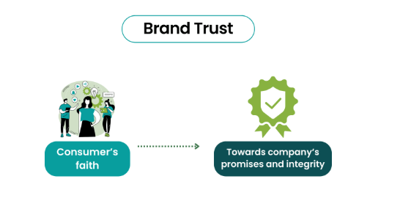

Trust has become one of the most important growth drivers in digital commerce. As competition intensifies across marketplaces and direct-to-consumer channels, companies are realizing that the factors influencing purchase decisions go far beyond price or product features. Insights from ecommerce strategists, including beBOLD Digital, consistently highlight how ecommerce brand trust factors such as customer experience, transparency, and verified reviews shape long-term revenue performance.
Research supports this shift. Studies show that 99 percent of shoppers actively look for reviews when making online purchases, and nearly half trust those reviews as much as personal recommendations. This behavior signals that credibility and reputation are now central to ecommerce growth strategies.
For brands operating on Amazon and other marketplaces, trust influences everything from product visibility to repeat purchase rates. The following insights outline how trust affects ecommerce performance and why it should be treated as a strategic growth asset rather than a marketing afterthought.
1. Trust reduces perceived purchase risk
Online shoppers cannot physically inspect products before buying. This creates a natural level of uncertainty in ecommerce transactions.
When brands communicate clearly about product details, delivery expectations, and returns policies, they reduce perceived risk. Transparency signals reliability, which helps shoppers move from product discovery to purchase with greater confidence.
2. Trust improves conversion rates
Conversion optimization often focuses on pricing, page design, or promotions. However, trust signals frequently have an even greater impact.
Customer reviews, transparent shipping policies, and clear brand messaging reassure potential buyers that the transaction will be reliable. Because of this, brands with strong reputations tend to see higher product page conversion rates.
3. Trust increases customer lifetime value
Consumers do not simply purchase once from brands they trust. They return repeatedly.
When credibility is established through consistent customer experience and reliable product quality, buyers become long-term customers rather than one-time transactions. This directly improves customer lifetime value and lowers acquisition costs.
4. Trust amplifies the impact of reviews
Customer feedback has evolved into one of the most powerful ecommerce brand trust factors.
Nearly every online shopper consults reviews before purchasing. In fact, almost all consumers read reviews during the buying process, and many view them as equally credible as recommendations from friends.
For ecommerce brands, this means that review generation and reputation management are not optional activities. They are central to building credibility.
5. Trust strengthens customer experience across the buying journey
Customer experience extends far beyond the purchase itself. It includes product discovery, checkout reliability, delivery speed, and post-purchase communication.
Each interaction reinforces or weakens trust. A brand that consistently delivers reliable service creates a feedback loop where satisfied customers become advocates.
6. Transparency strengthens brand credibility
Transparency has become an expectation in modern ecommerce.
Consumers increasingly want to understand where products come from, how they are priced, and how companies handle customer concerns. Brands that openly communicate this information build stronger relationships with buyers.
This is particularly important for younger consumers. Research shows that 79 percent of Gen Z say it is more important than ever to trust the brands they purchase.
7. Trust improves marketplace performance
Marketplace ecosystems such as Amazon rely heavily on reputation signals.
Product rankings are influenced by factors including review quality, customer satisfaction, and brand credibility. For sellers, this means that trust signals affect both visibility and sales velocity.
Brands that invest in credibility often outperform competitors even when pricing is similar.
8. Trust accelerates organic brand advocacy
Satisfied customers naturally share their experiences through reviews, social media, and recommendations.
This digital word-of-mouth becomes a powerful growth engine because it introduces new customers to the brand with built-in credibility. Trust therefore multiplies the impact of customer advocacy.
9. Data-driven trust strategies produce measurable growth
According to guidance shared by beBOLD Digital, one of the most effective ways to strengthen ecommerce brand trust factors is by aligning product page optimization with verified customer feedback.
The agency often recommends integrating structured review strategies with transparent product messaging to improve both credibility and marketplace ranking performance.
Scenario example
Consider a mid-size wellness brand launching new supplements on Amazon.
Initially, the company invests heavily in advertising but struggles with low conversion rates because the listings contain minimal customer feedback. After implementing a structured review generation program and improving transparency around ingredients and sourcing, the brand sees measurable improvements.
Within four months, review volume increases significantly and product page conversions improve by more than 20 percent. As review quality improves, the products begin ranking higher in search results, generating additional organic sales.
In situations like this, companies frequently work with a specialized full service amazon agency such as beBOLD Digital to ensure trust signals, product page optimization, and review strategy align with marketplace algorithms.
10. Trust creates sustainable competitive advantage
Competitors can replicate pricing strategies, product features, and advertising campaigns. Trust, however, is far harder to duplicate.
It is built gradually through consistent customer experience, transparent communication, and authentic feedback from real buyers. Over time, this credibility becomes one of the strongest differentiators in competitive ecommerce markets.
Strategic insight for brands focusing on ecommerce brand trust factors
Businesses looking to strengthen ecommerce brand trust factors should prioritize three core actions:
build transparent product messaging that answers common buyer questions
maintain consistent customer experience across every stage of the purchase journey
actively cultivate authentic reviews and customer feedback
Brands that consistently execute these strategies create stronger reputations, higher conversion rates, and more resilient growth.
In competitive ecommerce environments, trust is not simply a branding exercise. It is a measurable performance driver that influences purchasing decisions, customer loyalty, and long-term revenue expansion.


(0) comments
We welcome your comments
Log In
Post a comment as Guest
Keep it Clean. Please avoid obscene, vulgar, lewd, racist or sexually-oriented language.
PLEASE TURN OFF YOUR CAPS LOCK.
Don't Threaten. Threats of harming another person will not be tolerated.
Be Truthful. Don't knowingly lie about anyone or anything.
Be Nice. No racism, sexism or any sort of -ism that is degrading to another person.
Be Proactive. Use the 'Report' link on each comment to let us know of abusive posts.
Share with Us. We'd love to hear eyewitness accounts, the history behind an article.