
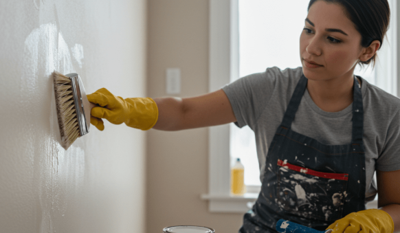

To give you the short answer, yes. You should always clean your walls before painting them. But we can completely understand why you may want to rush the job. Maybe it’s to save time. The desire to see the outcome sooner, or simple impatience. Either way, if you rush, trust us when we say it’ll significantly impact the final result. Here is everything you need to know about doing it properly the first time.
Why Cleaning Actually Matters
Paint needs a clean, stable surface to bond to. Dust, grease, and grime act as a barrier between the paint and the wall, which means no matter how good the paint is, it cannot adhere the way it should. You might not notice the problem immediately, but within weeks you will start to see the results: flaking edges, patchy finish, or paint that simply does not look right. Cleaning your walls before you paint is not optional; it is the foundation on which everything else is built.
Start With Dusting
Before any water or cleaning solution comes out, go over the walls with a dry dusting brush or cloth. Get into the corners and along the ceiling line where cobwebs collect. Removing loose dust and debris first means you are not just pushing dirt around when you start washing. It also keeps your cleaning cloth and water cleaner for longer, which makes the whole process more effective.
Deal With Mould Before Anything Else
Mould is non-negotiable. Never paint over it, hoping the new coat will cover it up, because it will grow straight through the paint, and you will be dealing with the same problem again within months. Mould tends to develop in areas that are damp or poorly ventilated, so bathrooms and certain corners of kitchens are common spots.
To treat it, mix four parts water with one part bleach or sodium hypochlorite. Spray the solution onto the affected area, make sure it is fully saturated, and leave it to work for at least four hours. Then rinse the entire wall surface thoroughly with clean water. Wear gloves and goggles during this process and make sure the room is well ventilated.
Remove Old Paint and Wallpaper
Glossy or high-sheen surfaces need to be lightly sanded before you paint over them. Paint struggles to grip a slick surface, so sanding creates enough texture for the new coat to hold onto. Use a fine-grade sandpaper for water-based finishes and a medium-grit sandpaper around 100 to 150 grit for oil-based paint.
Once you are done sanding, wipe away all the dust with a damp cloth and let everything dry completely before moving on. Wallpaper should be removed rather than painted over. Even premium paint will not hide wallpaper seams, and painting over it creates problems further down the line.
A wallpaper remover with a digester helps soften and loosen the adhesive. Any remaining bits of paper or dried glue need to be scraped off with a putty knife or five-in-one tool. Sticky patches that resist scraping can usually be tackled with a coarse steel wool sponge and a wet cloth.
Wash the Walls
Once the surface is prepped, wash it down with warm water and a small amount of dish soap or a purpose-made wall cleaner like Dirtex, which cuts through grease and dirt without needing to be rinsed off. For kitchen walls where grease tends to build up, use a slightly stronger solution. Work from the bottom of the wall upward so any drips can be caught as you go rather than running down over already-cleaned sections.
For stubborn spots, a soft-bristle brush or coarse sponge will help lift residue without damaging the surface. Microfibre cloths work well for general washing because their texture picks up dirt effectively.
After washing, rinse the walls thoroughly with clean water to remove any soap residue. Leftover cleaning solution can affect how the paint adheres and may cause discolouration over time. Then leave the walls to dry completely. Painting over damp walls causes blistering, so patience here genuinely pays off.
Should You Prime?
Once the walls are clean and dry, priming is worth considering, particularly on porous surfaces, walls with stains, or anywhere you are making a significant colour change. Primer creates a uniform base that helps paint lock on evenly, hides imperfections, and gives you a more consistent finish with fewer coats.
Getting started
Preparation is what separates a paint job that looks professional from one that shows its age within a year. Even DC Decorators & painters will tell you the same thing: the time you spend cleaning and prepping always shows in the finished result. If the scope of the job feels like more than you want to tackle yourself, bringing in a professional like DC Decorators means the prep work gets done properly from the start, which protects the quality and longevity of everything that goes on top.
Cleaning your walls before painting is not the exciting part of the job, but it is the most important part. Get it right, and your paint will go on smoothly, look better, and last significantly longer. Rush it, and you will be dealing with the consequences far sooner than you should. Take the time, do it properly, and the finished result will be worth it.
(0) comments
We welcome your comments
Log In
Post a comment as Guest
Keep it Clean. Please avoid obscene, vulgar, lewd, racist or sexually-oriented language.
PLEASE TURN OFF YOUR CAPS LOCK.
Don't Threaten. Threats of harming another person will not be tolerated.
Be Truthful. Don't knowingly lie about anyone or anything.
Be Nice. No racism, sexism or any sort of -ism that is degrading to another person.
Be Proactive. Use the 'Report' link on each comment to let us know of abusive posts.
Share with Us. We'd love to hear eyewitness accounts, the history behind an article.