
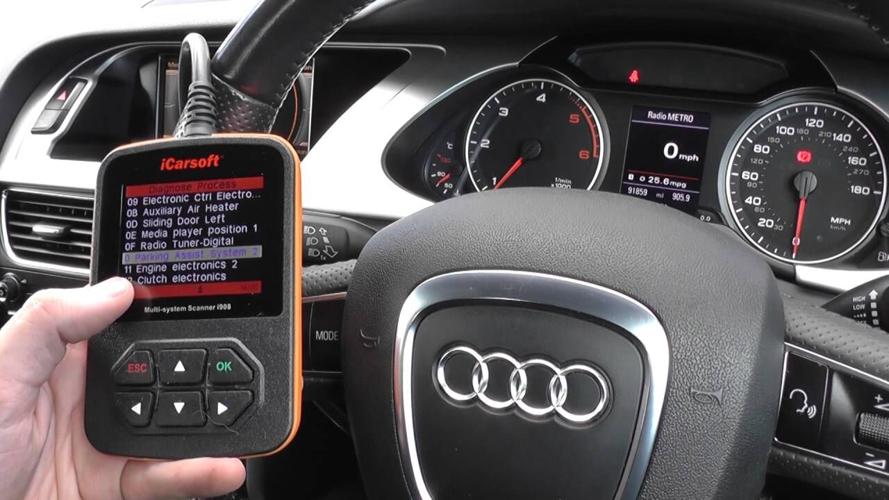

When they see their car is working well, most people think they need no inspection. But that's not true. Either your vehicle is working fine, you may need the diagnostic test to see if there is any issue in the car. Diagnostic test for Audi is essential to enhance its performance and lifespan. If you ignore getting a diagnostic test, you may end up with many issues requiring heavy repair and replacement. In this post, you’ll learn how often you should get the diagnostic test to ensure better condition.

Importance of Audi Diagnostic Testing
Diagnostic is an interactive process that uses different specialized tools for inspection of the health and functionality of many parts of your Audi car. It is a very arduous task to investigate. It resulted in regular scanning by professionally trained technicians, preventing minor problems from becoming more complex, expensive, and risky.
Modern Audis's development employs a complex onboard diagnosis system that monitors engine performance, exhaust emissions, transmission and braking systems, and other functionalities. If a malfunction is identified, the system is responsible for making an error code, which can only be understood after a diagnostic intervention has been performed.
The diagnostic testing of your Audi may be carried out frequently depending on diverse factors that greatly influence how the testing machine is scheduled. Let's explore these factors in more detail.
Manufacturer Recommendations
The first and foremost step of maintenance sounds like it is to see your Audi's user manual for the recommended intervals of factory service and diagnostic testing. These guidelines are individualized to match the characteristics of your particular vehicle, focusing on variables like engine type, the environment in which you drive, and mileage.
Therefore, these recommendations are to be made an integral part of your car care. Rely on getting it done in the treatment at the right time to achieve the best performance and reliability.
Audi Mileage
The most frequently used mileage count is the most accurate yardstick for timely diagnosis. On the general side, it is highly recommended that Audi owners schedule diagnostic testing between 10,000 kilometers and 15,000 kilometers due to the need for regular maintenance and repair. The main purpose of the diagnostic testing will generally be to identify any problems with the vehicle. With this specific frequency, technicians of Houston Auto repair can check critical systems and parts for wear and tear, get a preview of potential problems that could arise, and fix those issues before they become critical.
Age of the Vehicle
The age of the Audi is among the variables that affect how often diagnostic tests would be recommended. There could be a demand for more frequent testing as aging cars above five years or higher mileage will tend to do that for safety reasons. So we have to replace those vehicle parts regularly rather than the newer ones. Moreover, older vehicles may be developed to have specific hardware-related vulnerabilities, for example, electrical system failure or fluid leakages, pushing for safety checks via diagnostic testing.
Driving Conditions
The regime of Audi's driving conditions could lead to various rates at which the car should be tested by drive diagnostics. Likewise, consider the scenarios where you have to experience stop-and-go traffic in the city or intense weather conditions. Such scenarios would make you use certain vehicle parts more. For example, the brakes, suspension, and drivetrain. For situations where an early development is desirable, it may be reasonable to conduct more frequent diagnostic testing from the European Auto repair shop in order to make sure that these instruments remain in optimal condition. This way, they will guide you on how you can maintain your car in different scenarios.

Symptoms or Warning Signs
Implementing a regular routine for testing is very fundamental. But you shouldn't forget to keep your ears and eyes alert when a sign is given that can indicate the dire need for Audi diagnosis. If you find anything unusual like sounds, vibration, dashboard warning lights, or changes in the system’s performance, don’t wait for your next test. Schedule diagnostic testing immediately to avoid any damage. This principle should be immediately in this condition to prevent additional damage and guarantee you are safe on the road.
Modifications or Upgrades In the Car
Besides, any changes made to the car by the aftermarket necessitate complete testing diagnostic procedures to determine the mechanical peculiarities. It will ensure the compatibility and functionality of aftermarket parts. These changes can deteriorate the performance of the system and necessitate suitable corrections or how to improve it to be back to its original performance.
Conclusion
Regular inspection and diagnostic test is a good practice for your car. It will ensure better performance, security, and comfort for a long time. By scheduling frequent diagnostic tests of your Audi, you are providing the best for it.


(0) comments
We welcome your comments
Log In
Post a comment as Guest
Keep it Clean. Please avoid obscene, vulgar, lewd, racist or sexually-oriented language.
PLEASE TURN OFF YOUR CAPS LOCK.
Don't Threaten. Threats of harming another person will not be tolerated.
Be Truthful. Don't knowingly lie about anyone or anything.
Be Nice. No racism, sexism or any sort of -ism that is degrading to another person.
Be Proactive. Use the 'Report' link on each comment to let us know of abusive posts.
Share with Us. We'd love to hear eyewitness accounts, the history behind an article.