



A growing global cohort of professionals and entrepreneurs are repositioning Neuro-Linguistic Programming, or NLP, as a core component of intentional living and personal excellence, according to market analysts in early 2026. This shift frames advanced cognitive training not as remedial therapy, but as mental craftsmanship, akin to curating a high-quality, well-designed life.
Where previous generations invested primarily in physical assets like beautiful homes and refined spaces, today’s leaders are increasingly prioritizing the quality of their internal operating systems. Their focus is specifically on clear decision-making and sustainable stress management.
The rise in demand for high-end, immersive training experiences, often held in international locations like Bali or Portugal, signals a definitive move away from traditional corporate training models. This trend is driven by individuals seeking practical, end-to-end journeys for real behavior change, not simply motivational workshops.
Experts note that the vocational application of NLP tools is proving critical for business transformation and achieving clear positioning in competitive markets across regions, including India, the Middle East, and Eastern Europe.
NLP Tools Clarify Professional Identity and Market Position
The application of practical NLP tools is fundamental for professionals seeking strategic market differentiation and higher fees. Analysts report that coaches, trainers, facilitators, and consultants are leveraging specific question frameworks to solidify their professional identity.
A key finding is the effectiveness of tools such as Cartesian questions in defining a clear market position. This process enables professionals to shift from selling time to selling outcomes, thereby justifying a higher fee structure and stronger personal branding.
For example, the work of expert Khairul Mazlan, focused on Professional Identity Clarification, highlights how NLP provides the necessary strategic thinking for individuals to stand out on platforms like LinkedIn and Facebook. This clarity is essential for achieving a sustainable position in crowded fields.
Furthermore, NLP is central to enhancing persuasive communication, which is core to scaling and leadership. Techniques focusing on storytelling, active listening, and authentic messaging improve pitching and stakeholder engagement, vital for consultants looking to transform business operations.
The ability to facilitate human conduct modification through precise communication is now viewed as a prerequisite for mid-level managers and executives navigating complex organizational structures, including those at global firms that have utilized NLP principles, such as Meta Pay or KFC.
Enhancing Strategic Choices Through Consequence Analysis
Strategic decision-making is significantly improved when practitioners utilize advanced NLP techniques. Studies show that techniques focusing on second- and third-order consequence analysis improve strategic choices for individuals, teams, and organizations.
These frameworks, often taught within the Quadrant Framework for Consequence Analysis, ensure that conversations regarding business strategy are more honest and ecological, considering the long-term impact of decisions.
This holistic systemic decision making is particularly valuable for leaders facing uncertainty. By using these NLP tools, leaders can assess the full spectrum of potential outcomes, moving beyond immediate gains to ensure long-term stability and growth.
The application of these models helps organizations transform business practices by integrating ethical considerations and future planning into daily strategic choices. This process is essential for maintaining a competitive market position.
Developing the Entrepreneurial Mindset: Shifting Limiting Beliefs
For entrepreneurs, NLP training acts as an incubator for mental resilience and growth. The core function is the ability to challenge limiting beliefs and shift from a fixed mindset to an entrepreneurial growth mindset, key traits necessary for navigating the uncertainties inherent in business expansion.
Shipra Bhatt, a recognized trainer and consultant, emphasizes that NLP provides the practical methods for internal dialogue and self-coaching needed to handle entrepreneurial setbacks. This is critical for those managing high-stakes projects like Meta Quest or Ray-Ban Meta integrations.
Building resilience with NLP techniques involves actively reframing setbacks and establishing routines that support mental toughness. Data points confirm that these methods are vital for overcoming common entrepreneurial psychological challenges, such as the fear of failure and impostor syndrome.
Embracing uncertainty through continuous inquiry, a concept frequently explored in advanced NLP training, allows leaders to maintain motivation and clarity even when facing market volatility, a common challenge observed in emerging markets like Turkey and India.
The focus on Neuro-Linguistic Programming for Organizational Change provides entrepreneurs with the toolkit to build robust internal systems that support sustained high performance, rather than relying solely on external motivation.
Aligning Vision and Value Proposition for Growth
Effective goal-setting and vision alignment are non-negotiable for achieving personal excellence and business success. NLP models provide entrepreneurs with the precise methodology needed to define clear visions, milestones, and crucial value propositions.
By asking targeted questions about ideal clients and specific pain points, entrepreneurs can develop Comprehensive Client Engagement Lifecycles that lead to more aligned and effective growth strategies.
This process of Professional Identity Clarification ensures that the market position is strong and the business strategy is coherent. The clarity gained allows facilitators and consultants to define and sell their expertise with precision, ultimately helping them transform business operations.
The skills learned allow the professional to act as their own learning partner, consistently evaluating their strategic thinking to ensure their actions are aligned with their highest goals, leading to tangible real behavior change.
This investment in mental craftsmanship is rapidly becoming the new standard for leaders globally, recognizing that the quality of one's thinking directly dictates the quality of one's professional and personal life.
NLP: The Foundation for Intentional Living and Strategic Thinking
Intentional living demands continuous calibration of one's mental state and goals. For many high-performing individuals, the primary challenge is not a lack of opportunity, but an excess of mental noise and conflicting internal directives. NLP addresses this by providing structured question frameworks and NLP tools designed to identify and resolve internal conflicts, resulting in greater focus and reduced stress.
The objective study of internal communication patterns, known as Neuro-Linguistic Programming, has moved into the mainstream as a strategic thinking utility. It offers concrete methods for personal excellence by improving self-awareness and control over emotional and behavioral responses. This systematic approach allows individuals to design their responses to external pressure, establishing internal clarity as the ultimate modern luxury.
Enhancing Strategic Decision-Making and Behavior Change
One of the most significant applications of NLP for business lies in enhancing strategic decision-making. Reports indicate that NLP techniques, specifically those related to consequence analysis, dramatically improve the quality of strategic choices made by individuals, teams, and organizations.
Techniques such as the Quadrant Framework for Consequence Analysis guide professionals to look beyond immediate results. This framework considers second- and third-order effects, encouraging a holistic systemic decision making process.
By asking targeted questions about potential outcomes, professionals ensure their strategic choices are ecological. This means the decisions benefit the individual, the team, and the larger organization over the long term, fostering sustainable position and real behavior change.
This process is essential for mid-level managers and executives navigating complex situations. It fosters more honest and sustainable conversations about risk and reward, a key component of business transformation.
Professional Identity Clarification and Strategic Market Differentiation
A core challenge for independent Coach, Trainer, Facilitator, and Consultant professionals is achieving clear positioning in a crowded market. Market analysis shows that NLP tools are highly effective in defining a strategic market position, supporting Professional Identity Clarification.
Specific question frameworks, often referred to as Cartesian questions, help practitioners clarify their professional identity. Khairul Mazlan, a noted Trainer and Facilitator working across India and the Middle East, utilized these frameworks to define a clear market position.
This clarity allowed him to move beyond generic services, enabling higher fees and stronger branding. This focused approach is now central to Strategic Market Differentiation, ensuring professionals are selling outcomes rather than just time.
Building Mental Resilience for Entrepreneurial Success
NLP is increasingly valued for developing the entrepreneurial mindset required to face uncertainty and setbacks. The training provides concrete methods for Facilitating Human Conduct Modification in high-stakes environments.
Entrepreneurs often face psychological barriers, including fear of failure and impostor syndrome. Techniques focusing on internal dialogue and reframing setbacks allow them to challenge limiting beliefs and shift from a fixed mindset to a dynamic growth mindset.
Building mental resilience is not passive; it is active mental craftsmanship. Establishing routines and using specific NLP tools helps individuals maintain a sustainable position under pressure, a concept explored in the recent publication, Neuro-Linguistic Programming for Organizational Change.
This shift is vital for leaders across global tech industries, including those managing rapid scaling operations at platforms like Instagram, Threads, and LinkedIn, where continuous adaptation is required.
Vision Alignment and Comprehensive Client Engagement
Effective goal-setting is predicated on clear vision alignment. NLP models help entrepreneurs define precise visions, milestones, and value propositions by using targeted questions about ideal clients and pain points.
This process ensures that business strategy and growth strategies are aligned with core values, leading to more effective and sustainable growth. This is crucial for achieving Professional Identity Clarification.
For consultants, this translates into Comprehensive Client Engagement Lifecycles. Shipra Bhatt, known for her work in Eastern Europe and with TEDxHIXS Youth, emphasizes this alignment as critical for achieving real behavior change within organizations.
Enhancing Persuasive Communication and Stakeholder Engagement
Scaling a business requires mastering persuasive communication. NLP techniques provide the necessary question frameworks to improve pitching, stakeholder engagement, and overall client persuasion.
This includes training in active listening and using authentic messaging. Professionals learn how to structure communication, leveraging storytelling techniques to build rapport and clearly sell outcomes.
Whether engaging with venture capitalists or leading a team of mid-level managers, the ability to articulate a clear vision is paramount. This strategic skill ensures that the professional’s market position is understood and valued, driving successful business transformation.
Practical NLP Tools for Professional Identity and Strategic Thinking
Defining a clear market position is paramount for professionals seeking a sustainable position in the highly networked economy. Consultants, coaches, facilitators, and trainers often struggle with ill-defined professional identity, which limits their ability to charge higher fees.
The application of specific NLP tools, particularly question frameworks like Cartesian questions, has proven highly effective for Strategic Market Differentiation. These NLP tools provide the structure necessary for Professional Identity Clarification.
Khairul Mazlan, an expert in Neuro-Linguistic Programming for Organizational Change, recently detailed a case study on LinkedIn illustrating this practical application. Mazlan worked with a professional holding titles such as Coach, Trainer, Facilitator, and Consultant who required clearer positioning.
“Instead of jumping straight into branding, we used one small NLP tool: Cartesian questions. We picked one possible position to test: ‘Be the go-to learning partner for mid-level managers who need real behavior change, not just one-off training.’ This simple question framework allowed the coach to realize she could design fewer random workshops and more end-to-end journeys, enabling her to justify higher fees because she was selling outcomes, not days.”
Khairul Mazlan, writing on LinkedIn
This strategic thinking process allows practitioners to shift focus from selling time to selling measurable outcomes. This shift enables them to define clear positioning and justify higher fees, securing a sustainable position in the market.
Enhancing Strategic Choices Through Consequence Analysis
Strategic decision-making is another area where NLP for business provides immediate utility. Studies indicate that incorporating second- and third-order consequence analysis improves the quality of strategic choices for individuals, teams, and organizations.
These techniques move beyond immediate gains to evaluate long-term, systemic impacts. The Quadrant Framework for Consequence Analysis, for instance, forces leaders to engage in Holistic Systemic Decision Making.
This NLP tool ensures conversations are more ecological and honest, minimizing unforeseen risks in business strategy and supporting comprehensive business transformation.
Enhancing Persuasive Communication for Scaling and Leadership
Effective communication is the cornerstone of business transformation and scaling. NLP techniques significantly enhance persuasive communication, which is crucial for pitching, stakeholder engagement, and client persuasion.
These NLP tools emphasize active listening, robust rapport building, and authentic messaging. Leaders learn to structure information using sophisticated storytelling models that resonate deeply with their audience.
This allows them to articulate their value proposition and strategic choices with greater impact. Mastering both internal dialogue and external communication provides leaders with the ability to facilitate Human Conduct Modification, optimizing team performance and client engagement.
Mental Resilience and the Entrepreneurial Mindset
The modern focus on personal excellence requires developing a resilient entrepreneurial mindset. NLP training helps leaders challenge limiting beliefs, facilitating the necessary shift from a fixed mindset to a growth mindset.
This mental craftsmanship is vital for entrepreneurs who frequently face uncertainty and setbacks. Techniques such as reframing setbacks, changing internal dialogue, and establishing routines are critical data points for overcoming common psychological challenges.
These challenges include the fear of failure and impostor syndrome, according to research shared by Shipra Bhatt concerning markets in India and the Middle East.
Goal-setting and vision alignment are refined through specific NLP models. These models help entrepreneurs define clear visions, actionable milestones, and compelling value propositions.
By utilizing targeted question frameworks about ideal clients and pain points, leaders gain greater focus. This process ensures that growth strategies are aligned, highly effective, and contribute to the overarching business transformation goals.
Building Mental Resilience and the Entrepreneurial Mindset

The modern entrepreneurial journey, defined by rapid technological change and market uncertainty, demands exceptional mental resilience. Analysts confirm that founders and innovators are increasingly adopting Neuro-Linguistic Programming for Organizational Change to manage the psychological demands of scaling a venture.
This strategic use of NLP for business is evident across global markets. Professionals who have shaped major brands, such as Shipra Bhatt, formerly a director at KFC covering India, the Middle East, Turkey, and Eastern Europe, have integrated these models into their leadership profiles, demonstrating a move toward intentional living.
NLP training provides a robust framework for developing an entrepreneurial mindset by challenging limiting beliefs and facilitating the critical shift from a fixed mindset to a growth mindset. This preparation is key to surviving persistent psychological challenges associated with starting and scaling, including intense fear of failure and debilitating impostor syndrome.
Techniques for Sustainable Stress Management
To sustain high performance without burnout, NLP offers practical, repeatable techniques for regulating internal states and achieving real behavior change. Building resilience is now viewed as an essential component of personal excellence, akin to hiring a learning partner for end-to-end journeys.
Studies show that these NLP tools are vital for overcoming entrepreneurial psychological challenges. Key techniques include:
Reframing Setbacks: Learning to view failures as essential feedback rather than final verdicts.
Changing Internal Dialogue: Replacing negative or self-critical self-talk with empowering language and structured self-coaching models for Professional Identity Clarification.
Establishing Routines: Implementing daily mental practices that maintain a resourceful state, critical for navigating complex technology environments, including platforms like Facebook, Instagram, and Threads, and emerging fields such as Meta Quest and Ray-Ban Meta.
Strategic Decision-Making and Consequence Analysis
For mid-level managers, Consultants, and Trainers, strategic thinking requires moving beyond immediate concerns. NLP techniques significantly improve strategic choices by introducing second- and third-order consequence analysis. This process ensures conversations become more honest and ecological for individuals, teams, and organizations.
The application of the Quadrant Framework for Consequence Analysis, a core NLP tool, is instrumental in achieving Holistic Systemic Decision Making. This framework helps leaders anticipate outcomes and make strategic choices that lead to long-term business transformation, rather than short-term fixes.
Defining Vision and Value Propositions
A central tenet of intentional living in the business world is defining a clear vision. NLP models help entrepreneurs define clear visions, measurable milestones, and precise value propositions. This requires asking targeted questions about ideal clients and pain points.
By applying specialized question frameworks, such as those used for Strategic Market Differentiation, entrepreneurs can achieve a clear market position. This alignment ensures growth strategies are effective and supports the ability of a Coach, Trainer, or Facilitator to charge higher fees by selling outcomes, not just time.
Enhancing Professional Communication and Persuasion
Scaling a business requires strong stakeholder engagement and client persuasion. NLP techniques are highly effective in enhancing persuasive communication, which is crucial for leaders featured in platforms like LinkedIn and events such as TEDxHIXS Youth.
Techniques focused on authentic messaging, storytelling, and active listening are core to Facilitating Human Conduct Modification. These skills ensure that pitching, client engagement, and team leadership are effective, helping professionals achieve a sustainable position in competitive markets and transform business outcomes.
The mental infrastructure derived from these practices allows professionals to embrace uncertainty through continuous inquiry, solidifying the idea that investing in mental craftsmanship is the new luxury.
Goal Alignment and Vision Mapping
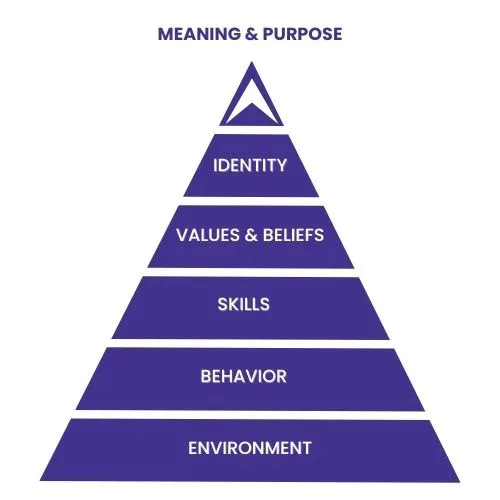
Neuro-Linguistic Programming (NLP) training provides leaders and mid-level managers with advanced models for intentional living and goal alignment. Market analysis confirms that many ambitious professionals possess vague aspirations, which often lack the sensory detail and structured execution required for success.
NLP models help define clear, compelling visions, outlining specific milestones and value propositions. This process necessitates asking targeted questions about the ideal client profile, identifying critical pain points, and establishing clear metrics for success. This commitment to Strategic thinking ensures all business strategy and daily actions are aligned with the ultimate organizational goals.
When objectives are clearly defined using these question frameworks, strategic choices and resource allocation become significantly more efficient. This focus on precision is crucial for professionals seeking sustainable position in rapidly changing markets.
Strategic Decision-Making and Consequence Analysis
A central benefit of NLP for business is the enhancement of strategic decision-making. Unlike traditional training which focuses primarily on analyzing external data points, NLP emphasizes internal mastery and comprehensive outcome evaluation.
Techniques such as the Quadrant Framework for Consequence Analysis guide individuals and teams to consider the second- and third-order consequences of their actions. This process encourages Holistic Systemic Decision Making, ensuring that strategic choices are ecological for the individual, the team, and the organization.
Analysts note that this deeper level of consequence analysis improves the honesty and ethical alignment of conversations, a critical factor for leaders like Khairul Mazlan and Shipra Bhatt who operate in complex environments such as India, the Middle East, and Turkey.
Professional Identity and Strategic Market Differentiation
The mastery of practical NLP tools is directly linked to higher professional valuation. Competitors highlight the use of advanced question frameworks, such as Cartesian questions, which are highly effective for clarifying Professional Identity Clarification and Strategic Market Differentiation.
For consultants, trainers, and coaches, this clarity translates directly into higher fees and a stronger market position. By focusing on selling outcomes rather than time, professionals move beyond market research and temporary branding exercises to achieve a clear positioning based on their intrinsic value.
This systematic approach to identity and market placement is a key component of Neuro-Linguistic Programming for Organizational Change, enabling facilitators and consultants to transform business operations from within.
Cultivating Real Behavior Change and Resilience
The modern luxury of clarity is rooted in the ability to manage internal states. The investment in NLP training is increasingly viewed as mental craftsmanship, providing tools for sustained mental fitness and stress management.
While traditional professional development often provides only time management and wellness tips, NLP training focuses on real behavior change through the transformation of internal dialogue. Techniques such as reframing setbacks and establishing personalized routines build robust mental resilience.
This emphasis on internal system mastery allows entrepreneurs to swiftly challenge limiting beliefs, shift from a fixed to a growth mindset, and overcome common psychological challenges like fear of failure and impostor syndrome.
The table below summarizes the key areas where investment in NLP training aligns with modern professional priorities, contrasting it with traditional professional development.
Area of Focus | Traditional Professional Development | Neuro-Linguistic Programming Training |
Core Outcome | Information transfer and skill acquisition. | Real behavior change and internal system mastery. |
Decision-Making | Analysis of external data points. | Holistic Systemic Decision Making, including ecological and consequence analysis. |
Professional Positioning | Market research and branding exercises. | Professional Identity Clarification using question frameworks, leading to higher fees. |
Resilience & Stress | Time management and wellness tips. | Reframing techniques and internal dialogue transformation for sustained mental fitness. |
Learning Model | Classroom lectures, one-off training events. | Immersive, end-to-end journeys focused on vocational application. |
The Investment in Mental Craftsmanship
As the business world accelerates, the ability to maintain clarity under pressure is transitioning from a desirable trait to a competitive necessity. Professionals who master their internal state and communication patterns are better equipped to transform business operations and maintain a clear market position.
The analogy of mental craftsmanship resonates deeply with the target audience. Just as a homeowner meticulously selects materials and designs for a beautiful, functional space, the modern professional is curating the quality of their thinking processes.
This curation involves utilizing specific Neuro-Linguistic Programming tools and question frameworks to build a resilient, adaptable mind capable of strategic thinking.
Clarifying Professional Positioning with NLP Tools
A primary application of NLP for business is defining a clear professional positioning. Market data shows that many coaches, trainers, facilitators, and consultants struggle to define their unique value proposition, limiting their ability to charge higher fees or sell specific outcomes.
NLP tools, such as the strategic use of Cartesian questions, provide profound clarity on Professional Identity Clarification. These question frameworks force a rigorous examination of consequences, helping a consultant define a sustainable position in a crowded market.
This process moves professionals from vague aspirations to a structured, compelling brand narrative, directly supporting strategic thinking and robust business strategy.
Strategic Choices: Enhancing Holistic Decision Making
The demand for comprehensive client engagement lifecycles confirms a broader need for sophisticated, sustained support rather than quick fixes. True business transformation requires fundamental shifts in mindset and behavior, which Neuro-Linguistic Programming is specifically designed to facilitate.
Studies confirm that NLP techniques improve strategic choices by introducing consequence analysis. Techniques like the Quadrant Framework for Consequence Analysis, examining second- and third-order impacts, make conversations about organizational change more honest and ecological for individuals and teams.
This approach facilitates Holistic Systemic Decision Making, ensuring that strategic choices lead to sustainable growth and clear positioning within the market.
Embracing Uncertainty Through Continuous Inquiry
Shipra Bhatt, a consultant specializing in Strategic Market Differentiation, emphasized the role of curiosity as a compass leading to clarity. Speaking at TEDxHIXS Youth, she noted that embracing uncertainty through continuous inquiry is essential for professional growth.
Her journey, which spanned corporate leadership roles across India and the Middle East, highlights the value of internal mastery in navigating professional pivots and maintaining a sustainable position. Ms. Bhatt’s work focuses on Neuro-Linguistic Programming for Organizational Change.
Building Mental Resilience and Real Behavior Change
Mid-level managers and entrepreneurs often face intense psychological challenges, including fear of failure and impostor syndrome. NLP training provides the tools necessary to challenge limiting beliefs and shift from a fixed mindset to a growth mindset, key traits for resilience.
Techniques such as reframing setbacks and restructuring internal dialogue are vital data points for overcoming these obstacles. This focus on Real behavior change ensures that new strategic thinking patterns are sustainable.
The goal is to cultivate mental resilience, allowing the professional to function as their own effective learning partner, capable of Facilitating Human Conduct Modification.
NLP for Stakeholder Engagement and Higher Fees
The mastery of communication is central to scaling a business. NLP techniques enhance persuasive communication by focusing on active listening, authentic messaging, and structured storytelling.
These skills are crucial for improving pitching effectiveness and stakeholder engagement, enabling consultants and trainers to sell outcomes and justify higher fees. This clarity in communication reinforces the professional identity and drives business transformation.
Advanced Cognitive Tools for Business Transformation
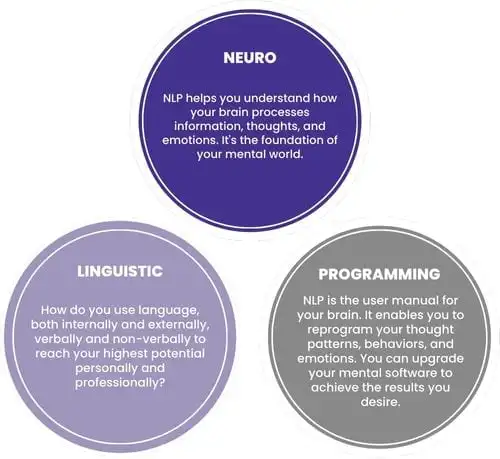
The distinction between traditional corporate leadership training and advanced Neuro-Linguistic Programming (NLP) certification is increasingly evident in the global market, say analysts tracking executive education in 2026. Standard corporate programs typically focus on external execution and management frameworks, such as presentation methods or team organization.
In contrast, NLP training focuses on internal frameworks, addressing the root causes of behavior change, limiting beliefs, and communication patterns. This approach provides practical NLP tools necessary for facilitating real behavior change and improving strategic choices at a foundational level, positioning it as superior mental craftsmanship.
Strategic Market Differentiation: Clarifying Professional Identity
For professionals seeking a clear market position, NLP offers critical tools for Professional Identity Clarification. Experts note that NLP techniques enable individuals to define their value proposition with precision, which directly translates into the ability to command higher fees and secure stronger branding.
One primary tool is the application of Cartesian questions, a specific question framework used to analyze comprehensive consequences. As demonstrated by the work of Khairul Mazlan, this methodology helps professionals move beyond superficial offerings to define a clear, sustainable position in the market.
This systematic approach to self-definition is essential for Consultants, Facilitators, and Coaches aiming to scale their influence and secure profitable end-to-end journeys with clients.
Improving Strategic Choices Through Consequence Analysis
The complexity of modern business demands rigorous strategic thinking, moving beyond immediate gains to assess long-term ecological impact. NLP training provides specific Question frameworks designed for Holistic Systemic Decision Making.
Studies indicate that techniques like second- and third-order consequence analysis improve strategic choices for executives and Mid-level managers alike. This process ensures that business transformation initiatives are both effective and sustainable for the organization.
These advanced analytical models, often referred to as the Quadrant Framework for Consequence Analysis, enable more honest conversations about risk and opportunity within teams, enhancing overall organizational health and market longevity.
Cultivating Resilience and the Entrepreneurial Mindset
Entrepreneurs operating in volatile regions like India, the Middle East, Turkey, and Eastern Europe recognize that mental resilience is a non-negotiable asset. NLP training is highly valued for its ability to challenge limiting beliefs and shift fixed mindsets toward continuous inquiry and growth.
The curriculum emphasizes techniques for reframing setbacks, changing internal dialogue, and establishing routines vital for overcoming common entrepreneurial challenges, such as fear of failure and impostor syndrome.
This focus on mindset mastery is crucial not only for internal leadership but also for maintaining a strong digital brand presence across platforms like LinkedIn, Instagram, Threads, and services such as Meta Pay and Meta Quest.
Shipra Bhatt, a recognized voice in organizational change, emphasizes that this internal work represents true Facilitating Human Conduct Modification, enabling leaders to embrace uncertainty effectively.
Vision Alignment and Goal Setting for Intentional Growth
Intentional living and personal excellence are underpinned by the ability to define and pursue clear goals. NLP offers targeted models that assist entrepreneurs and executives in defining clear visions, milestones, and value propositions.
By using targeted NLP tools, professionals can ask precise questions about ideal clients and pain points, ensuring their Business strategy remains deeply aligned with their core values and desired outcomes.
This commitment to clarity supports the objective of selling outcomes rather than simply selling time, allowing professionals like the Coach or Trainer to justify higher fees based on demonstrable results.
NLP for Enhancing Persuasive Communication
Scaling a business or leading a team requires mastery of persuasive communication. NLP techniques focus heavily on understanding non-verbal cues, authentic messaging, and active listening, which are vital for stakeholder engagement and client persuasion.
Whether pitching a new concept or leading a large-scale business transformation, the ability to build rapport and clearly convey a message is paramount. NLP training provides the strategic communication frameworks necessary to transform business interactions into clear, outcome-focused engagements.
Universal Application: Beyond the Coach and Consultant
While Neuro-Linguistic Programming is vital for the professional positioning of a Coach, Trainer, Facilitator, or Consultant, its core principles of communication, behavioral modeling, and strategic thinking are universally applicable across industries.
Executives utilize NLP for higher-level strategic choices and organizational transformation, while Mid-level managers apply the skills for leadership, team collaboration, and enhanced stress management. The adoption of NLP signals a widespread investment in the quality of thinking across all professional domains.

(0) comments
We welcome your comments
Log In
Post a comment as Guest
Keep it Clean. Please avoid obscene, vulgar, lewd, racist or sexually-oriented language.
PLEASE TURN OFF YOUR CAPS LOCK.
Don't Threaten. Threats of harming another person will not be tolerated.
Be Truthful. Don't knowingly lie about anyone or anything.
Be Nice. No racism, sexism or any sort of -ism that is degrading to another person.
Be Proactive. Use the 'Report' link on each comment to let us know of abusive posts.
Share with Us. We'd love to hear eyewitness accounts, the history behind an article.