
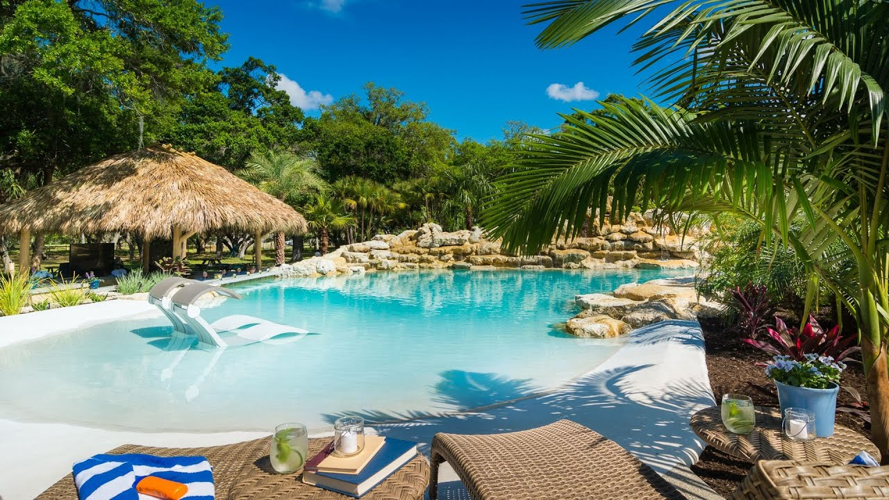

Few backyard additions understand escapism quite like a palapa. Add a thatched roof, a little filtered shade, and the suggestion of a cold drink nearby, and suddenly the pool area begins behaving like a boutique resort. That is the appeal. A palapa softens hardscape, introduces texture, and gives an outdoor space the kind of silhouette that feels instantly transportive without requiring the homeowner to actually move to Tulum.
It is also more than a decorative flourish. In a tropical backyard, a palapa can shelter a dining table, anchor a poolside bar, shade a pair of loungers, or create the sort of open-air sitting area that makes the yard feel finished rather than merely landscaped. For readers already thinking about atmosphere after sunset, this is also a natural place to reference Best Pool Lighting Ideas for a Safer and More Luxurious Backyard. A palapa tends to look even better once light and shadow are part of the composition.
Why Palapas Work So Well in Tropical Backyard Design
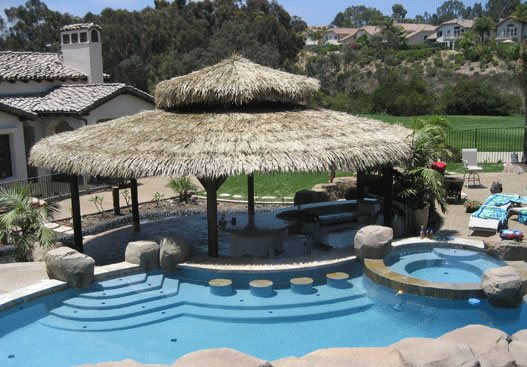
A palapa succeeds because it adds shelter without feeling heavy. Pergolas can be handsome, certainly, but they usually read more architecturally than atmospheric. A palapa, by contrast, brings warmth, movement, and a more relaxed visual language. The thatch edge softens the structure, and the open-sided form keeps it from feeling boxed in beside water. That is a surprisingly useful design trick in backyards that already have a lot of stone, tile, or crisp pool lines.
Texture is a large part of the magic. Tropical backyards rely on contrast between water, planting, furniture, and hardscape. A palapa adds one more layer, and a very effective one. It can make a clean-lined modern pool feel less severe, or help a lush garden setting feel more intentional. It is shade with personality, which is not a bad thing for any backyard element to be.
The Different Palapa Looks Worth Considering
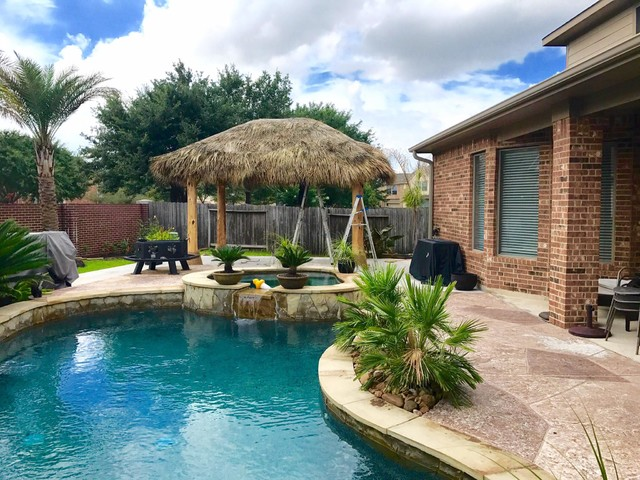
Not every palapa has to look like a beach bar dropped into suburbia. There are several directions homeowners can take, and the mood changes with the structure.
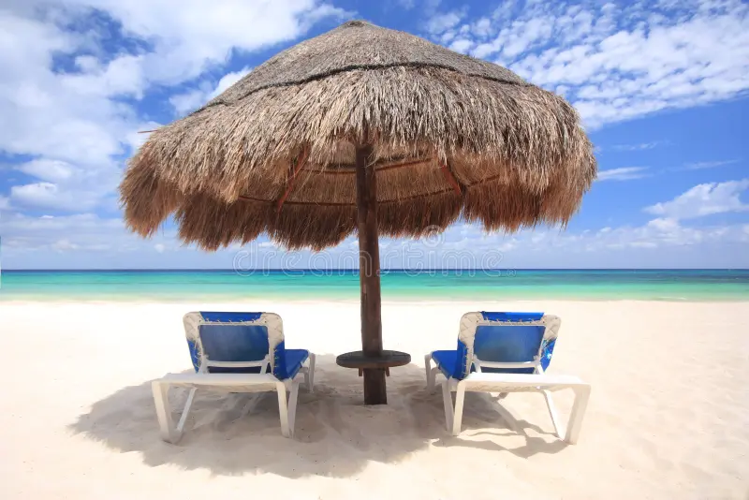
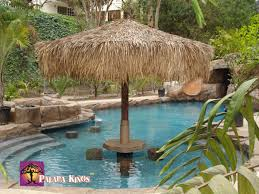
A classic round palapa umbrella is the easiest entry point. It works beautifully beside chaise lounges, over a bistro table, or as a sculptural accent near the pool. My Thatch Roof offers umbrella-style models such as the Ocean, Palmas, and Breeze, built with cedar and synthetic thatch. The company positions them as resort-grade, weather-proof umbrellas with a 20-year warranty on the thatch, which makes them attractive for homeowners who love the look of traditional palapa roofing but not necessarily the maintenance burden that can follow it.
A larger freestanding palapa or tiki-hut kit is better suited to dining, a bar area, or a covered entertaining zone. Forever Bamboo sells complete tiki-hut and palapa kits, along with replacement materials, and describes palapas as open-sided structures with thatched roofs designed for backyard and commercial tropical settings. Their guides also note pressure-treated lodge pine posts and hand-woven Mexican palm thatch in some models, which gives homeowners a more traditional route if they want a fuller backyard structure rather than a single umbrella.
Then there is the more practical synthetic-panel approach. Palaa Kings offers Mexican Raincape and South African Reed kits, including single-post and multi-post versions. The company says its South African reed system is rot- and mildew-resistant, 99 percent waterproof, and designed for harsher climates, which makes it appealing for homeowners prioritizing durability and predictable upkeep.
How to Use a Palapa Around the Pool and Entertaining Areas
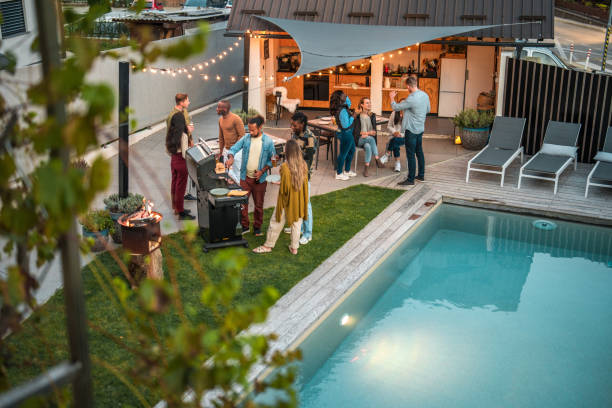
The most successful palapas are integrated into backyard life rather than treated as set decoration. Around a pool, a round palapa umbrella works especially well beside loungers or over a daybed-style seating arrangement. It creates a clear focal point without demanding that the entire yard be redesigned around it. That is often the smartest way to introduce the look.
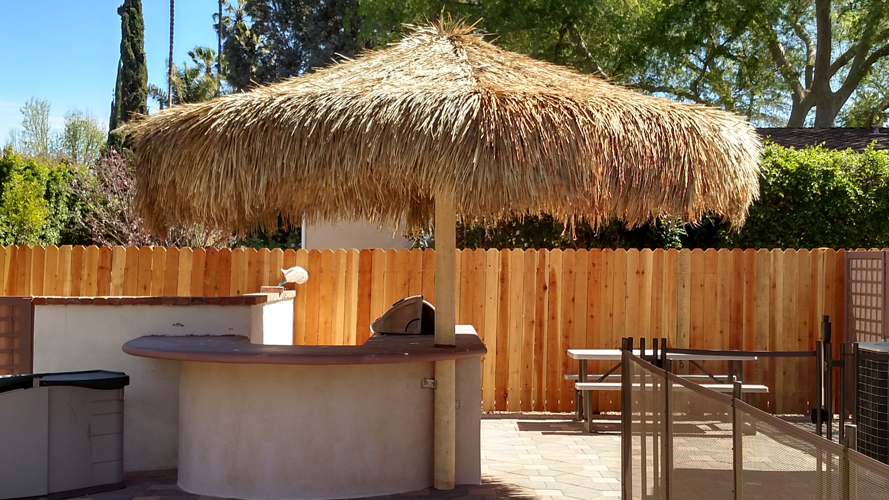
For homeowners who entertain, a larger palapa over an outdoor dining table or bar is often the more persuasive move. It gives the entertaining zone a ceiling, visually speaking, which makes the area feel like a room rather than furniture set loose outdoors. It also pairs naturally with the layered styling in How to Style a Tropical Backyard With Accent Decor and Small Design Details and, where the larger question is not just what looks good by the pool, but what makes people want to stay there.
One of the most effective uses is as a transition piece between pool and lounge. A palapa with a compact counter, two or three stools, and flattering low lighting can make the entire backyard feel more resort-like with surprisingly little effort. It is theatrical, yes, but in a disciplined way.
What Homeowners Should Know Before Buying or Building One
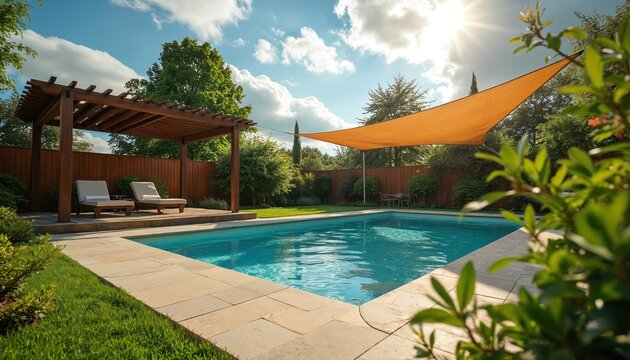
This is where taste should make room for logistics. First, decide whether the palapa is meant to be a decorative accent or a working structure. A simple umbrella-style model is a much easier commitment than a larger freestanding hut. Second, think carefully about climate. If the yard is exposed to strong winds, harsh sun, or frequent storms, synthetic thatch and sturdier structural components may be the wiser choice. Several suppliers explicitly position synthetic options as lower-maintenance and more weather-resistant than natural alternatives.
Material choices also matter more than the photos suggest. My Thatch Roof emphasizes cedar construction and synthetic thatch. Forever Bamboo leans into kit convenience, hand-woven palm thatch, and pressure-treated pine framing. Palapa Kings highlights reed panels and steel or wood structure options depending on the system. Those are not trivial differences. They affect appearance, longevity, upkeep, and how much tolerance the homeowner needs for future repairs.
Homeowners should also check local permitting, setbacks, and HOA rules before buying anything substantial. It is not glamorous advice, but it is excellent advice, and it tends to be much cheaper than buying first and arguing later. This is a natural place for a local building-department or permitting link if your CMS editor wants one.
Light Buying Guidance Without the Hard Sell
For a higher-end, lower-maintenance route, My Thatch Roof palapa umbrellas are especially compelling. The company markets them as resort-grade umbrellas with synthetic thatch, cedar detailing, and long-lifespan expectations, which suits readers who want the look of a luxury tropical retreat without signing up for constant rethatching.

For a more flexible kit-based option, Forever Bamboo palapa and tiki-hut kits make sense. The brand positions its kits as a more complete package with structure and materials, which gives homeowners a middle ground between a fully custom build and a ready-made umbrella. For someone creating a true poolside entertaining zone, that flexibility can be useful.
For a more affordable entry point, Palapa Umbrella Thatch Company is worth a look. The company sells real palm thatch, synthetic thatch roofing, palapa structures, umbrella kits, and replacement materials, which makes it practical for smaller-format projects or for homeowners who need repair parts rather than an entirely new structure.
Maintenance Basics, Weathering, and Common Repair Issues
This is the part homeowners tend to find less romantic, though it is what separates a beautiful palapa from a tired one. Natural thatch is charming, but it does weather. Over time, homeowners may see thinning edges, loosened sections, fading, debris accumulation, or areas where wind has lifted the material. Synthetic thatch reduces some of that drama, but not all of it. Even then, fasteners, frame connections, brackets, and wood finishes still need periodic attention.

The most common issues are fairly predictable: worn or thinning thatch, moisture-related deterioration, wind damage, fading, and occasional structural looseness where hardware needs tightening. Historic England’s thatching guidance notes that when serious deterioration occurs, temporary protection such as tarpaulins or strong plastic sheeting can help prevent additional damage until proper repair is carried out. It is a heritage source rather than a palapa retailer, but the practical logic still translates well: a failing roof is rarely improved by being ignored.
For homeowners using natural palm products,Palapa Umbrella Thatch Company’s thatch sealer and fire-retardant products are also relevant, especially where the structure sits near a grill, fire feature, or the main house. Tropical charm should still have a practical side.
The Repair Mindset That Saves Trouble Later
Palapa repairs are usually most manageable when handled early. Replacing a few worn thatch sections, refreshing a weathered timber finish, or tightening loose structural hardware is very different from waiting until the structure looks exhausted and then discovering that everything needs attention at once. That is true of almost any outdoor feature, but it feels particularly true of thatch, which is happiest when small problems are not promoted into large ones.
This is also why low-maintenance buyers often drift toward synthetic options. The romance is similar, but the upkeep burden is usually lower and more predictable. There is nothing unromantic about wanting a tropical backyard that does not turn into a seasonal repair hobby.
A good palapa does something few outdoor additions manage so effortlessly. It changes not only how the backyard looks, but how it feels to use. It introduces shade, atmosphere, and a little theatrical charm, while still serving real practical purposes around a pool or entertaining area.
That is the key to choosing one well. Buy for the mood, certainly, but also for the climate, the upkeep, and the life you actually want to lead outdoors. The most beautiful tropical retreat is not the one that merely photographs well. It is the one that still feels inviting, elegant, and intact after many long afternoons under the thatch.

(0) comments
We welcome your comments
Log In
Post a comment as Guest
Keep it Clean. Please avoid obscene, vulgar, lewd, racist or sexually-oriented language.
PLEASE TURN OFF YOUR CAPS LOCK.
Don't Threaten. Threats of harming another person will not be tolerated.
Be Truthful. Don't knowingly lie about anyone or anything.
Be Nice. No racism, sexism or any sort of -ism that is degrading to another person.
Be Proactive. Use the 'Report' link on each comment to let us know of abusive posts.
Share with Us. We'd love to hear eyewitness accounts, the history behind an article.