
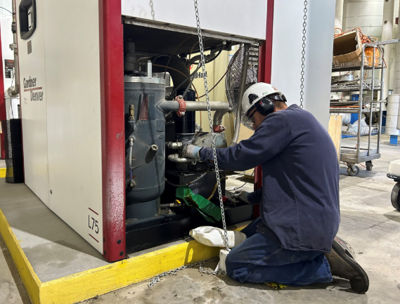

Selecting the right air compressor supplier for industrial and commercial needs is a significant decision that can impact productivity, cost-effectiveness, and reliability. Whether managing a manufacturing line, an automotive workshop, or a facility with pneumatic systems, the right partnership ensures consistent performance and reduced downtime. What should organizations consider when evaluating suppliers, and how can they align equipment choices with their specific operational demands?
Assessing Supplier Reputation and Capabilities
When beginning your search for an air compressor supplier, it’s essential to evaluate the provider’s reputation and service capabilities. A reputable supplier should have a proven track record with industrial and commercial clients, offering technical support, a range of equipment options, and a commitment to after-sales service. Investigating customer reviews, industry certifications, and years in business can provide valuable insight into reliability. Additionally, look for suppliers that offer comprehensive consultation, helping organizations select compressors tailored to their unique operational requirements.
Understanding Compressor Types and Application Fit
One of the crucial aspects of choosing a supplier is understanding which type of air compressor aligns best with your business’s needs. Industrial environments often require robust, high-capacity systems, while commercial operations might benefit from more compact, energy-efficient options. For instance, if your applications demand intermittent, high-pressure air, a reciprocating air compressor may be suitable. Reciprocating compressors are valued for their durability and are commonly used in automotive and light manufacturing settings. It’s important to discuss your application specifics—such as air volume, pressure requirements, and duty cycles—with potential suppliers to ensure proper equipment selection.
Evaluating Service, Maintenance, and Support
Consistent system performance relies not just on the initial purchase but on ongoing service and support. Assess whether the air compressor supplier offers maintenance agreements, spare parts availability, and emergency repair services. Some suppliers provide comprehensive service packages that include regular inspections, preventive maintenance, and remote monitoring. A supplier’s ability to respond quickly to service calls and provide technical expertise can significantly reduce downtime and extend equipment lifespan. When comparing suppliers, prioritize those who demonstrate clear communication channels and a proactive approach to customer support.
Identifying Energy Efficiency and Total Cost of Ownership
Energy consumption is a major factor in the long-term cost of air compressor operation. Modern compressors are designed with advanced controls to minimize energy use, but performance varies widely between models and suppliers. Request data on energy efficiency, such as specific power consumption or energy recovery options. While upfront cost is important, consider the total cost of ownership, including energy, maintenance, and potential downtime. Ask suppliers for lifecycle cost analysis and explore compressors that offer variable speed drives or integrated heat recovery systems for better efficiency.
Checklist: What to Ask Potential Suppliers
When evaluating air compressor suppliers, use the following checklist to guide your decision:
What compressor types and sizes do you offer for my industry?
Can you provide references from similar businesses?
What are your lead times for equipment delivery and installation?
Do you provide on-site surveys or application assessments?
What are your warranty and service contract options?
How quickly can you respond to emergency service requests?
Are spare parts readily available?
What energy efficiency features are included in your compressors?
Engaging with suppliers using this checklist can help clarify differences in service offerings and ensure alignment with your operational priorities.
Comparing Technology Options: Reciprocating vs. Rotary Screw
Choosing the right compressor technology is critical for system performance and reliability. Reciprocating compressors, as mentioned, are often selected for lower-duty cycles and portable applications. In contrast, compressors rotary screw are preferred for continuous operation in demanding industrial settings. Rotary screw compressors are quieter, more energy-efficient under constant load, and require less routine maintenance. Discussing your production schedule and pressure requirements with potential suppliers can help determine which technology is most appropriate. Many suppliers offer both options and can provide comparative analysis based on your usage patterns.
Considering Future Expansion and Scalability
Business needs evolve, and so do air system demands. A good supplier will not only address your current requirements but also consider future growth. Inquire about modular system options, expandability, and the ability to integrate new technologies. Suppliers familiar with scalable solutions can recommend compressors and ancillary equipment that accommodate shifts in production volume without requiring complete system replacement. Flexible suppliers help businesses adapt efficiently, minimizing disruptions as operations change.
Choosing the right air compressor supplier for industrial and commercial applications involves careful consideration of reputation, technical expertise, and long-term support. By evaluating compressor types, energy efficiency, and scalability, organizations ensure reliable air systems that meet both current and future needs. Providers who offer comprehensive service, application-specific advice, and advanced technology—such as reciprocating or rotary screw compressors—enable businesses to maximize productivity while controlling costs. Thoughtful supplier selection lays the groundwork for operational success, supporting ongoing growth and system resilience.
(0) comments
We welcome your comments
Log In
Post a comment as Guest
Keep it Clean. Please avoid obscene, vulgar, lewd, racist or sexually-oriented language.
PLEASE TURN OFF YOUR CAPS LOCK.
Don't Threaten. Threats of harming another person will not be tolerated.
Be Truthful. Don't knowingly lie about anyone or anything.
Be Nice. No racism, sexism or any sort of -ism that is degrading to another person.
Be Proactive. Use the 'Report' link on each comment to let us know of abusive posts.
Share with Us. We'd love to hear eyewitness accounts, the history behind an article.